Showing posts with label African American detectives. Show all posts

Monday, September 16, 2024

Clues 42.2:
BIPOC Female Detectives in a Global Context.

Clues, vol. 42, no. 2 (2024)—a theme issue on BIPOC female detectives in a global context guest edited by Sam Naidu (Rhodes University, South Africa)—has been published. Contact McFarland to order the issue or a subscription. Abstracts follow below.

Update, 8 Mar 2025—Ebook versions now available:
Kindle, Nook, Google Play

Introduction: BIPOC Female Detectives in a Global Context / Sam Naidu

The guest editor discusses the rationale for and content of this Clues theme issue, including articles on the TV series Brooklyn Nine-Nine and the work of Eleanor Taylor Bland, Oyinkan Braithwaite, K’im Ch’aehŭi, Maria L. M. Fres-Felix, Pauline Hopkins, Tiffany D. Jackson, Vaseem Khan, Angela Makholwa, Marcia Muller, BarbaraNeely, Nnedi Okorafor, and Kwei Quartey.

“Or my name ain’t Venus Johnson”:
The Birth of Pauline Hopkins’ Black Female Detective in
Hagar’s Daughter
Andrea Tinnemeyer

Pauline Hopkins’ Hagar’s Daughter (serialized 1901–03) meditates on detective fiction’s potential to offer agency and self-created potential for a Black woman in Jim Crow times. The result is a liberating use of genre that not only celebrates the prowess of its detective, Venus Johnson, but also affirms the knowledge that flows from Black women and their communities.

Night Girl and the Nate-Rock:
Material Feminisms and Double Consciousness in BarbaraNeely’s
Blanche on the Lam
Lisa Koyuki Smith (CUNY Graduate Center)

This study focuses on BarbaraNeely’s Blanche on the Lam (1992), exploring Neely’s material feminisms avant la lettre, their connection to W.E.B. Du Bois’s articulation of double consciousness, narratological understandings of the detective genre, and narratives of racial passing that express the discursive and material complexity of race relations in the United States. 

Listen to the Silence:
Reconsidering Race in Marcia Muller’s Sharon McCone Hard-boiled Detective Novels

Alexander N. Howe (University of the District of Columbia)
This article examines the development of the Native identity of Marcia Muller’s female private eye, Sharon McCone. McCone initially is identified with one-eighth Shoshone heritage. In Listen to the Silence (2000), McCone learns of her adoption and the membership of her birth parents in the Shoshone Nation. The series’ second half explores McCone’s Native identity, and contemporary Native experience, with increasing nuance and detail. 

“You are a Symbol, Persis”: The Complexity of Postcolonial and Feminist Progress in Vaseem Khan’s Malabar House Series
Sophie-Constanze Bantle (University of Freiburg, Germany)
Vaseem Khan’s Malabar House series presents 1950s India as rife with opportunity and difficulty. Post-independence feminist and postcolonial emancipation is portrayed as a complicated and ongoing process, mirrored in discussions around Persis’ status as a symbol. Persis combats her society’s social problems, providing an example of agency in the face of oppression.

Monday, February 06, 2023

Clues CFP: BIPOC female detectives.


Seeking to illuminate an often marginalized space, this Clues theme issue will focus on female detectives who are BIPOC (Black, Indigenous, People of Color); span eras, genres, and geographical locations; and appear in texts, TV programs, films, and other media. Of particular interest are intersections among race, indigeneity, gender, age, class, or sexuality in these works, as well as projects that center BIPOC authorship and scholarship. 

Some Suggested Topics:  

  • BIPOC female detective figures in African and Asian crime fiction, such as in works by Leye Adenle, Oyinkan Braithwaite, Angela Makholwa, and Jane De Suza. 
  • BIPOC female detectives in hard-boiled and traditional mysteries that might include characters such as Carolina Garcia-Aguilera’s Lupe Solano, Eleanor Taylor Bland’s Marti MacAlister, Leslie Glass’s April Woo, Sujata Massey’s Rei Shimura and Perveen Mistry, Marcia Muller’s Sharon McCone, BarbaraNeely’s Blanche White, S. J. Rozan’s Lydia Chin, Valerie Wilson Wesley’s Tamara Hayle and Odessa Jones, and Paula L. Woods’s Charlotte Justice. 
  • BIPOC female detectives in film and television series such as Get Christie Love! (1974–75, TV movie 2018), Angie Tribeca (2016), and Black Earth Rising (2018). 
  • BIPOC female detectives in comics/graphic novels such as Storm and Misty Knight of Marvel Comics, Martha Washington of Dark Horse Comics, and Vixen of DC Comics. 
  • BIPOC female sidekicks such as Janet Evanovich’s Lula, Elementary’s Joan H. Watson, or BIPOC detecting teams such as those in Cheryl Head’s Charlie Mack series or Ausmat Zehanat Khan’s Inaya Rahman series. 
  • BIPOC female detectives of male authors such as Kwei Quartey, Deon Meyer, and Alexander McCall Smith. 
  • Analyses of historical BIPOC female detectives in crime fiction such as in Fergus Hume’s Hagar of the Pawnshop (1898) and Pauline E. Hopkins’s Hagar’s Daughter (1901). 
  • Analyses that queer the BIPOC female detective, or examine the intersections between gender and sexuality in these works. 
  • Relationships between BIPOC female detectives and criminals/criminality. 

Submissions should include a proposal of approximately 250 words and a brief biosketch. Proposals due: May 30, 2023. Submit proposals to: Prof. Sam Naidu, email: s.naidu <at> ru.ac.za. Full manuscripts of approximately 6,000 words based on an accepted proposal will be due by September 30, 2023.

Monday, January 25, 2021

An evening with Walter Mosley.

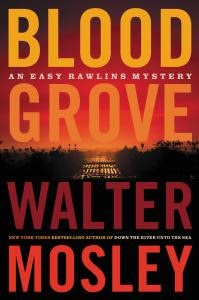
On February 8, the Dallas Museum of Art will be hosting a virtual event with Walter Mosley in connection with his new novel Blood Grove.

Monday, February 18, 2019

Archives on the Air: Ernest Tidyman.

Dynamite Entertainment's 2016 edition
of Ernest Tidyman's Shaft (1970)
The Archives on the Air radio series on Wyoming Public Media provides brief highlights about the collections of the University of Wyoming's American Heritage Center. One recent episode is on Edgar winner Ernest Tidyman (1928–84), the author of Shaft and a screenwriter on the film The French Connection. Among its holdings, the center has the original manuscript for Shaft and production files for films involving Tidyman.

And in case you want to sing along...

Monday, December 26, 2016

Listen to Chester Himes in 1969.

Chester Himes in 1967.
Fotocollectie Anefo,
Dutch National Archives
University of Rochester's online exhibition on writer John A. Williams features a May 1969 audio clip in which fellow author Chester Himes talks about Paris, Richard Wright, and the CIA.

Tuesday, April 07, 2015

Mystery in Swing (1940).

In this film with a somewhat stiff all-black cast and a lot of music, a philandering trumpet player is killed in Harlem, and a reporter finds a plethora of suspects. Thomas Cripps, a former professor of music at Morgan State University, is not fond of the film.

Thursday, April 25, 2013

Reddy receives 2013 Dove Award.

Maureen Reddy (Rhode Island College) is this year's recipient of the George N. Dove Award from the Detective/Mystery Caucus of the Popular Culture Association for contributions to the serious study of mystery/crime fiction. Reddy is the author of Traces, Codes, and Clues: Reading Race in Crime Fiction and Sisters in Crime: Feminism and the Crime Novel, among other works. Past recipients of the Dove Award include Frankie Y. Bailey, Douglas G. Greene, the late H. R. F. Keating, P. D. James, Catherine Ross Nickerson, and yours truly.

Monday, December 17, 2012

Chester Himes this week on BBC Radio 4 Extra.

Clues 28.1,  2010
(theme issue on Chester Himes)
Coffin Ed Johnson and Grave Digger Jones are on the case in Chester Himes's Cotton Comes to Harlem this week on BBC Radio 4 Extra. Episodes usually may be heard online for up to week after broadcast.

Monday, May 09, 2011

Happy birthday, Rudolph Fisher.

New York City, 1924. From left to right:
Langston Hughes, Charles S. Johnson,
E. Franklin Frazier, Rudolph Fisher,
Hubert T. Delaney. NYPL.
Rudolph Fisher—physician, Harlem Renaissance figure, and author of The Conjure- Man Dies: A Mystery Tale of Dark Harlem (1932)—was born today in Washington, DC, in 1897. He died in 1934. The Conjure-Man Dies is commonly believed to be the first mystery novel by an African American, but Marlena Bremseth argues persuasively that Philip S. Warne preceded Fisher. Author and professor Frankie Y. Bailey recently wrote a Clues article that compares the Harlem of Conjure-Man to that of Chester Himes in A Rage in Harlem.

Monday, December 06, 2010

James Sallis, Simon Brett this week on
BBC Radio 7.

This week on BBC Radio 7: James Sallis's Eye of the Cricket with African American private eye Lew Griffin and Simon Brett's Murder Unprompted with alcoholic actor-sleuth Charles Paris. Go here for the schedule or to listen online; episodes can usually be heard for a week after broadcast.