Showing posts with label Chester Himes. Show all posts

Monday, February 02, 2026

James Sallis, 1944–2026.

Nathan Ashman's James Sallis:
A Companion to the Mystery Fiction
Author James Sallis died on Jan 27 at age 81. Although he might be best known for Drive (adapted as a film with Ryan Gosling and Carrie Mulligan), he had a long and distinguished career, not only in mystery fiction but also in science fiction and as a critic. There are many admirers of his Lew Griffin series (e.g., The Long Legged Fly), and he wrote a well-respected biography of Chester Himes. He received a Lifetime Achievement Award from Bouchercon, the Hammett Award for literary excellence in crime writing, and the Grand Prix de Littérature policière.  

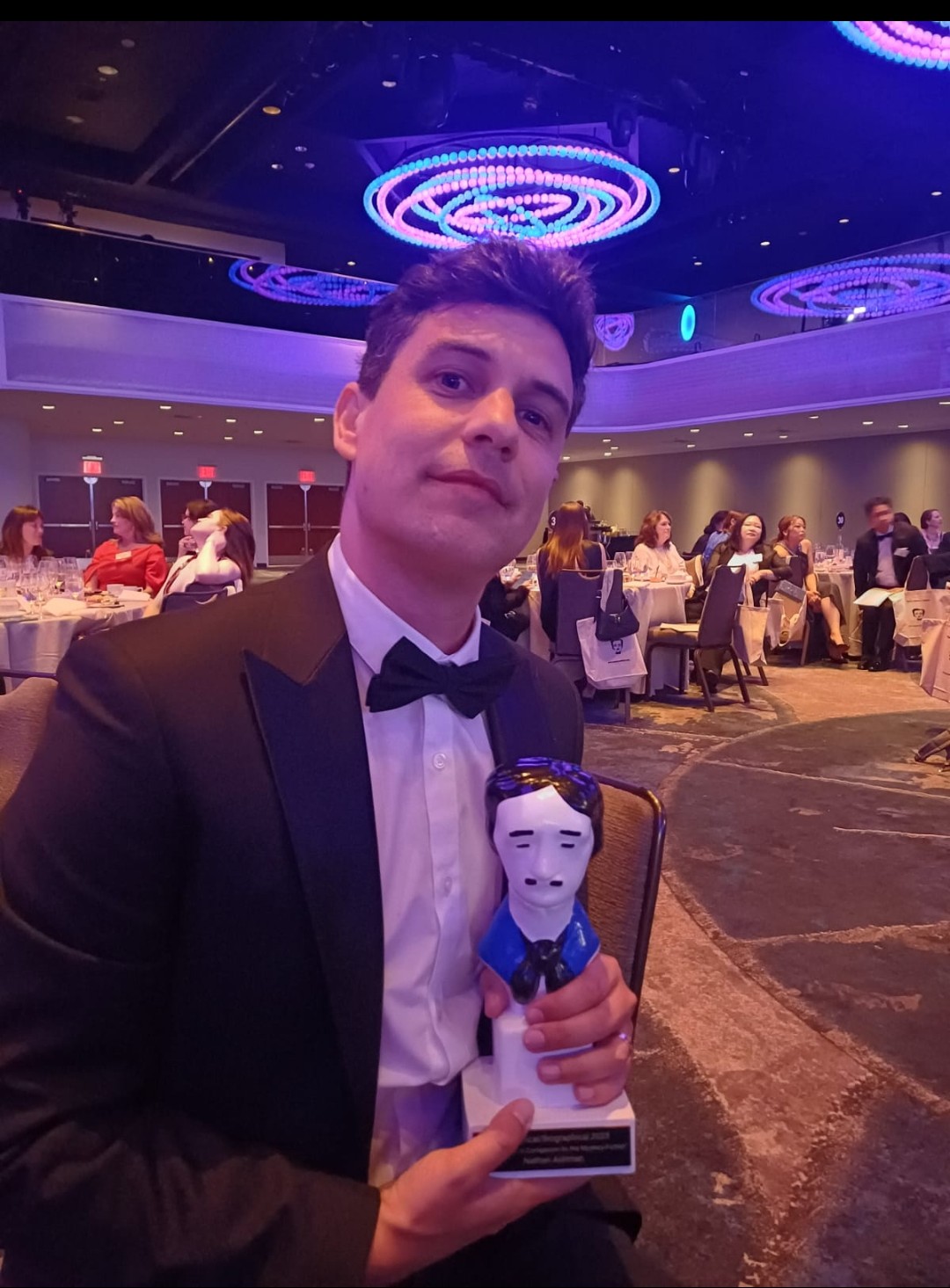
He wrote to me after James Sallis: A Companion to the Mystery Fiction by Nathan Ashman had won the Edgar Award for best biographical/critical work (I edited the book), expressing his appreciation for Nathan's hard work and mentioning that his email box had been filling up with congratulations after the Edgar win (It was the first Edgar win for a book in the series, although the Ian Rankin companion and the James Ellroy companion had been Edgar nominees). He also related a funny story: when he was reading the companion, he discovered to his horror that he had forgotten about three short stories discussed by Nathan, and he was in the midst of compiling a collection of his "complete" short stories. He sent an SOS to his editor, rooted around in his files, found the stories, and managed to include them in the volume. Said he, "So Nathan, and you, have to take the blame for those three."

James Sallis' biography of Chester Himes
called "smart, conscientious, often stylish" 
by Robert Polito in NYT


Monday, May 05, 2025

Nathan Ashman: Edgar winner, Sallis companion.

The hardworking Nathan Ashman (University of East Anglia) nabbed the Edgar in the Best Critical/Biographical category for his book James Sallis: A Companion to the Mystery Fiction (I edit the McFarland Companions to Mystery Fiction). The many works of the multitalented Sallis (an author and poet active in both mystery and sci-fi) include his novel Drive (filmed with Ryan Gosling and Carey Mulligan), his Lew Griffin series, and his biography of African American mystery author Chester Himes.

The Sallis companion is currently on sale at McFarland.


Monday, January 27, 2025

Edgar nomination for Sallis companion.

James Sallis: A Companion to the Mystery Fiction by Nathan Ashman (University of East Anglia) has been nominated for an Edgar Award in the best Critical/Biographical category. This is no. 13 in the McFarland Companions to Mystery Fiction series that I edit. Sallis may be best known for the novel Drive (filmed with Ryan Gosling and Carey Mulligan), although he is the author of numerous mysteries and a well-regarded book on Chester Himes, is a poet, and has been active in the science fiction community. 

Other companion volumes that have previously been nominated for an Edgar are James Ellroy (by Jim Mancall) and Ian Rankin (by Erin E. MacDonald, also a Macavity Award nominee).

Monday, July 10, 2023

Next McFarland Companion to Mystery Fiction:
James Sallis.

Volume 13 in the McFarland Companions to Mystery Fiction series that I edit is on James Sallis (author of Drive, creator of detective Lew Griffin, biographer of Chester Himes, critic, poet, and cross-genre writer). The author is University of East Anglia's Nathan Ashman. The book is expected to be issued in fall 2023.


Monday, January 09, 2023

Upcoming classic thrillers, Library of America.

On January 3, the Library of America announced some of its fall 2023 releases, which included the following:

(1) Five Classic Thrillers 1961–1964 (The Murderers by Fredric Brown, The Name of the Game Is Death by Dan J. Marlowe, Dead Calm by Charles Williams, The Expendable Man by Dorothy B. Hughes, The Score by Richard Stark [Donald Westlake])

(2) Four Classic Thrillers 1964–1969 (The Fiend by Margaret Millar, Doll by Ed McBain [Evan Hunter], Run Man Run by Chester Himes, The Tremor of Forgery by Patricia Highsmith)

Below are some critics' reactions to the works in these volumes.

Re Brown's The Murderers: Sgt. Cuff [John Winterich] in 30 Sept. 1961 Saturday Review dubbed it "highly amative."

Re Highsmith's Tremor of Forgery: Terrence Rafferty in the 4 Jan. 1988 New Yorker dubbed the book "nihilistic."

Re Himes's Run Man Run: Sgt. Cuff in the 31 Dec. 1966 Saturday Review regarded this as a "[t]aut, devilish, ably-written slice of life—and death."

Re Hughes's Expendable Man (Edgar nominee, Best Novel): Kirkus lauded its "savage momentum."

Re Marlowe's The Name of the Game Is Death: Anthony Boucher in the 11 Feb 1962 New York Times believed that Marlowe had reached "an impressive new high."

Monday, March 01, 2021

More on Chester Himes.

Chester Himes in 1967.
Fotocollectie Anefo,
Dutch National Archives
On UT Austin's Harry Ransom Center Web site, Melanie Alberts highlights a few documents on Chester Himes in the Ransom Center's Knopf archive, concentrating in particular on Himes's novel Lonely Crusade (1947) and his autobiography The Quality of Hurt (1971).

Monday, June 29, 2020

Upcoming online course, African American detective fiction.

Norlisha Crawford, associate professor emerita at University of Wisconsin–Oshkosh who guest edited the Clues theme issue on Chester Himes, will be teaching an online course on African American detective fiction starting in August under the auspices of the Rosenbach in Philadelphia. Authors covered will include Himes, Eleanor Taylor Bland, Walter Mosley, and Nichelle D. Tramble.

Monday, January 28, 2019

Eudora Welty and mystery.

Eudora Welty, 1980.
Library of Congress,
Prints and Photographs Div.
The 2019 Eudora Welty Conference, which will be hosted by the College of Charleston on February 21–23, will include the February 22 panel "Welty and Mystery," with the following presentations:
Eudora Welty’s Career in Mystery Fiction. Harriet Pollack (College of Charleston)

Chester Himes, Harper Lee, Eudora Welty: The Civil Rights Movement on a Crime Fiction Continuum. Jacob Agner (Univ of Mississippi)

Murder, Mystery, and Motivation: Eudora Welty’s The Optimist’s Daughter and Agatha Christie’s The Body in the LibrarySarah Ford (Baylor Univ)

Wanted Dead Or Alive: Last Years’ Dead Branches. Rebecca Mark (Tulane Univ)

“The Writer as Detective Hero”:  Eudora Welty and Her Late Fiction. Suzanne Marrs (Millsaps College)
I would imagine the relationship between Welty and Kenneth Millar (aka Ross Macdonald) will be discussed, including Welty's famous review of Macdonald's The Underground Man. Further details can be found in Meanwhile There Are Letters: The Correspondence between Eudora Welty and Ross Macdonald, ed. Marrs and Tom Nolan (Macdonald's biographer).

Monday, July 24, 2017

"Iconic detectives" exhibition at Ohio State.

On view until September 17 is "Hot on the Trail of Iconic Detectives," an exhibition at Ohio State University's Thompson Library Gallery that features detectives from dime novels, young adult books, comic books, films, and manga. They include Sherlock Holmes, Nancy Drew, Dick Tracy, Coffin Ed Johnson, and Grave Digger Jones.


"Hot on the Trail of Iconic Detectives." Curated by Jennifer
Schnabel, English Librarian, University Libraries, OSU.

Monday, December 26, 2016

Listen to Chester Himes in 1969.

Chester Himes in 1967.
Fotocollectie Anefo,
Dutch National Archives
University of Rochester's online exhibition on writer John A. Williams features a May 1969 audio clip in which fellow author Chester Himes talks about Paris, Richard Wright, and the CIA.

Monday, December 07, 2015

70 years of Gallimard's Serie Noire.

French publisher Gallimard has published C'est l'histoire de la Série Noire (1945–2015) to mark the 70th anniversary of its crime fiction series Série Noire. Founded by Marcel Duhamel, Série Noire was instrumental in establishing the literary reputation of hardboiled authors such as Chester Himes (e.g., Coffin Ed Johnson/Grave Digger Jones series) and Charles Williams (e.g., Dead Calm). The Bibliothèque des littératures policière (Bilipo) in Paris is hosting an exhibition in conjunction with the book.

Monday, December 17, 2012

Chester Himes this week on BBC Radio 4 Extra.

Clues 28.1,  2010
(theme issue on Chester Himes)
Coffin Ed Johnson and Grave Digger Jones are on the case in Chester Himes's Cotton Comes to Harlem this week on BBC Radio 4 Extra. Episodes usually may be heard online for up to week after broadcast.

Thursday, August 25, 2011

NEH's Edsitement: Not much mystery.

Theodore Dreiser, NYPL
The National Endowment for the Humanities' Edsitement offers K–12 lesson plans in literature, but I wish the site had beefier mystery-related content (at minimum, including some plans on teaching Alcott's thrillers, Conan Doyle, Christie, Hammett, and Chandler, not to mention black writers Rudolph Fisher and Chester Himes. How about something on teaching Theodore Dreiser's An American Tragedy?). The only somewhat related plans I can find are on Hemingway's Nick Adams and two lesson plans on Poe. Although Faulkner is included, there is nothing on his mystery-related work (such as Intruder in the Dust, "A Rose for Emily," and his Gavin Stevens stories).

Tuesday, June 07, 2011

Chester Himes and Doubleday.

Chester Himes, by Carl
Van Vechten, 1946.
LOC Prints &
Photographs Div.
In the summer 2011 issue of American Literary History, Emory U's Lawrence Jackson reconstructs the events concerning Doubleday's publication of Chester Himes's first novel, If He Hollers Let Him Go (1945), that refutes Himes's version in his autobiography The Quality of Hurt (1972). The events include Himes receiving a Julius Rosenwald fellowship, meeting Doubleday editor Bucklin Moon, and hanging out with Richard Wright and Ralph Ellison. Jackson also accomplishes some literary detective work to reveal FBI surveillance of Himes as a suspected communist, determine who removed material from Himes's book pertaining to a lesbian relationship, and describe Himes's dissatisfaction with the marketing of the book: "... he resented being classed with writers of crime fiction and sex melodrama" (300).

Monday, May 09, 2011

Happy birthday, Rudolph Fisher.

New York City, 1924. From left to right:
Langston Hughes, Charles S. Johnson,
E. Franklin Frazier, Rudolph Fisher,
Hubert T. Delaney. NYPL.
Rudolph Fisher—physician, Harlem Renaissance figure, and author of The Conjure- Man Dies: A Mystery Tale of Dark Harlem (1932)—was born today in Washington, DC, in 1897. He died in 1934. The Conjure-Man Dies is commonly believed to be the first mystery novel by an African American, but Marlena Bremseth argues persuasively that Philip S. Warne preceded Fisher. Author and professor Frankie Y. Bailey recently wrote a Clues article that compares the Harlem of Conjure-Man to that of Chester Himes in A Rage in Harlem.

Thursday, September 09, 2010

Chester Himes materials in
Yale's Beinecke Library

Raymond St. Jacques,
left, and Godfrey
Cambridge in Cotton
Comes to Harlem
Yale University's Beinecke Library has various materials available online that pertain to Chester Himes:

• Ads for the films Cotton Comes to Harlem (dir. Ossie Davis, 1970) and its sequel, Come Back, Charleston Blue (dir. Mark Warren, 1972)

Photos of Himes

Monday, April 12, 2010

Clues 28.1 published: Chester Himes.

Just published is vol. 28, no. 1 of Clues: A Journal of Detection, which is a theme issue on the work of Chester Himes (1909–84) to honor his centenary. Norlisha F. Crawford (University of Wisconsin–Oshkosh) guest edited the issue. Edgar nominee Frankie Y. Bailey (SUNY–Albany) compares Rudolph Fisher's The Conjure-Man Dies (1932) to Himes's A Rage in Harlem (1957); Justin Gifford (University of Nevada–Reno) examines Himes's Run Man Run (1959) in the context of black pulp publishing; Agustin Reyes-Torres (University of Valencia) compares Himes's Coffin Ed Johnson and Grave Digger Jones with Walter Mosley's Easy Rawlins; and Stephen F. Soitos looks at Himes's use of tropes from African American folklore.

An exciting aspect of the issue is its reprint of "He Knew," a short story by Himes that has been out of print since 1933 and is his first work that features African American detectives. John Cullen Gruesser (Kean University, NJ) analyzes the story and discusses its place in the history of African American detective fiction.

Other essays in the issue compare Boris Akunin with Christie and Collins (Marcia A. Morris, Georgetown University); examine Anne Perry's World War I series (Barbara Korte, University of Freiburg); look at the language used in James Ellroy's Dudley Smith trilogy (Jon Clay, Richmond-on-Thames College); and analyze John le Carre's The Secret Pilgrim, his first novel to deal with the end of the cold war (Jonathan Goodwin, University of Louisiana at Lafayette). Edgar nominee Rita Rippetoe (author of Booze and the Private Eye) also reviews Edgar nominee Jean Murley's The Rise of True Crime: 20th-Century Murder and American Popular Culture.

Go here for the table of contents with article abstracts; here for more information about the journal.

Wednesday, February 03, 2010

Illustrators try their hand at mystery characters.

On Steve Gettis's Web site, various illustrators provide their interpretations of their favorite literary figures. Roger Langridge's Jeeves & Wooster are charming. Mystery-related subjects include Earl Derr Biggers's Charlie Chan, Raymond Chandler, Arthur Conan Doyle, Len Deighton, Erle Stanley Gardner, Dashiell Hammett, Chester Himes's Coffin Ed Johnson and Grave Digger Jones, Ed McBain's Carella and Meyer, and Edgar Allan Poe.

(Hat tip to Quill & Quire)

Tuesday, September 01, 2009

University of Delaware Library:
Chester Himes.

As part of the University of Delaware's "Fifty Years of the University of Delaware Library Associates" exhibition, you can see this cover of Chester Himes's If He Hollers Let Him Go (1945).

Sunday, February 08, 2009

A new Federal Writers' Project? And a Himes query.

Eastern Washington University historian Larry Cebula proposes a new Federal Writers' Project as part of the stimulus package. The New Republic's Mark I. Pinsky has his own take on the idea (and misses a significant alumnus of the original project: Chester Himes).

There's an infuriatingly vague hint from Himes in Dear Chester, Dear John: Who is the "big fat mannish woman who wrote detective stories" (p. 19) and supervised Himes on the Ohio State Writers' Project in Cleveland in the late 1930s? I've checked Conversations with Chester Himes and resources on the Federal Writers' Project to no avail.

BTW, Clues still has an open Call for Papers on "Chester Himes and His Legacy."

(Hat tip to the AHA blog. About the photo: Chester Himes by Carl Van Vechten, 1946. Library of Congress, Prints and Photographs Division.)