  |
| (Top) Robert Louis Stevenson, NYPL (Bottom) Dashiell Hammett, ca. 1934 |
• Images of the grove and the original plan for the grove
|
| (Top) Robert Louis Stevenson, NYPL (Bottom) Dashiell Hammett, ca. 1934 |
• Images of the grove and the original plan for the grove

 |
| John Dickson Carr's It Walks by Night |


Clues: A Journal of Detection 43.1 (2025) has been published; see below for abstracts. Contact McFarland for a hard copy issue or a subscription.
Update, May 26, 2025: Kindle, Nook, and GooglePlay versions of the issue are now available.
Want to stay up to date on Clues content? Visit the Clues RSS feed.
Introduction: Insight into Messy Truths
Caroline Reitz (John Jay College of Criminal Justice/CUNY Graduate Center)
Ukrainian Crime Fiction: Trends, Themes, Traditions
Svitlana (Lana) Krys (MacEwan University, Canada)
This article traces the development of crime fiction in Ukraine: its origins in the gothic literary movement, main authors, historical memory and colonial traumas, role as an instrument of Ukraine’s cultural diplomacy, limited presence in the Soviet era, and proliferation following Ukraine’s independence.
Sympathy for the Devil: Failed Catharsis and Universal Guilt in Agatha Christie's Curtain
Emilie Laurent (Université Clermont Auvergne, France)
Reading Christie's Curtain as a depiction of an ideological battle between good and evil, this essay analyzes the novel as a manipulation of the reader’s moral judgment that dissolves the genre’s over-optimistic promise of restoration social order and generates anxiety about a possible guilt located within the
reader’s self.
Dangerous Skepticism and the Challenge of Acknowledgment in Peter Høeg’s Smilla’s Sense of Snow
Christine Hamm (University of Bergen, Norway)
This essay argues that crime fiction can encourage readings of literature that differ from those criticized by Rita Felski (2015) as outcomes of a “hermeneutics
of suspicion.” Tracing motivations for and effects of skepticism at the plot level, Nordic noir such as Smilla’s Sense of Snow promotes acknowledgment rather than “critique.”
Pie in the Sky: Political Readings of Dashiell Hammett’s “Faith”
Jacob A. Zumoff (New Jersey City University)
This essay examines “Faith,” a short story by Dashiell Hammett unpublished in his lifetime, exploring its relationship to detective fiction, proletarian fiction, and literary modernism. The story’s setting suggests a left-wing perspective yet resists easy political categorization, contributing to our understanding of Hammett’s evolving literary approach to detective fiction and complex relationship to left-wing politics and modernism.
A Woman Agent in the Male World of the Cold War Spy Novel:
The Case of Len Deighton’s Fiona Samson
Howard Mason
This essay discusses Len Deighton’s Fiona Samson, a female agent with strong character traits who is working for the West during the Cold War. Samson’s womanhood and femininity, as well as her love of husband and family, eventually take precedence over her agency as a professional intelligence officer.
The latest episode of Kansas Public Radio's Film Music Friday on Warner Brothers films includes selections from The Maltese Falcon (1941).

 |
| Alex Raymond: An Artistic Journey— Adventure, Intrigue, and Romance by Ron Goulart |
 |
| Dashiell Hammett Yank 30 Nov 1945 |
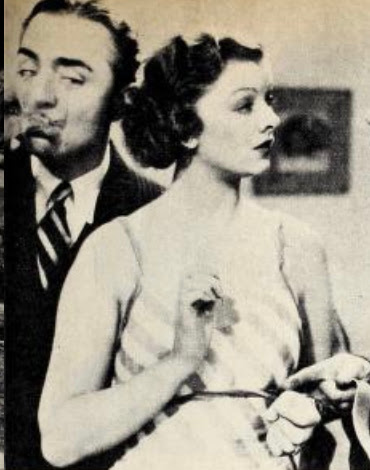
Austin Wood in The Advocate discusses a pair of bald eagles—dubbed Nick and Nora after Dashiell Hammett's Nick and Nora Charles—at White Rock Lake in Texas.
 |
| Dashiell Hammett, Yank, 30 Nov. 1945 |


(Photos: Herbert Hoover, Lou Henry Hoover: NYPL)

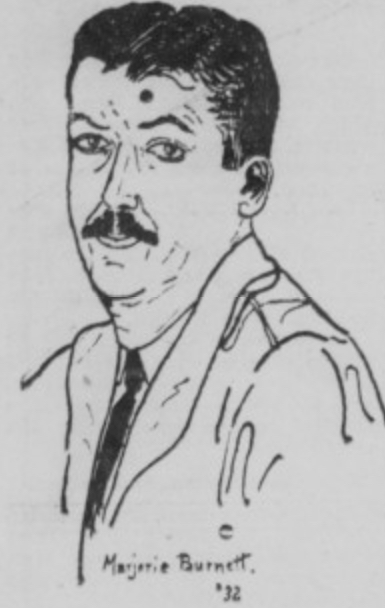
Over on the blog Black Gate, Will Murray discusses "The Diamond Wager" (1929)—a Detective Fiction Weekly short story about a gentleman thief long thought to be written by Dashiell Hammett, but Murray makes a strong case for the WWI Navy veteran, journalist, and WWII OSS agent Samuel Lungren Dashiell (1891–1949) as the author.
 |
| Dashiell Hammett Yank 30 Nov. 1945 |
 |
| Journalist Samuel Lungren Dashiell, from his 1919 passport application. |

 From May through August, DeKalb (IL) Public Library is hosting the free monthly program "The Golden Age of Film Noir and Its Novels," discussing key novels and showing clips from their film adaptations. Authors featured include Dashiell Hammett (May 27), James M. Cain, W. R. Burnett, and Cornell Woolrich.


 |
| The Phantom of the Opera by Gaston Leroux, part of the UNC Libraries exhibition |

 |
| Panek's last book |
His last book is the newly published Nineteenth Century Detective Fiction: An Analytical History. His other works include the following:
• Before Sherlock Holmes: How Magazines and Newspapers Invented the Detective Story
• After Sherlock Holmes: The Evolution of British and American Detective Stories 1891–1914
• The American Police Novel: A History (Edgar nominee)
• Early American Detective Stories: An Anthology (ed. with Mary Bendel-Simso)
• The Essential Elements of the Detective Story, 1820–1891 (coauthored with Bendel-Simso)
• Introduction to the Detective Story (Edgar winner)
• The Origins of the American Detective Story
• Reading Early Hammett: A Critical Study of the Fiction Prior to The Maltese Falcon
• Watteau's Shepherds: The Detective Novel in Britain 1914–1940 (Edgar nominee)
Panek's Westminster Detective Library (a project with Bendel-Simso) is an invaluable online repository of short detective works published in the United States prior to 1891.

