
Showing posts with label Dorothy L. Sayers. Show all posts
Showing posts with label Dorothy L. Sayers. Show all posts
Monday, January 26, 2026
Poisons in Golden Age mysteries.

Monday, December 29, 2025
Map of Dorothy L. Sayers' Britain.

New from Herb Lester Associates is Dorothy L. Sayers' Britain, a map of locations in the works of Sayers. The writer is Eric Sandberg (City University of Hong Kong), author of Dorothy L. Sayers: A Companion to the Mystery Fiction (which I edited; take 20% off the book this month with coupon code HOLIDAY25).
Other maps:
• Ian Fleming's London
• Maigret's Paris
Monday, December 16, 2024
Grolier Club exhibition: "Imaginary Books."
 |
| Sheridan Le Fanu. |
Monday, April 15, 2024
Lou and Herbert Hoover, mystery fans.

- The friendship of the Hoovers with author Mary Roberts Rinehart.
- Mystery writers read by the Hoovers, pt 1. (Margery Allingham, Dashiell Hammett, Ellery Queen, Dorothy L. Sayers, S. S. Van Dine)
- Mystery writers read by the Hoovers, pt 2. (The Detection Club)
- Mystery writers read by the Hoovers, pt 3. (Margery Allingham, Dashiell Hammett)
- Mystery writers read by the Hoovers, pt. 4. (Lawrence Saunders, aka John Burton Davis and Clare Ogden Davis; Harry Stephen Keeler)

- Mystery writers read by the Hoovers, pt. 5. (Carolyn Wells)
- Mystery writers read by the Hoovers, pt. 6. (Agatha Christie, Dorothy L. Sayers)
- Mystery writers read by the Hoovers, pt. 7. (Freeman Wills Crofts, Robin Forsythe)
- Mystery writers read by the Hoovers, p. 8. (Harry Ashton-Wolfe)

(Photos: Herbert Hoover, Lou Henry Hoover: NYPL)
Monday, December 04, 2023
McFarland's December sale.
 |
| New from McFarland: God and the Great Detective |
Wednesday, November 22, 2023
McFarland bk sale (incl Companions to Mystery Fiction).


Monday, March 13, 2023
New mystery audiobooks from Librivox.
 Librivox, which marshals volunteer readers to produce free audiobooks of works in the public domain, has some new mystery-related offerings:
- A Modern Mephistopheles by Louisa May Alcott
(an Alcott "blood and thunder" tale) - The Tower Treasure by Frankin W. Dixon (the Hardy Boys debut)
- The Casebook of Sherlock Holmes by Arthur Conan Doyle
- The Moon Rock by Arthur J. Rees (man with an aristocratic title claim is murdered)
- The Unholy Three by Tod Robbins (carnival performers become criminals)
- Clouds of Witness by Dorothy L. Sayers (Lord Peter's brother is accused of murder)
- Unnatural Death by Dorothy L. Sayers (Lord Peter looks into a potential murder)
- The Fellowship of the Frog by Edgar Wallace (cop and prosecutor chase a dastardly secret society)
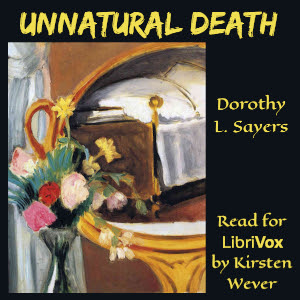 Want to volunteer as a reader? Visit this webpage.
Monday, May 30, 2022
Dorothy L. Sayers as anthologist.

Monday, March 21, 2022
Coming soon: Golden Age mystery map.

The Golden Age map joins Agatha Christie's England by Shedunnit's Caroline Crampton, and The Hardboiled Apple by Jon Hammer and Karen McBurnie, with art by Andy Gregg.
Monday, December 27, 2021
Now available: Dorothy L. Sayers Companion.

Monday, May 31, 2021
Available for preorder: Dorothy L. Sayers companion.

The series has garnered Edgar nominations (Ellroy companion, Rankin companion), an Agatha nomination (Paretsky companion), and a Macavity Award (Paretsky companion).
Monday, January 06, 2020
The life of a mystery writer.

Monday, October 14, 2019
Restored 1954 recording of Ngaio Marsh.
 |
| Ngaio Marsh companion (2019) published by McFarland |
Monday, September 02, 2019
Clues 37.2: Interwar mysteries.

Ebook versions available: GooglePlay, Kindle, and Nook.
Introduction / VICTORIA STEWART. The guest editor of Clues 37.2 on interwar mysteries discusses its contents, including articles on Agatha Christie, Mary Fitt. Ngaio Marsh, Clifford Orr, Raymond Postgate, Dorothy L. Sayers, and Josephine Tey.
Detecting Histories, Detecting Genealogies: The Origins of Golden Age Detective Fiction / STACY GILLIS (University of Newcastle, UK). This article traces interwar attempts to define detective fiction, with an emphasis on how critics such as Dorothy L. Sayers, H. Douglas Thomson, and T. S. Eliot traced its origins in classical, biblical, and more recent texts. It argues that this demonstrates an anxiety relating to conceptions of literary taste on the part of these commentators.
“The Ghost of Dr. Freud Haunts Everything Today”:
Criminal Minds in the Golden-Age Psychological Thriller / STEFANO SERAFINI (Royal Holloway, University of London). This essay provides new insights into the development of interwar crime fiction by investigating how, and to what extent, two such apparently irreconcilable subgenres as the classic detective story and the psychological thriller interact and intertwine in the work of often-neglected Golden Age writers.
Killing Innocence: Obstructions of Justice in Late-Interwar British Crime Fiction / J. C. BERNTHAL (University of Cambridge). This article analyzes Agatha Christie’s And Then There Were None and Raymond Postgate’s Verdict of Twelve, both written toward the end of the interwar period and published at the outset of World War II. Christie and Postgate interrogate ethics in the British criminal justice system, using the figure of the child-victim to complicate interwar constructions of innocence.
Capital Punishment and Women in the British Police Procedural: Josephine Tey’s A Shilling for Candles and To Love and Be Wise / EVIE JEFFREY (University of Newcastle, UK). This article considers Josephine Tey’s engagement with contemporary capital punishment debates through considering the phenomenon of the “wrongful” arrest. It argues that women are central to the exploration of these debates, particularly when reading the novels as part of the subgenre of police procedurals within the Golden Age of detective fiction.
Monday, August 05, 2019
New publications on Sayers.
Some new books dealing with Dorothy L. Sayers:
• Tippermuir Books follows up its collection of Sayers book reviews (ed. Martin Edwards) with God, Hitler, and Lord Peter Wimsey, a collection of articles, essays, and speeches by Sayers, including a radio broadcast that has never been published before.
• Anglican Woman Novelists from T&T Clark covers Sayers and P. D. James, among other female authors.
• Coming in October from InterVarsity Press: Choosing Community: Action, Faith, and Joy in the Works of Dorothy L. Sayers


• Tippermuir Books follows up its collection of Sayers book reviews (ed. Martin Edwards) with God, Hitler, and Lord Peter Wimsey, a collection of articles, essays, and speeches by Sayers, including a radio broadcast that has never been published before.
• Anglican Woman Novelists from T&T Clark covers Sayers and P. D. James, among other female authors.
• Coming in October from InterVarsity Press: Choosing Community: Action, Faith, and Joy in the Works of Dorothy L. Sayers
Monday, August 27, 2018
Clues 36.2: Atkinson, Conan Doyle, Chandler, Hammett, Macdonald, and a noir graphic novel.

To keep up to date on Clues, subscribe to the new RSS feed for the Clues tables of contents, or visit the Clues website. There is currently a call for papers on interwar mysteries (submission deadline: October 12, 2018).
Introduction JANICE M. ALLAN (Univ of Salford)
Transvestism and Transgender in the Crime Fiction of Andrea G. Pinketts BARBARA PEZZOTTI (Monash Univ)
This article focuses on the figure of the transvestite and the treatment of transgender in the novels of Italian crime writer Andrea G. Pinketts. The aim is to determine whether Pinketts’s highly entertaining, parodic hard-boiled series succeeds in subverting a traditional discourse on transvestism and transgender in Italian crime fiction.
Bending the Genre: Portraying the Genders of Harriet Vane and Lord Peter Wimsey in the Detective Fiction of Dorothy L. Sayers SALLY BERESFORD-SHERIDAN (Univ of Waterloo)
This essay explores how the fictional female detective of Dorothy L. Sayers works outside normative gender conventions of the interwar years. By positing a female character who can become a detective, Sayers allows both Harriet Vane and Peter Wimsey to break and redefine social expectations of masculine behaviors, feminine behaviors, and gender stereotypes.
Hard-boiled detective fiction often limits women to the roles of femme fatale or love interest of the detective. However, Effie Perine (Dashiell Hammett’s The Maltese Falcon) and Anne Riordan (Raymond Chandler’s Farewell, My Lovely) embody the femme fiable (“dependable woman”), a survivor who goes where the detective cannot and avoids the fate of the femme fatale.
Wednesday, April 26, 2017
Foxwell on mystery reviewing, EQMM blog.
Today on the EQMM blog "Something Is About to Happen," I discuss "The Not-So-Simple Art of Mystery Reviewing," including a look back at some eminent reviewers (such as Walter R. Brooks, Dorothy L. Sayers, Dorothy B. Hughes, Howard Haycraft, and Anthony Boucher).
Monday, October 26, 2015
Clues vol. 33 now in Kindle format.

 For those with e-readers: Clues 33.1 and Clues 33.2 (Patricia Highsmith issue) are now available in Kindle format.
 Clues 33.1 (2015)
• Kindle version
• Abstracts
Clues 33.2 (2015; theme issue on Patricia Highsmith, with new revelations about Per Wahlöö)
• Kindle version
• Abstracts
Wednesday, May 13, 2015
Clues 33.1: Westlake, Leonard, Reichs, et al.

Update. The issue is now available on Nook and Kindle.
Introduction JANICE M. ALLAN
Now You See Her—Now You Don’t: Household Spies in Aurora Floyd and Lady Audley’s Secret RACHEL SMILLIE (U Aberdeen) In Mary Elizabeth Braddon’s novels the female domestic servant enjoys a uniquely privileged position; she is granted admittance to the most intimate spaces of the home and given unfettered access to the family’s secrets. By focusing on the role of the female servant as household spy, this essay explores the control these women are able to exercise over their respective narratives.
“Something in a New Key”: Democratizing Poe’s Ratiocination in Psych and Elementary PATRICK KENT RUSSELL (U-Conn) Psych (2006–14) and Elementary (2013–) take steps to democratize Edgar Allan Poe’s ratiocination. Early seasons of Psych take a greater step by providing viewing audiences access to clues and lessons in what to observe. Seasons 1 and 2 of Elementary also show lessons, but as character development, rather than to redistribute necessary knowledge.
Far from Home and Near to Harm: Mazes, Rhizomes, and Illusory Domestic Spaces in Richard Stark’s Parker Novels GREGORY ALAN PHIPPS This article considers the construction of Richard Stark’s Parker novels in relation to the symbolic models of the maze and the rhizome. These function in the Parker novels as frameworks that capture the structural forms of various spaces, social encounters, and modes of subjectivity.
Scarlet Fever: Communism, Crime, and Contagion in James Ellroy’s The Big Nowhere JOSHUA MEYER (U of Western Sydney) Throughout James Ellroy’s The Big Nowhere, the threat of communism and the institutional anxiety it engenders is played out through a series of symbolic associations among communism, crime, and contagion. Ellroy’s figuration of communism as a form of criminal contagion takes up underlying tensions involved with the discourse of typology that runs through the detective genre.
Monday, October 13, 2014
Great Lives: Dorothy L. Sayers.

Subscribe to:
Posts (Atom)