Showing posts with label Louisa May Alcott. Show all posts

Monday, March 13, 2023

New mystery audiobooks from Librivox.

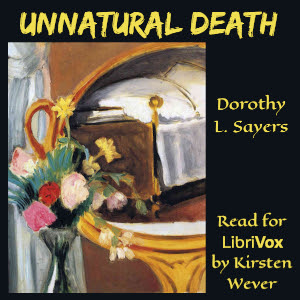
Librivox, which marshals volunteer readers to produce free audiobooks of works in the public domain, has some new mystery-related offerings:

Want to volunteer as a reader? Visit this webpage


Monday, October 25, 2021

"Women & crime fiction" resource, UF Tampa Libraries

Margaret Lewis's biography of Edith Pargeter/Ellis Peters
To accompany the U-Florida course Lit 4386, the Special Collections of the UF–Tampa Libraries has assembled a "Women & Crime Fiction" online exhibition featuring mystery highlights of its collection that focus on female authors, female detectives, femme fatales, and female victims. Some of the works featured are by Mary Elizabeth Braddon, Vera Caspary, Lillian de la Torre, Anna Katharine Green, Margaret Millar, Ellis Peters, and the Stratemeyer Syndicate. Unusual items include The Vulcan Academy Murders by Jean Lorrah, which offers Captain Kirk as detective, and an April 1960 letter from Columbia University student Leigh Marlowe to mystery author Baynard Kendrick related to her study of villains.

Friday, September 26, 2014

Friday Forgotten Book:
Atwater's Crime in Corn Weather (1935).

Was William Breen at that moment on a train or an airplane on his way to unextraditable ease with a few hundred thousands of the bank's funds in a modest suitcase at his feet? Mr. Vane knew how it could have been done. He had worked out a perfect system years ago. Now, of course, it would be too late—for him. Why hadn't he done it first? He pretended he believed it was his moral uprightness that had prevented, but as a matter of fact he was afraid of airplanes and got desperately seasick even in a rowboat on the lake. Of such things are virtue made sometimes. (Crime in Corn Weather 51)
A tyrannical banker from a rural town in the Midwest disappears, and his neighbors suspect foul play in Mary Meigs Atwater's only mystery novel. Atwater's focus is the effect of the event on the residents, and there is a great deal of wisdom in her observations of people seeking to capitalize on the case (merchants, reporters) and those with sadder legacies (a World War I veteran, a young woman, a henpecked husband). Younger readers may not know what a switchboard is, and there is one appearance of the six-letter "N" word (in reference to a lawn jockey) that contemporary readers may find disconcerting.

Mary Meigs Atwater (1878–1956) was referred to as the "dean of American handweaving" and as "gun toting" and "chain smoking" in the Interweave Press 1992 reprint of Crime in Corn Weather (iii). She was a granddaughter of Montgomery C. Meigs, the Union quartermaster general during the Civil War who later played a key role in the development of Arlington Cemetery, the Pension Building (now the National Building Museum), and the Washington Aqueduct. Her sister, Bryn Mawr professor Cornelia Meigs, received a Newbery Medal for Invincible Louisa, a biography of Louisa May Alcott. In the Interweave Press edition of Crime in Corn Weather, there is a tantalizing reference to an unpublished mystery manuscript by Atwater.

Tuesday, May 22, 2012

Alcott royalty smackdown.

Louisa May Alcott, NYPL
The Houghton Library blog reveals that Louisa May Alcott, in an 18-year period, raked in more than $100,000 in royalties, in comparison to Henry James ($58,503) and Herman Melville ($10,444). An approximate comparison in today's dollars would be $2.5 million for Alcott, $1.4 million for James, and $257,000 for Melville.

Tuesday, April 17, 2012

Alcott, her family, and Little Women.

Louisa May Alcott, ca. 1862
NYPL
Running until May 26, the exhibition "Louisa May Alcott: Family Life and Publishing Ventures" at Harvard's Houghton Library features materials on the Alcott family and the publication of Little Women. It's curated by Joel Myerson and Daniel Sheehy, editors of Alcott's thrillers, journals, and letters.

Tuesday, November 29, 2011

Happy birthday, Louisa May Alcott.

Louisa May Alcott, NYPL
Louisa May Alcott was born today in 1832 in Germantown, PA. Although she achieved literary and lucrative success with Little Women (1868–69) and its sequels as well as provided a role model for millions of women with the restless and ambitious Jo, she took a great deal of pleasure in penning her pseudonymous "blood-and-thunder" tales (see, for example, Behind a Mask: The Unknown Thrillers of Louisa May Alcott; I wrote a few entries on these in the Louisa May Alcott Encyclopedia and discuss her thrillers in "Lady and the Dark" in Deadly Women). She also provided a penetrating look at caring for the wounded during the Civil War in her autobiographical Hospital Sketches (1863). You can support the educational programs at Orchard House—her home in Concord, MA—here.

Wednesday, March 16, 2011

BYU exhibition, Literary Worlds.

Caricature of Chesterton
by David Low from
Lions and Lambs
(1928),
NYPL
The Literary Worlds: Illumination of the Mind exhibition in Special Collections at Brigham Young University's Harold B. Lee Library focuses on the creative processes of writers. Among those included are Louisa May Alcott, Edward Bulwer Lytton, Orson Scott Card, G. K. Chesterton, Arthur Conan Doyle, Zane Grey, Eden Phillpotts, and Robert Louis Stevenson. It's on display until June, and some materials can be accessed online. I'm rather astounded that the précis on Chesterton fails to mention Father Brown.

Friday, November 12, 2010

Residences of Poe, Alcott, et al.

Jack London. Library
of Congress, Prints and
Photographs Division
On this podcast, Oberlin's Anne Trubek discusses her book A Skeptic's Guide to Writers' Houses, which include her journeys to Edgar Allan Poe's various residences, Louisa May Alcott's Orchard House, Jack London's home, and more.

Tuesday, January 12, 2010

A bully reader: TR's favorite books.

The following is information I've gleaned on some of the favorite books of Theodore Roosevelt from various sources (according to his autobiography [18], he was not allowed to read dime novels when he was a child, which apparently did not thwart him from obtaining a few. He was forbidden to read Ouida's Under Two Flags but did so anyway):
  • Louisa May Alcott, Little Women, Little Men, and An Old-Fashioned Girl (according to TR's autobiography)
  • Dante's Divine Comedy (according to J. A. Zahm—see below for source)
  • Inazo Nitobe, Bushido (according to Donald Keene's Emperor of Japan)
  • William Makepeace Thackeray, Vanity Fair (according to TR's autobiography)
  • H. G. Wells, The Time Machine (reported by Wells after his 1906 White House visit)
What TR didn't like to read:
  • Hamlet
  • Jane Austen
Roosevelt's concentration of mind when reading was quite as remarkable as his ability to read at any and all times and under the most unfavorable circumstances without inconvenience or annoyance. When interested in a book, he seemed to be absolutely dead, for the time being, to all the rest of the world. Noise did not affect him in the least. He could sit in the midst of a talking, shouting crowd and be totally oblivious of and insensible to everything but the contents of the volume in his hands.
— J. A. Zahm, C.S.C., "Theodore Roosevelt as a Hunter-Naturalist,"
The Outlook 121 (March 1919): 435
About the image: TR reads, ca. 1904. Library of Congress, Prints and Photographs Division

Tuesday, November 24, 2009

New biography of Louisa May Alcott.

Just in time for Louisa May Alcott's birthday on November 29th, Julia M. Klein reviews Harriet Reisen's new Louisa May Alcott: The Woman Behind Little Women in Obit magazine and mentions that the PBS program American Masters on December 28 will focus on Alcott.

I've always enjoyed Alcott's sense of humor and penetrating eye. In 1942, scholars Leona Rostenberg and Madeleine Stern discovered Alcott's hidden history as a writer of "blood and thunder" tales when they compared entries in Alcott's account books to published stories and so linked the A. M. Barnard pseudonym to Alcott. As I wrote in Deadly Women, these stories have lurid content such as drug addiction and murder; and A Long Fatal Love Chase, considered too sensational to be published in Alcott's lifetime, has the modern themes of domestic abuse and stalking. Klein cites Alcott's "thirst for adventure" in penning such tales; as Alcott wrote about one story, "Enjoyed doing it, being tired of providing moral pap for the young."

Klein mentions that Alcott may have suffered from lupus, but it was my understanding that mercury—the treatment for the typhoid pneumonia Alcott contracted as a Civil War nurse—likely contributed to her death some 20 years later.

About the photo: Louisa May Alcott, NYPL.

Monday, December 15, 2008

Helping nonprofits during the holidays.

Often, people wish to donate to nonprofit organizations in the name of a loved one during the holiday season. Here is my short list of possibilities:
AmeriCares. Delivers medical supplies to disaster areas around the world. I like its attention to accountability in its regular reports on the use of funds and the low amount spent on overhead.

BGSU's Ray and Pat Browne Popular Culture Library. One of the leading U.S. collections of mystery, sci fi, and other genres.

ProLiteracy. Teaches adults to read and publishes literacy resources, among other activities related to reading.

Orchard House, home of Louisa May Alcott. Preserves the home of the Alcotts, runs educational programs, assists scholars.

Reading Is Fundamental. Providers of the gift of reading to underprivileged children and their families for nearly 45 years.

Tuesday, October 14, 2008

A whale of a tale.

The Massachusetts House of Representatives has passed a bill proposing that Herman Melville's Moby-Dick be named the state's official "epic novel." This is actually a change, as the original proposal called for it to be named the commonwealth's "official book," but the representatives from Salem and Concord objected. Salem is the birthplace of Nathaniel Hawthorne, and Concord is the hometown of Louisa May Alcott. For the bill to become a law, it needs to pass the state senate and be signed by the governor.

(Hat tip to PhiloBiblos.)

Saturday, September 01, 2007

Madeleine Stern, R.I.P.

I was distressed to learn of the Aug 18th death of Madeleine Stern, who, in conjunction with Leona Rostenberg, uncovered the pseudonyms and hidden thriller work of Louisa May Alcott. She was 95.

After a Guggenheim fellowship, Stern wrote a biography of Alcott and edited several collections of Alcott's thrillers. With Rostenberg, she wrote vastly entertaining memoirs about their antiquarian book business, such as Old Books, Rare Friends and Old Books in the Old World: Reminiscences of Book Buying Abroad. Stern sent me a gracious letter when I published an article on Alcott's thriller work (giving her and Rostenberg full credit, of course); the article is reprinted in Deadly Women (Carroll & Graf, 1998).

Memorial contributions may be made to Alcott's Orchard House.