Showing posts with label true crime. Show all posts

Monday, April 13, 2026

Poe, other content at upcoming Amer Literature Assn mtg.

Edgar Allan Poe, 1848.
Library of Congress,
Prints & Photos Div.

The American Literature Assn conference will take place at Chicago's Palmer House on May 20–23, 2026. Mystery fans may be interested in the following papers:

The Novel: Formal and Ethical Considerations (May 21)
• “Spectacular Violence, Speculative Truth: JFK, Conspiracy Culture, and Birth of the True Crime
Novel,” Pinar Tasdemir, Univ of Wisconsin–Madison

Religion in Contemporary American Fiction (May 21)
• “Late Thomas Pynchon: Detective Fiction and the Inner Life,” Luke Ferretter, Baylor Univ 

Reassessments, Secrets, and Revelations (May 21)
• “Revealing the Secrets of Rawson’s Magical Mysteries,” Neil Tobin, Independent Scholar 

An American Tragedy: A New Musical based on Theodore Dreiser’s Novel (May 21) 

Pairing Poe in the Classroom (May 22)
Chair: Philip Edward Phillips, Middle Tennessee State Univ
• “Seeing and Seaing Wrong: Poe, Melville, and Interpretive Failure at Sea,” Sam Gleason, Pellissippi State Community College
• “Teaching the Abyss of Justification: Poe, Ngũgĩ, and the Collapse of Oppressive Rationalizations," Juliet Tawiah, Northern Illinois Univ
• “Poe and Poe AI: Calculating Fictions and the Philosophy of Artificial Composition," Craig Carey, Univ of Southern Mississippi

Postwar Consumerism and Consumption (May 22)
• “The Rise of the Working-Class Cop in the Novels of Ed McBain,” Joseph George, North Carolina Agricultural and Technical State Univ

The Gothic's Successor Genres (May 22)
• "'Deep Red Bells': Shallow Graves and Uneven Development in True Crime's South," Jennie Lightweis-Goff
• "Gritty Gothic Noir: The Evolution of the Southern Gothic in Michael Farris Smith," Peter Ingrao
(Univ of Texas at Dallas)

Literary Movements after Poe (May 22)
Chair: Margarida Vale de Gato, Universidade de Lisboa
• “The Fall of the House of Nowak: Esmé Weijun Wang's Revision of Edgar Allan Poe," Andy Harper, St. Louis Univ
• “Rosa Arciniega's Descent into Poe's Maelstrom," Micah K. Donohue, Eastern New Mexico Univ
• “Cannibalizing Poe: The 'Pure Potential' of White Monstrosity in Edgar Allan Poe and Mónica Ojeda," Noah Reed Miranda, Smittcamp Family Honors College at California State Univ (Fresno) 

Don DeLillo and the Canon of Literature (May 22)
Chair: Jesse Kavadlo, Maryville Univ
• "Doubling Dostoevsky: DeLillo's 'Midnight in Dostoevsky,’" Mark Osteen, Loyola Univ Maryland
• "‘Two Days Wrong!:' DeLillo's Textures of Time," Crystal Alberts, Univ of North Dakota
• “Owning Narrative in DeLillo and Eco,” Michael Streit, Independent Scholar
• “He Writes in Your Voice, American: DeLillo and Some Paradoxes of the Great American Novel” 

Policed Bodies and Minds in American Literature (May 23)
• “An Irresistible and Uncontrollable Impulse’: The Legal Context for Edgar Allan Poe’s ‘The Imp of the Perverse,’” Rene H. Treviño, California State Univ

Monday, September 08, 2025

McFarland's true crime sale.

In honor of CrimeCon, McFarland is running a sale on its true crime books. Use coupon code CRIMECON25 to save 20 percent through the end of September.


Monday, September 09, 2024

Poison and espionage.

On the Spy Museum's SpyCast, host Andrew Hammond discusses the role of poison in espionage (such as with Alexander Litvinenko) with Neil Bradbury, professor of physiology and biophysics at the Rosalind Franklin University of Medicine and Science, and author of A Taste for Poison: Eleven Deadly Molecules and the Killers Who Used Them.

Monday, February 12, 2024

The legend of Vidocq.

Eugène-François Vidocq. NYPL
Over on the Public Domain Review, Daisy Sainsbury delves into the legend of Eugène-François Vidocq (1775–1857), the head of the Sûreté whose tumultuous life included a criminal past and work in law enforcement, forensics, private investigation, and prison reform. He also achieved literary fame as the author of wildly popular memoirs.


Monday, May 08, 2023

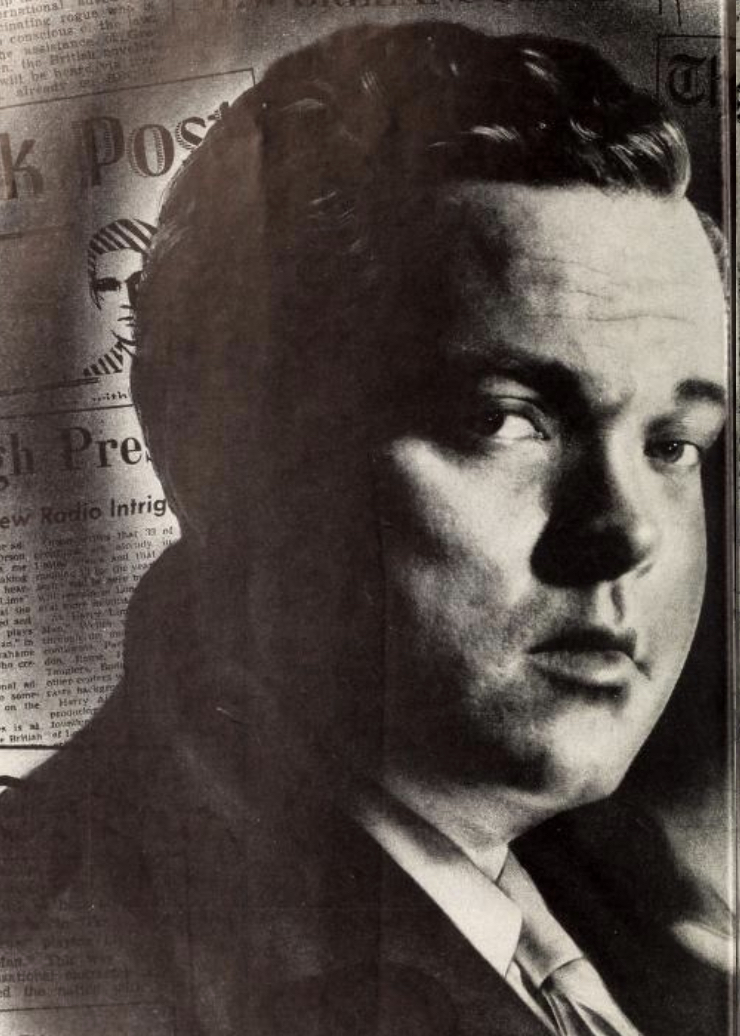
Orson Welles and The Black Museum.

Illustration of Orson Welles 
to advertise The Lives of
Harry Lime
, ca. 1951
Over on Wellesnet, Ray Kelly discusses Orson Welles' role in The Black Museum, an early true-crime radio program based on Scotland Yard cases, and The Adventures of Harry Lime (US title: The Lives of Harry Lime), a radio program based on Welles's shady character in the film The Third Man

Listen to Black Museum episodes here.
Listen to The Lives of Harry Lime episodes here.

Monday, April 11, 2022

Clues 40.1: Historical crime fiction.

Volume 40, no. 1 (2022) of Clues: A Journal of Detection—a theme issue on historical crime fiction guest edited by Rosemary Erickson Johnsen—has been published. The issue abstracts follow below; contact McFarland to order a print copy. 

Update, May 1, 2022. The ebook versions of the issue are now available: Kindle, Nook, Google Play

We are happy to have the essay of professor emeritus Fred Erisman, who was a contributor to the first issue of Clues in 1980. Unfortunately, I do not have an update on our Ukrainian contributor who had to flee her town due to Russian bombing.

Historical Crime Fiction: A Cushion on the Seat
ROSEMARY ERICKSON JOHNSEN (Governors State Univ)
The guest editor of Clues 40.1 on historical crime fiction provides a brief history of related scholarship and discusses post–WWI India-set series by Massey and Mukherjee as representative of emerging trends. She previews the issue's articles on mysteries set in China, India, Latin America, Ukraine, and the United States.

Editor’s Note
CAROLINE REITZ (John Jay College of Criminal Justice–CUNY/CUNY Graduate Center)

Caroline Reitz, the executive editor of Clues, discusses two essays that appear in Clues 40.1 and a new call for submissions on pedagogy.

Rebecca Harding Davis and Early Women’s Detective Fiction
ALICIA MISCHA RENFROE (Middle Tennessee State Univ)

In Peterson’s Magazine, Rebecca Harding Davis developed one of American fiction’s earliest recurring detective figures in several mysteries that foreground the antebellum South as a historical setting. These stories illustrate the genre’s productive intersection with the gothic, destabilize narratives of the past, and complicate the detective’s traditional role in restoring social order. 


Hardball Speaks to Our Hard Times
MARGARET J. OAKES (Furman Univ)

The settings of Sara Paretsky’s Hardball are Chicago’s glittering but decrepit political scene in the late 2000s and an open housing march led by Dr. Martin Luther King Jr. in 1966 that became volatile and violent. Hardball’s instructional text shows the contemporary consequences of systemic racism stemming from Jim Crow laws, the development of police power, and waves of immigration.

Investigating Mexico’s History with Paco Ignacio Taibo II and Detective Héctor Belascoarán Shayne: On Which Side Are You?
PATRICIA VARAS (Willamette Univ)

This essay examines Paco Ignacio Taibo II’s approach to history as an effort to capture or rewrite well-known yet forgotten episodes in Mexican history. By retelling the 1971 Corpus Christi student massacre, channeling Pancho Villa’s ghost, and recovering Aztec artifacts in his novels, he ensures that his readers will not forget this history, providing a controversial insight into today’s Mexico.

Ukrainian Hero and the Habsburg Monarchy:
Retro Visions in Contemporary Ukrainian Historical Detective Fiction
SOFIYA FILONENKO (Berdyansk State Pedagogical Univ)

The series by contemporary Ukrainian writer Bogdan Kolomiychuk presents the adventures of police officer Adam Vistovych in Lviv (aka Lemberg). The author’s depiction of the Austro-Hungarian Empire in the early-twentieth century and its colony—Ukraine—highlights the social, political, national, and historical aspects of the mystery genre.

“The Truth Is Rarely Pure and Never Simple”: 
The Kidnapping of Charley Ross in Fact and Fiction
PHYLLIS M. BETZ (La Salle Univ)

This article compares the differences between Carrie Hagen’s nonfiction reconstruction of the 1874 kidnapping of Charley Ross and Mark Graham’s use of this event in his historical mystery. The main emphasis is how details of the actual event are altered to fit the requirements of each narrative form.

The Transcultural Construction of a Historical Chinese Murder Case: The Ninefold Murder
SABRINA YUAN HAO (Guangdong Univ of Foreign Studies)

This article explores the cross-cultural adaptations of a historical Chinese murder case. Focusing on three key texts published by An He in 1809, Wu Jianren in 1904, and Robert van Gulik in 1958, it investigates the potential of historicity to be used by authors of crime fiction to address concerns of their own times.

Abir Mukherjee’s Historical Crime Novels and the Contemporary Postcolonial
MOLLY SLAVIN (Georgia Inst of Technology)

Abir Mukherjee’s historical crime novels set in the British Raj interrogate colonial structures of violence. The author argues that Mukherjee uses these novels to riff on Golden Age detective novel tropes and communicate knowledge about imperialism, history, and postcolonialism to mass market detective novel readers in the twenty-first-century.

The Cultural Ideology of the Great War–Haunted British Detective in Historical Crime Fiction
MARZENA SOKOŁOWSKA-PARYŻ (Univ of Warsaw)

This article examines the cultural ideology underlying the constructions of the war-haunted detective in the historical crime fiction series by Rennie Airth, Jonathan Hicks, Charles Todd, and Jacqueline Winspear. These (re)imaginings of the Great War demonstrate the capacity of this literary genre to perpetuate the futility myth in the contemporary cultural memory of the 1914–18 British experience.

ESSAYS
Time and Detective Novels: Exploring the Past and the Night in Ian Rankin’s John Rebus Series

IAN R. COOK (Northumbia Univ)
Given that time is an important theme within detective novels, this article explores the portrayal of time in Ian Rankin’s John Rebus series. More precisely, it draws on the concepts of temporality and relationality to critically examine two important temporal dimensions in the series: the past and the night.

Dick Francis and the Fine Arts
FRED ERISMAN (Texas Christian Univ)
Apart from P. D. James with Adam Dalgleish, mystery authors have rarely used an artist as their protagonist. Between 1972 and 2000, Dick Francis wrote seven such books, contrasting the artist’s world with the professional detective’s and exploring ways in which art equips the amateur to be as effective a crime-solving entity as the professional.

REVIEWS
Donald K. Hartman, Ed. The Hypno-Ripper
 ELYSSA WARKENTIN
 (Univ of Manitoba)

Steven Powell, Ed. The Big Somewhere: Essays on James Ellroy’s Noir World
 DEIRDRE CONDIT
 (Virginia Commonwealth Univ)

Janice Allan, Jesper Gulddal, Stewart King, and Andrew Pepper, Eds. The Routledge Companion to Crime Fiction
 ROSA HARO FERNÁNDEZ (Univ of Málaga)

Phyllis M. Betz, Ed. Reading the Cozy Mystery: Critical Essays on an Underappreciated Subgenre
 PAMELA BEDORE (Univ of Connecticut–Avery Point)

Tuesday, September 14, 2021

The return of F. Tennyson Jesse.

F. Tennyson Jesse
In October, the British Library will reprint F. Tennyson Jesse's A Pin to See the Peepshow (1934) as part of its Women Writers series. The novel is based on the Thompson-Bywaters murder case of 1922–23. Jesse—the great-niece of Alfred, Lord Tennyson and a war correspondent, playwright, screenwriter, and novelist—was known for involvement in the series on notable British trials as well as her works with female detective Solange Fontaine.

Monday, June 15, 2020

CFP, Historical Crime Fiction (theme issue of Clues: A Journal of Detection).

Clues has issued a new Call for Proposals for a theme issue on "Historical Crime Fiction" that will be guest edited by Rosemary Erickson Johnsen (Governors State University; author of Contemporary Feminist Historical Crime Fiction). The deadline for proposals is November 1, 2020.

As usual, Clues considers manuscripts on all aspects of mystery, detective, and crime fiction on an ongoing basis, so authors who have a manuscript on a topic that falls outside the Call for Proposals are welcome to submit to Clues Executive Editor Caroline Reitz at any time.


Tuesday, April 23, 2019

Clues 37.1: Canadian Detective Fiction, Nancy Drew, Shelley, Trauma, Dementia, and More.

Volume 37, no. 1 of Clues: A Journal of Detection has been published, which can be purchased from McFarland & Co. (Cree-French Canadian author Wayne Arthurson is on the cover). The abstracts for the issue follow below.

Ebook versions available: Google Play, Nook, Kindle

Introduction / JANICE M. ALLAN (Univ of Salford) The executive editor of Clues discusses the contents of Clues vol. 37, no. 1, including articles on dementia in detective fiction, a Percy Bysshe Shelley poem viewed as a detective story, Wayne Arthurson, Giles Blunt, Gail Bowen, Arthur Conan Doyle, Laurie R. King, Nancy Drew, Ron Rash, Rene Saldana Jr., and Peter Temple.

The Sign of the Four and the Detective as a Disrupter of Order / NATHANAEL T. BOOTH (Huazhong University of Science and Technology, China). Arthur Conan Doyle’s The Sign of the Four (1890) often is read in the context of British imperialism and bourgeois rationality, which stresses the problematic nature of Sherlock Holmes’s activity as a detective. Separated from its imperialist context, the novel shows a Holmes who unsettles (rather than restores) social order.

“I ain’t going to the jailhouse if I can help it”: The Thriller Impulse in Ron Rash’s One Foot in Eden / JIM COBY (University of Alabama in Huntsville). This essay examines how the contemporary Appalachian writer Ron Rash employs the tropes of mystery thrillers—tropes largely ignored in southern fiction—in his novel One Foot in Eden (2002), as he grapples with an increasingly urbanized Appalachia.

René Saldaña Jr.’s Innovations of Children’s Detective Fiction in the Mickey Rangel Series / AMY CUMMINS (University of Texas Rio Grande Valley). René Saldaña Jr.’s Mickey Rangel series (Arte Público, 2009–18) both fulfills and rewrites the conventions of children’s detective fiction. On the south Texas border of the United States, fifth-grade detective Mickey solves cases while facing social problems and unanswered questions, aided by a mysterious Angel as his secret sidekick.

Trauma and Contemporary Crime Fiction / MARY ANN GILLIES (Simon Fraser University, Canada). This article explores the role of trauma in contemporary crime novels by Laurie R. King and Peter Temple. It argues that, as understandings of what constitutes trauma have shifted over the last century, crime fiction has adapted as well, representing trauma in sophisticated and complex ways and, in so doing, mirroring the contemporary preoccupation with it.

The Case of the Missing Memory: Dementia and the Fictional Detective / MARLA HARRIS. This essay explores the challenges of creating a detective with dementia in Mitch Cullin’s A Slight Trick of the Mind (2005), Adele LaPlante’s Turn of Mind (2011) and Emma Healey’s Elizabeth Is Missing (2014). As these metaphysical narratives feature paradoxes of identity, they can help destigmatize this devastating condition.


Monday, June 11, 2018

Clues CFP: "Interwar Mysteries"
(deadline Oct 12, 2018).

The Bat (1926), adapted
from the play by
Mary Roberts Rinehart
and Avery Hopwood
 
A new Call for Papers has been posted for a theme issue of Clues: A Journal of Detection on "Interwar Mysteries: The Golden Age and Beyond." It will be guest edited by University of Leicester's Victoria Stewart (author, Crime Writing in Interwar Britain: Fact and Fiction in the Golden Age, and a previous contributor to Clues). Although the period between the World Wars is known as the Golden Age of traditional mystery fiction, other literary forms such as the hard-boiled subgenre, true crime, and noir emerged that often reflected a grimmer reality. Articles of between 3300 and 6000 words are sought that examine this important crossroads in mystery, detective, and crime fiction, with a deadline of Oct 12, 2018.

Tuesday, March 06, 2018

"Novel Appeal" (1957).

Mary Roberts Rinehart.
NYPL
Claudette Colbert plays author Mary Roberts Rinehart in "Novel Appeal," a 3Dec 1957 episode of Telephone Time that dramatizes Rinehart's part in exonerating a man convicted of murder. Directed by Arthur Hiller, the episode costars John Carradine.

The real-life case involves the 1896 murders on the Herbert Fuller of Captain Charles Nash; his wife, Laura Nash; and August Blomberg, the second mate. Thomas M. C. Bram, the first mate, was convicted of the crimes in a second trial held in 1899 and originally was sentenced to death; his sentence was changed to life imprisonment after a Supreme Court appeal.

According to Rinehart (see "Mary Roberts Rinehart Shows How Truth Is Stranger Than Fiction" and her autobiography My Story), a Pittsburgh lawyer told her about the case, and she subsequently read about it in a magazine for lawyers. Her choice for the perpetrator was the ship's Scandinavian wheel-man, Justus Leopold Westerberg, who was nicknamed Charley Brown. Westerberg had tried to kill his nurse while he was a patient in a mental hospital. A fictionalized version of Brown, Charlie Jones, appears in Rinehart's novel The After House (1913). The After House began serialization in McClure's in June 1913, attracting further interest to the case, and Bram was paroled in August 1913. 

As Reader's Digest editor Fulton Oursler (aka mystery writer Anthony Abbot) relates in The Mystery Bedside Book (ed. John Creasey, 1960), Theodore Roosevelt read The After House and called on Rinehart. Oursler states that Roosevelt concurred with Rinehart's view of the case and wrote President Woodrow Wilson, asking for a pardon for Bram. Wilson granted the pardon in June 1919. Bram went on to captain the ship Alvena and to own a restaurant in Florida.

Monday, November 13, 2017

Exhibition:
"Rogues Gallery—Faces of Crime 1870–1917."

The exhibition "Rogues Gallery: Faces of Crime 1870–1917" is on view until December 1 at Edinburgh's General Register House. It provides a look at early Scottish mugshots and related crime documentation, including items pertaining to the real-life counterpart of Robert Louis Stevenson's Dr. Jekyll.

Monday, May 22, 2017

Upcoming book on historical murder cases.

McFarland's imprint Exposit Books provides a sneak peek at its upcoming book The Trunk That Dripped Blood: Five Sensational Murder Cases of the Early 20th Century by Mark Grossman. Some of the cases involve Emma LeDoux (1906), priest Hans Schmidt (1913), and dentist Arthur Warren Waite (1916).

Monday, September 19, 2016

Murder in song.

University of Kentucky law professor Richard H. Underwood looks at the real-life cases behind ballads featuring murder in Crime Song: True Crime Stories in Southern Murder Ballads. Individuals covered include Frankie Silver, Frankie Bailey (of Frankie and Johnny fame), Delia Green (of Delia's Gone), and Mary Phagan and Leo Frank (of The Ballad of Mary Phagan).  (Thanks to Law & Humanities blog)

Monday, May 23, 2016

Historic images of counterfeiters.

John S. Bell, chief of
the Secret Service (1888–90);
Newark (NJ) police chief (1884)
The Unwritten Record blog of the National Archives highlights historic mugshots of counterfeiters—both men and women—from the Secret Service files in its collections.

Monday, May 09, 2016

"True Crime" exhibition, USC.

Eugene Francois Vidocq, NYPL
On display until May 31 is the exhibition "True Crime" at the USC Libraries, which features "the history of detectives in the popular imagination" and includes a handwritten letter from legendary private investigator Eugene Francois Vidocq and the "black bird" from The Maltese Falcon. (See review of the exhibition in LA Weekly.)

Tuesday, February 16, 2016

The Lee Marvin Show (1963-64).

1963 ad for The Lee Marvin Show
In 1963–64, actor Lee Marvin had a syndicated TV program (also known as The Lawbreakers and Lee Marvin Presents Lawbreaker) in which principals (witnesses, investigators, family members, suspects, etc.) participated in reconstructed crimes, and Marvin provided narration. Star Trek's Gene Roddenberry is listed as screenwriter on the Seattle episodes "The Michael Olds Story" and "Queen Anne Killer Unidentified." Produced by Vernon E. Clark, the program is available on DVD. The episode below features Hartford police officers in a case about a boardinghouse killer with a violent temper. a

Wednesday, July 29, 2015

Judith Flanders's The Invention of Murder on BBC Radio 4.

BBC Radio 4's Book of the Week is offering readings of Judith Flanders's The Invention of Murder: How the Victorians Revelled in Death and Detection and Created Modern Crime. I reviewed the book here for the Washington Independent Review of Books.

Of related interest: Readings are starting of Kate Summerscale's The Suspicions of Mr. Whicher (on the Constance Kent case).

Tuesday, April 29, 2014

Dishonored Lady (1947).

Troubled former magazine editor Hedy Lamarr faces a murder charge in Dishonored Lady (1947, dir. Robert Stevenson), based on the play by Pulitzer Prize winner Margaret Ayer Barnes and her longtime friend, Edward Sheldon, that starred American theater legend Katharine Cornell. Its subject matter is the Madeleine Smith poisoning case of 1857 (featured also in David Lean's Madeleine, 1949). Barnes and Sheldon successfully sued MGM for plagiarism of their play in the studio's film of Letty Lynton (1932)—Marie Belloc Lowndes's version of the Smith case.


Tuesday, September 21, 2010

NLM: Early true crime pamphlets.

Rev. Herbert Hayden,
tried for the 1879 murder
of Mary Stannard. From
The Rev H. H. Hayden:
An Autobiography
(1880)
The latest online exhibition from NLM's History of Medicine Division is "Most Horrible and Shocking Murders: True Crime and Murder Pamphlets in the Collection of the National Library of Medicine." It includes pamphlets from the eighteenth and nineteenth centuries.