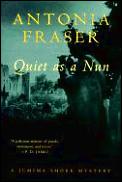
 Lady Antonia Fraser turns 74 today. Well-known for her historical works such as Faith and Treason: The Story of the Gunpowder Plot, The Warrior Queens, and The Weaker Vessel, she also is an accomplished mystery writer with her series featuring journalist Jemima Shore, which began in 1977 with Quiet as a Nun and was adapted into the TV series Jemima Shore Investigates. Fraser has an amazing literary family: her mother is biographer Elizabeth Longford; her brother, nonfiction writer Thomas Pakenham; her sister, novelist Rachel Billington; and yes, she's married to playwright Harold Pinter.
Sunday, August 27, 2006
Happy birthday, Lady Antonia Fraser
 Lady Antonia Fraser turns 74 today. Well-known for her historical works such as Faith and Treason: The Story of the Gunpowder Plot, The Warrior Queens, and The Weaker Vessel, she also is an accomplished mystery writer with her series featuring journalist Jemima Shore, which began in 1977 with Quiet as a Nun and was adapted into the TV series Jemima Shore Investigates. Fraser has an amazing literary family: her mother is biographer Elizabeth Longford; her brother, nonfiction writer Thomas Pakenham; her sister, novelist Rachel Billington; and yes, she's married to playwright Harold Pinter.
Lady Antonia Fraser turns 74 today. Well-known for her historical works such as Faith and Treason: The Story of the Gunpowder Plot, The Warrior Queens, and The Weaker Vessel, she also is an accomplished mystery writer with her series featuring journalist Jemima Shore, which began in 1977 with Quiet as a Nun and was adapted into the TV series Jemima Shore Investigates. Fraser has an amazing literary family: her mother is biographer Elizabeth Longford; her brother, nonfiction writer Thomas Pakenham; her sister, novelist Rachel Billington; and yes, she's married to playwright Harold Pinter.

Friday, August 25, 2006
Happy birthday, John Buchan
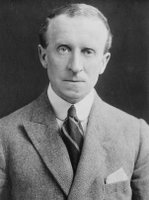 Baron Tweedsmuir, better known as Scottish thriller writer extraordinaire John Buchan, was born on August 26, 1875. He died in 1940 as Governor-General of Canada.
Buchan worked for British intelligence during WWI; served as a member of Parliament; and wrote historical fiction, criticism, poetry, history, and biography. But it is probably for his novel The Thirty-Nine Steps (1915), in which mining engineer Richard Hannay becomes embroiled in espionage, that he is best known because of the Alfred Hitchcock film of 1935 starring Robert Donat and Madeleine Carroll (don't we all remember the chill we felt when Mr. Bad Guy holds up his hand, and we see along with Hannay that he is missing part of a finger).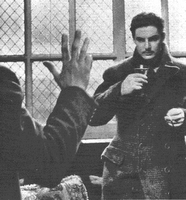
The Thirty-Nine Steps was filmed two additional times, in 1959 starring Kenneth More, and in 1978 with Robert Powell, Karen Dotrice, and David Warner in one of his delicious villainous turns. Powell went on to star in a short-lived Thames television series "Hannay" (1988-89), but the scripts were not based on the other Hannay stories such as Greenmantle (1916), Mr. Standfast (1919), and The Three Hostages (1924). It was rumored that after Hitchcock directed Family Plot that he was considering filming Greenmantle, which I regard as an attempt to return to his roots, but he died before these plans could come to fruition.
Buchan dubbed his thrillers "shockers," which he called "the romance where the incidents defy the probabilities, and march just inside the borders of the possible." He also wrote several novels with lawyer Edward Leithen, such as The Power-House (1913), The Dancing Floor (1926), and Sick Heart River (1941). For more information on Buchan, read Buchan's memoir, Memory Hold-the-Door; John Buchan: The Presbyterian Cavalier by Andrew Lownie; or visit the John Buchan Society Web site, which also has a complete bibliography of his work.
 Baron Tweedsmuir, better known as Scottish thriller writer extraordinaire John Buchan, was born on August 26, 1875. He died in 1940 as Governor-General of Canada.
Buchan worked for British intelligence during WWI; served as a member of Parliament; and wrote historical fiction, criticism, poetry, history, and biography. But it is probably for his novel The Thirty-Nine Steps (1915), in which mining engineer Richard Hannay becomes embroiled in espionage, that he is best known because of the Alfred Hitchcock film of 1935 starring Robert Donat and Madeleine Carroll (don't we all remember the chill we felt when Mr. Bad Guy holds up his hand, and we see along with Hannay that he is missing part of a finger).
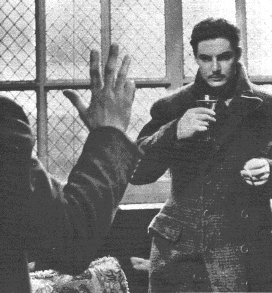
The Thirty-Nine Steps was filmed two additional times, in 1959 starring Kenneth More, and in 1978 with Robert Powell, Karen Dotrice, and David Warner in one of his delicious villainous turns. Powell went on to star in a short-lived Thames television series "Hannay" (1988-89), but the scripts were not based on the other Hannay stories such as Greenmantle (1916), Mr. Standfast (1919), and The Three Hostages (1924). It was rumored that after Hitchcock directed Family Plot that he was considering filming Greenmantle, which I regard as an attempt to return to his roots, but he died before these plans could come to fruition.
Buchan dubbed his thrillers "shockers," which he called "the romance where the incidents defy the probabilities, and march just inside the borders of the possible." He also wrote several novels with lawyer Edward Leithen, such as The Power-House (1913), The Dancing Floor (1926), and Sick Heart River (1941). For more information on Buchan, read Buchan's memoir, Memory Hold-the-Door; John Buchan: The Presbyterian Cavalier by Andrew Lownie; or visit the John Buchan Society Web site, which also has a complete bibliography of his work.
Monday, August 21, 2006
Happy birthday, Anthony Boucher
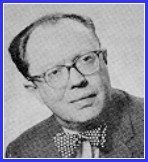 The industrious critic/editor/sci-fi author/mystery writer Anthony Boucher, aka William Anthony Parker White, who gave his name to mystery convention Bouchercon, was born on August 21, 1911. He died in 1968. He received the Edgar Award for mystery criticism in 1946, 1950, and 1953 (go here for volumes of his collected reviews).
His intriguing Rocket to the Morgue, written under the pseudonym of 19th-century murderer H. H. Holmes, features thinly disguised versions of his sci-fi colleagues Hugo Gernsback, Robert Heinlein, and L. Ron Hubbard. His mysteries include locked-room murders The Case of the Solid Key and Nine Times Nine, and puzzle story The Case of the Seven of Calgary. He also wrote scripts for radio series such as Sherlock Holmes and The Casebook of Gregory Hood.
 The industrious critic/editor/sci-fi author/mystery writer Anthony Boucher, aka William Anthony Parker White, who gave his name to mystery convention Bouchercon, was born on August 21, 1911. He died in 1968. He received the Edgar Award for mystery criticism in 1946, 1950, and 1953 (go here for volumes of his collected reviews).
His intriguing Rocket to the Morgue, written under the pseudonym of 19th-century murderer H. H. Holmes, features thinly disguised versions of his sci-fi colleagues Hugo Gernsback, Robert Heinlein, and L. Ron Hubbard. His mysteries include locked-room murders The Case of the Solid Key and Nine Times Nine, and puzzle story The Case of the Seven of Calgary. He also wrote scripts for radio series such as Sherlock Holmes and The Casebook of Gregory Hood.
Sunday, August 20, 2006
Happy birthday, H. P. Lovecraft
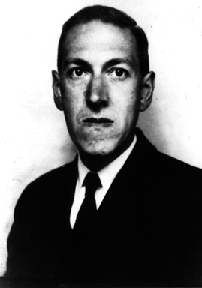 Master of weird fiction H. P. Lovecraft was born on this day in 1890. He died in 1937.
His stories include the Poe-inspired "The Rats in the Walls," "The Dunwich Horror," "The Whisperer in Darkness," and The Case of Charles Dexter Ward. His work inspired authors such as Robert Bloch, Robert E. Howard (creator of Conan the Barbarian), and August Derleth. Several collections of his tales are published by Arkham House. For further details, go here.
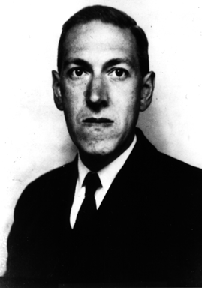 Master of weird fiction H. P. Lovecraft was born on this day in 1890. He died in 1937.
His stories include the Poe-inspired "The Rats in the Walls," "The Dunwich Horror," "The Whisperer in Darkness," and The Case of Charles Dexter Ward. His work inspired authors such as Robert Bloch, Robert E. Howard (creator of Conan the Barbarian), and August Derleth. Several collections of his tales are published by Arkham House. For further details, go here.
Tuesday, August 15, 2006
Happy birthday, Georgette Heyer.
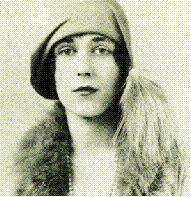 Georgette Heyer, beloved for her lively and meticulously researched Regency romances but also a fine mystery writer, was born on August 16, 1902. She died in 1974.
Heyer actually wrote her mysteries in conjunction with her husband, George Ronald Rougier. A particular favorite of mine is Behold, Here's Poison, with the son and heir who specializes in insulting all his relations, the born-again lady who insists on "testifying" at dinner, and a pseudo-prince who is constantly confused with the family dog (also named Prince). A friend of mine singles out Envious Casca as his favorite, dubbing it "the house party from hell."
A common affliction among Heyerites is reading and rereading her paperbacks until they fall apart, and then one must purchase new copies. My favorites among her Regencies include Cotillion (where Heyer accomplishes a rather neat switch on who we imagine the love interest to be), The Toll Gate (restless ex-soldier finds skullduggery and love in the countryside), and Frederica (bored marquis finds more than he bargained for in a pack of distant relatives).
For more on Heyer, you can read The Private World of Georgette Heyer by fellow novelist Jane Aiken Hodge, and Georgette Heyer: A Critical Retrospective has all sorts of intriguing material, including articles and short stories by Heyer. Go here to learn more about the Yahoogroup that discusses Heyer's work. Malice Domestic Ltd. has selected Heyer as its 2007 Ghost of Honor.
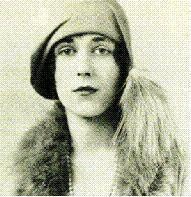 Georgette Heyer, beloved for her lively and meticulously researched Regency romances but also a fine mystery writer, was born on August 16, 1902. She died in 1974.
Heyer actually wrote her mysteries in conjunction with her husband, George Ronald Rougier. A particular favorite of mine is Behold, Here's Poison, with the son and heir who specializes in insulting all his relations, the born-again lady who insists on "testifying" at dinner, and a pseudo-prince who is constantly confused with the family dog (also named Prince). A friend of mine singles out Envious Casca as his favorite, dubbing it "the house party from hell."
A common affliction among Heyerites is reading and rereading her paperbacks until they fall apart, and then one must purchase new copies. My favorites among her Regencies include Cotillion (where Heyer accomplishes a rather neat switch on who we imagine the love interest to be), The Toll Gate (restless ex-soldier finds skullduggery and love in the countryside), and Frederica (bored marquis finds more than he bargained for in a pack of distant relatives).
For more on Heyer, you can read The Private World of Georgette Heyer by fellow novelist Jane Aiken Hodge, and Georgette Heyer: A Critical Retrospective has all sorts of intriguing material, including articles and short stories by Heyer. Go here to learn more about the Yahoogroup that discusses Heyer's work. Malice Domestic Ltd. has selected Heyer as its 2007 Ghost of Honor.
Saturday, August 12, 2006
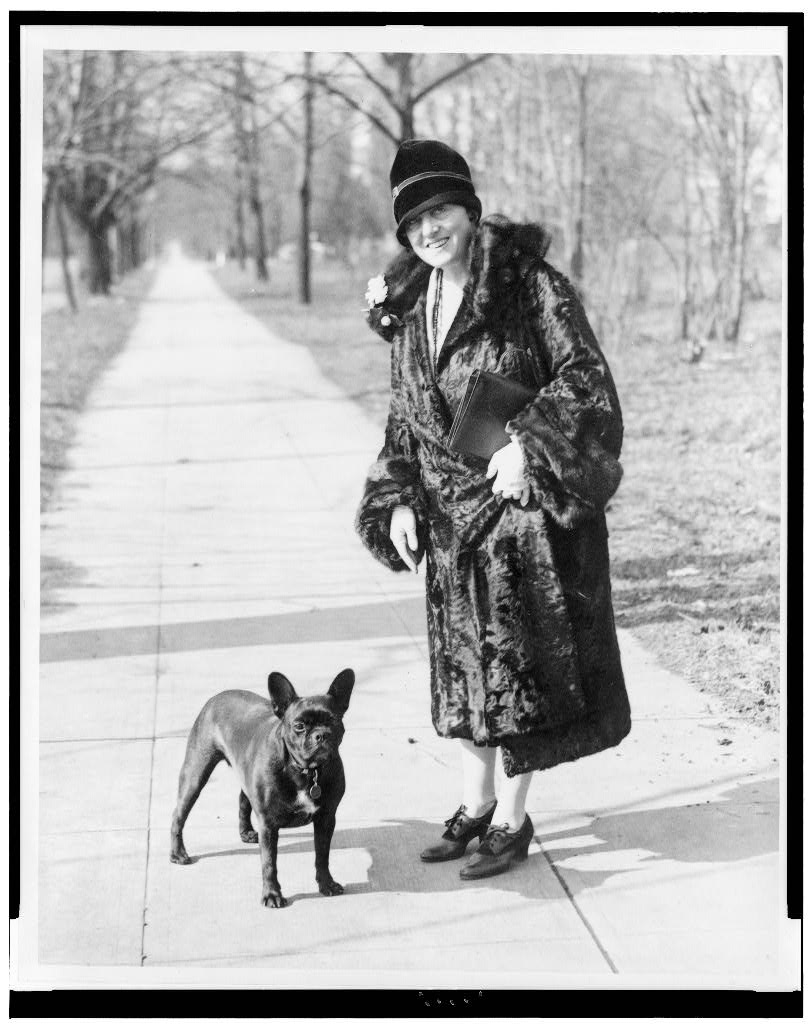 Happy birthday, Mary Roberts Rinehart.
Mary Roberts Rinehart, whose hugely successful mystery career spanned a half-century, would have been 130 today. She is buried in Arlington Cemetery. Undeservedly disparaged for creating the "Had-I-But-Known" approach to mystery writing, she was a writer of great gifts, and her play The Bat grossed over $9 million in the 1920s. I especially recommend The Man in Lower Ten (1909), with its Hitchcockian plot of a bored, staid lawyer who becomes immeshed in murder on a train and a particularly hilarious take on the amateur sleuth. Also take a look at MRR's nonfiction Kings, Queens, and Pawns (1915), her clear-eyed account of visiting the wounded in Belgian and French hospitals during WWI (MRR trained as a nurse) and interviewing the King and Queen of Belgium.
Photo: MRR out with her French bulldog, taken somewhere between 1920 and 1932.
Thursday, August 10, 2006
 Stan Freberg.
 Over on Bill Crider's blog, there was a tribute to comedian Stan Freberg on the occasion of his 80th birthday this week. I've played some Freberg on my radio show "It's a Mystery," such as "Sam Splayed, Detective." On the "It's a Mystery" Web site, I've posted a clip from his 1957 radio show: the classic "St. George and the Dragonet." Go here to listen.
Friday, July 21, 2006
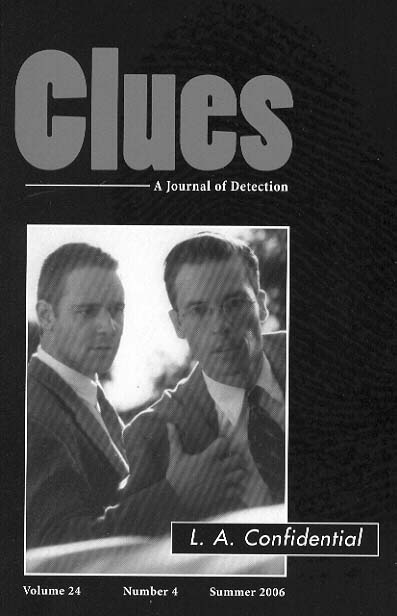 CLUES Summer 06 issue published
The summer 06 issue of CLUES: A Journal of Detection has been published, featuring articles on James Ellroy's LA Quartet, Raymond Chandler's portrayal of psychiatrists in his work, Lady Macbeth in detective fiction, the Nell Bray novels by Gillian Linscott, and Reginald Hill's Good Morning, Midnight. For further details, go here.
Tuesday, July 11, 2006
 Martha Gellhorn.
I love biographies, especially literary ones, and Caroline Moorehead's Gellhorn: A Twentieth-Century Life is a fascinating one. Gellhorn's considerable literary gifts were often overshadowed by her five-year marriage to Hemingway.
Best known for her reporting on the Spanish Civil War, she was profoundly and permanently affected by seeing Dachau during her reporting on WWII. The section on her reporting on the Vietnam War is particularly interesting. The most fun bit deals with Gellhorn's participation in the Mary McCarthy-Lillian Hellman row in 1980 (Gellhorn had traveled on the same ship as Hellman en route to the Spanish Civil War and disliked her). For a piece for The Paris Review (edited by George Plimpton), Gellhorn coined a new word, apocryphiar, or one who fabricates a story with himself or herself as hero, and discounted Hellman's account (in Pentimento) of life in Madrid at the time, calling Hellman's words "whoppers." She said in a letter to a friend, "[Hellman had] used the Spanish war as a garment to drape herself in."
Moorehead also has edited a volume of Gellhorn's letters; more information on that here.
Sunday, July 02, 2006
 Frank Langella.
Superman Returns is now in theaters, with New Jersey's own Frank Langella (below) as Perry White.
How many remember him as Sherlock Holmes (at left; photo by Jan A. Wein) in the Williamstown Theater Festival of 1977?
Yes, I'm a fan, a result of growing up with a relative of Langella and being fortunate enough to meet him on a few occasions. Perhaps you have your own favorite performance: Langella as the uber-evil chief of staff in Dave? As the title role in Dracula? As William S. Paley in Good Night, and Good Luck? As the roguish sidekick of Ron Moody in Mel Brooks's The Twelve Chairs? In any of his Tony-winning performances (he's won two and been nominated four times)?
As a villain, he can't be beat, but I'm most fond of his turn in the Noel Coward part in "Design for Living," which co-starred the late Raul Julia and Jill Clayburgh, at Circle in the Square in New York. In it, he displayed exemplary comic timing.
Saturday, July 01, 2006
 The Cat Who Went to Paris.
 Audiobooks have kept me sane when navigating Washington, DC-area traffic (as many people seem to get behind the wheel after having frontal lobotomies). A surprise treasure was Peter Gethers's The Cat Who Went to Paris. Former publisher Gethers relates his journey as a confirmed cat hater to cat lover when he adopts Norton, a Scottish fold feline (a breed where the ears are folded down on the cat's head); takes Norton wherever he goes, including restaurants; and watches the intelligent Norton captivate the world. One of the many amusing tales is Gethers's comparison of Spain and France. The Spanish border guards were insistent that Norton needed papers to enter the country (this was a simple day trip). On Gethers's reentry into France, the French guards only had this to say: "Bonjour, Monsieur le Chat. Ca va?" ("Hello, Mr. Cat. How's it going?"). The Cat Who Went to Paris is no cutesy cat book but a captivating memoir in the tradition of Peter Mayle's Toujours Provence.
Friday, June 30, 2006
 In Praise of Purple Prose
Okay, I confess. I really love those 19th- and early 20th-century thrillers with their often overwrought prose. I'm a fan of Louisa May Alcott's work in this area, including A Long, Fatal Love Chase, in which the heroine disguises herself as a man, the man who falls in love with her is a priest, and Alcott, presciently, deals with stalking. Perhaps it's genetic; my sister confesses to an undying devotion for that epitome of villains, Sax Rohmer's Dr. Fu Manchu (insert hissing sounds here).
So imagine my delight when reading an upcoming article for the fall 06 issue of CLUES: A Journal of Detection on the mysteries of Arthur Machen (1863-1947), an inspiration for H.P. Lovecraft and a member of Oscar Wilde's set. Machen's villains are so evil that they dissolve into protoplasm; to wit, in "The White Powder":
"Upon the floor was a dark and putrid mass, seething with corruption and hideous rottenness, neither liquid nor solid, but melting and changing before our eyes, and bubbling with unctuous oily bubbles like boiling pitch. And out of the midst of it I saw two burning points like eyes. "
Now, how can anyone possibly resist that?
You can learn more about Machen at the Friends of Arthur Machen Web site. For etexts of his work, go here.
Monday, June 12, 2006
 Happy Birthday, Dorothy L. Sayers
Dorothy L. Sayers was born on June 13, 1893. She could speak Latin, French, and German by the time she was sixteen; she broke new ground when she wrote a play about Jesus, "The Man Who Would Be King," for BBC broadcast (produced by Val Gielgud, John's brother); she was the translator on an acclaimed version of Dante's Divine Comedy. Oh, yeah, and she created aristocratic sleuth Lord Peter Wimsey.
Wimsey appearances on DVD with Ian Carmichael ("The Unpleasantness at the Bellona Club"; "The Nine Tailors"; "Murder Must Advertise"; "Five Red Herrings," "Clouds of Witness") and Edward Petherbridge ("Strong Poison," "Have His Carcase," "Gaudy Night") can be found here.
Sunday, June 04, 2006
On the Air.
 Here is a fetching photo of me in action on "It's a Mystery," my weekly show featuring interviews with mystery authors and others in the field, old-time radio mystery plays, and music from mystery TV shows and movies, on WEBR in Fairfax, VA. WEBR is broadcast on cable TV in Fairfax and Reston, VA and Webcast on Mondays at 11A ET here. J. Kingston Pierce gave the show a nice mention on his blog "The Rap Sheet" (see "Foyle'd Again" on my interview with Foyle's War creator Anthony Horowitz).
Using my previous experience as a newscaster on University of Maryland's WMUC (the oldest college radio station in the country), I created "It's a Mystery" because I was disturbed by the dearth of broadcast outlets for mystery authors unless their name was something like Clark, Patterson, or Grisham. I felt certain that readers wanted to hear about authors beyond the bestseller list, and I was concerned about the lack of knowledge out there about classic mystery writers such as Mary Roberts Rinehart, Charlotte Armstrong, and Edgar Wallace. I found written pearls of wisdom by now deceased writers such as A. A. Fair (aka Erle Stanley Gardner, the creator of Perry Mason) and thought, "Wouldn't it be wonderful to have an audio archive of mystery authors talking about their work before (God forbid) they leave us?" "It's a Mystery" is a small step in that direction.
WEBR is a noncommercial, public access station, where you can hear everything from early American rock 'n roll of "The Professor Rocks" and all Beatles music on "The Magical History Tour" to progressive rock, folk music, and talk shows such as the magazine format "American Odyssey"---all without paying for satellite radio. The producers are all volunteers.
To listen to the radio promo for "It's a Mystery," click here.
To listen to past author interviews, go here.
And you can listen here to a short excerpt from the theme from the 1968 TV show "Judd for the Defense," starring Carl Betz (playing a lawyer modeled on F. Lee Bailey). The theme was composed by Star Trek's Alexander Courage.
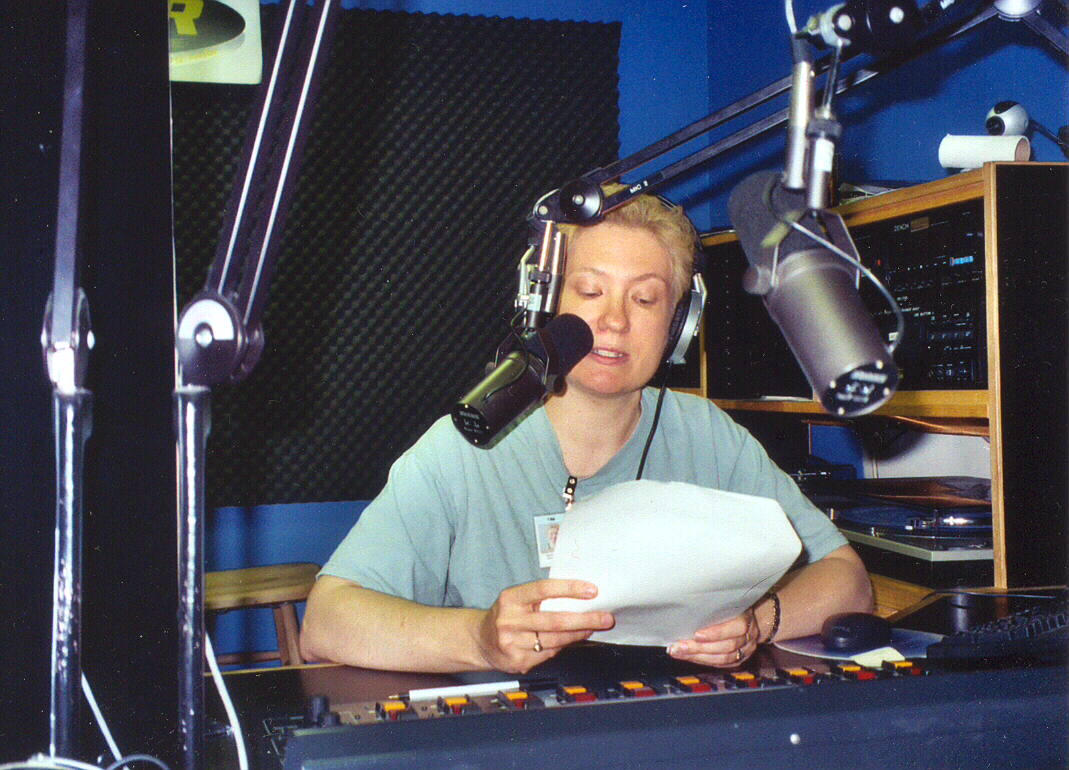 Here is a fetching photo of me in action on "It's a Mystery," my weekly show featuring interviews with mystery authors and others in the field, old-time radio mystery plays, and music from mystery TV shows and movies, on WEBR in Fairfax, VA. WEBR is broadcast on cable TV in Fairfax and Reston, VA and Webcast on Mondays at 11A ET here. J. Kingston Pierce gave the show a nice mention on his blog "The Rap Sheet" (see "Foyle'd Again" on my interview with Foyle's War creator Anthony Horowitz).
Using my previous experience as a newscaster on University of Maryland's WMUC (the oldest college radio station in the country), I created "It's a Mystery" because I was disturbed by the dearth of broadcast outlets for mystery authors unless their name was something like Clark, Patterson, or Grisham. I felt certain that readers wanted to hear about authors beyond the bestseller list, and I was concerned about the lack of knowledge out there about classic mystery writers such as Mary Roberts Rinehart, Charlotte Armstrong, and Edgar Wallace. I found written pearls of wisdom by now deceased writers such as A. A. Fair (aka Erle Stanley Gardner, the creator of Perry Mason) and thought, "Wouldn't it be wonderful to have an audio archive of mystery authors talking about their work before (God forbid) they leave us?" "It's a Mystery" is a small step in that direction.
WEBR is a noncommercial, public access station, where you can hear everything from early American rock 'n roll of "The Professor Rocks" and all Beatles music on "The Magical History Tour" to progressive rock, folk music, and talk shows such as the magazine format "American Odyssey"---all without paying for satellite radio. The producers are all volunteers.
To listen to the radio promo for "It's a Mystery," click here.
To listen to past author interviews, go here.
And you can listen here to a short excerpt from the theme from the 1968 TV show "Judd for the Defense," starring Carl Betz (playing a lawyer modeled on F. Lee Bailey). The theme was composed by Star Trek's Alexander Courage.
Monday, May 22, 2006
 Spring 06 issue of CLUES.
The spring 2006 issue of CLUES: A Journal of Detection focuses on Hispanic detective fiction. This includes articles on UT-Austin's own Rolando Hinojosa (see photo at left), the mystery novel in Argentina, contemporary Central American neoliberal noir, the contemporary Spanish detective novel, and authors Carlos Gonzalez Reigosa and Javier Otaola. Further details here.
Monday, April 17, 2006
 Dove Award.
Margaret Kinsman (the executive editor of Clues) and I were gobsmacked to receive the George N. Dove Award on April 14th. The award, sponsored by the Popular Culture Assn's Detective/Mystery Caucus, recognizes "outstanding contributions to the serious study of mystery and crime fiction"; past recipients include distinguished author-critic H.R.F. Keating and the late John M. Reilly (editor of Twentieth Century Crime and Mystery Writers).
Isn't the dove in the policeman's hat wonderfully fetching?
Sunday, April 09, 2006
Mark Salzman.
Some time has certainly passed since the last post (work, writing, and weekly radio show are the usual culprits).
I have a few authors on a select list where I will read anything they write, regardless of subject matter. The sadly late Laurie Colwin was one of these; the biographer A. Scott Berg is another (and if you look at the C-Span tape of Berg's 2001 appearance at the National Book Festival, you'll see me in the audience). It is because of the sterling quality of their prose.
Mark Salzman is another author in my personal pantheon. His particular strength is memoir, with his most well-known work as Iron and Silk, his narrative about teaching English and learning martial arts in China, and the hilarious Lost in Place: Growing Up Absurd in Suburbia, which includes an irresistible account of the young Salzman running around in white pajamas and a Kung Fu wig as an aspiring martial arts master in tony suburban Connecticut.
So there would seem to be a huge jump to his novel Lying Awake, about a cloistered nun, which might make the brow wrinkle a bit as to the potential for conflict. But Salzman pulls it off, featuring an intriguing look at the inner workings of a religious community and the grappling of the main character with a profound choice between her life and her relationship with God.
I've recently finished True Notebooks, Salzman's return to memoir with his account of teaching writing in juvenile detention in LA, where the violent crimes of his students include murder. I thought, "How will Salzman be able to make me understand such people?" But he does, through relating classroom conversations, showing the point of view of guards and volunteers within juvenile hall, and reprinting the often astonishingly eloquent pieces that the students produce. The reader sees the remorse of some perpetrators and the more hardened attitude of others. He squarely addresses the Norman Mailer-Jack Henry Abbott issue (Mailer mentored the writing of Abbott, a convicted murderer, who went on to kill again), displays his own stumbles in handling his students, and deals honestly with the brutality of their crimes. All in all, this is an eye-opening look at life behind bars for young people, told in Salzman's crystal-clear prose.
Some time has certainly passed since the last post (work, writing, and weekly radio show are the usual culprits).
I have a few authors on a select list where I will read anything they write, regardless of subject matter. The sadly late Laurie Colwin was one of these; the biographer A. Scott Berg is another (and if you look at the C-Span tape of Berg's 2001 appearance at the National Book Festival, you'll see me in the audience). It is because of the sterling quality of their prose.
Mark Salzman is another author in my personal pantheon. His particular strength is memoir, with his most well-known work as Iron and Silk, his narrative about teaching English and learning martial arts in China, and the hilarious Lost in Place: Growing Up Absurd in Suburbia, which includes an irresistible account of the young Salzman running around in white pajamas and a Kung Fu wig as an aspiring martial arts master in tony suburban Connecticut.
So there would seem to be a huge jump to his novel Lying Awake, about a cloistered nun, which might make the brow wrinkle a bit as to the potential for conflict. But Salzman pulls it off, featuring an intriguing look at the inner workings of a religious community and the grappling of the main character with a profound choice between her life and her relationship with God.
I've recently finished True Notebooks, Salzman's return to memoir with his account of teaching writing in juvenile detention in LA, where the violent crimes of his students include murder. I thought, "How will Salzman be able to make me understand such people?" But he does, through relating classroom conversations, showing the point of view of guards and volunteers within juvenile hall, and reprinting the often astonishingly eloquent pieces that the students produce. The reader sees the remorse of some perpetrators and the more hardened attitude of others. He squarely addresses the Norman Mailer-Jack Henry Abbott issue (Mailer mentored the writing of Abbott, a convicted murderer, who went on to kill again), displays his own stumbles in handling his students, and deals honestly with the brutality of their crimes. All in all, this is an eye-opening look at life behind bars for young people, told in Salzman's crystal-clear prose.
Monday, February 13, 2006
 Brief Encounter (1945).
It seems appropriate for Valentine's Day to mention a great film, Brief Encounter, which was based on a short play by one of my favorite writers, Noel Coward, and is often considered one of the great British movies.
This film of thwarted love has it all: beautifully staged scenes by David Lean; wonderful performances by Celia Johnson and Trevor Howard; and a compelling honesty in its writing and approach. (Let's try to forget the attempt to rewrite it with a different ending, Falling in Love, starring Robert DeNiro and Meryl Streep [1984]. A huge disappointment.)
Go here for the British Film Institute's site on Brief Encounter. And here is an interesting site on Brief Encounter's train station locations.
Sunday, January 29, 2006
Winter '06 CLUES published.
Just out is the winter 2006 issue of CLUES: A Journal of Detection (the only US scholarly journal on mystery fiction; I am its managing editor). Its truly international lineup of articles focus on Irish mystery writer Ken Bruen, American mystery writer Barbara Wilson, British mystery author Minette Walters, the German noir film Happy Birthday, Turke!, and the French polar film. Further details here.
Just out is the winter 2006 issue of CLUES: A Journal of Detection (the only US scholarly journal on mystery fiction; I am its managing editor). Its truly international lineup of articles focus on Irish mystery writer Ken Bruen, American mystery writer Barbara Wilson, British mystery author Minette Walters, the German noir film Happy Birthday, Turke!, and the French polar film. Further details here.
Saturday, January 21, 2006
Christianna Brand.
I've been reading with much pleasure Buffet for Unwelcome Guests: The Best Short Mysteries of Christianna Brand (ed. Francis M. Nevins Jr. and Martin H. Greenberg, 1983). Brand (1907?-1988) is probably best known for her superb WWII-era novel Green for Danger, which was made into a film in 1946 with Alastair Sim as Inspector Cockrill and Trevor Howard as Dr. Barnes (go here for the British Film Institute's site on Green for Danger). In addition, the upcoming movie Nanny McPhee with Emma Thompson is based on Brand's Nurse Matilda books for children, and she received a screenwriting credit on Secret People (1952), an early Audrey Hepburn film.
Brand's centenary is approaching (in 2007, although her friend and fellow scribe Robert Barnard says that she often fudged her birthdate and so her exact centenary may be a cause for doubt). The short stories in Buffet are terrific examples of Brand's razorlike prose and mastery of the twist ending and include a few with Inspector Cockrill. I was especially struck by "Murder Game," in which a man relates a case of mysterious death to someone who wants to figure out the culprit; Brand's numerous twists to the plot left me lost in admiration for her skill.
Brand once said, "[. . .C]rime novels are my real interest. I write them for no reason more pretentious than simply to entertain. I try to include, within the regulation puzzle form, good and interesting characterization, dialogue, and background [. . .]." The stories in Buffet more than amply fulfill these stated goals.
I've been reading with much pleasure Buffet for Unwelcome Guests: The Best Short Mysteries of Christianna Brand (ed. Francis M. Nevins Jr. and Martin H. Greenberg, 1983). Brand (1907?-1988) is probably best known for her superb WWII-era novel Green for Danger, which was made into a film in 1946 with Alastair Sim as Inspector Cockrill and Trevor Howard as Dr. Barnes (go here for the British Film Institute's site on Green for Danger). In addition, the upcoming movie Nanny McPhee with Emma Thompson is based on Brand's Nurse Matilda books for children, and she received a screenwriting credit on Secret People (1952), an early Audrey Hepburn film.
Brand's centenary is approaching (in 2007, although her friend and fellow scribe Robert Barnard says that she often fudged her birthdate and so her exact centenary may be a cause for doubt). The short stories in Buffet are terrific examples of Brand's razorlike prose and mastery of the twist ending and include a few with Inspector Cockrill. I was especially struck by "Murder Game," in which a man relates a case of mysterious death to someone who wants to figure out the culprit; Brand's numerous twists to the plot left me lost in admiration for her skill.
Brand once said, "[. . .C]rime novels are my real interest. I write them for no reason more pretentious than simply to entertain. I try to include, within the regulation puzzle form, good and interesting characterization, dialogue, and background [. . .]." The stories in Buffet more than amply fulfill these stated goals.
Subscribe to:
Posts (Atom)