There is a new call for papers for a Clues: A Journal of Detection theme issue on the work of mid–twentieth-century American female crime writers. The guest editors are Erin A. Smith (University of Texas at Dallas) and Clare Rolens (Palomar College). Proposals are due 15 January 2027, with full essays of 5,000 to 6,000 words due 1 August 2027.
Featuring History of Mystery/Detective Fiction and Other Literary Ramblings of Elizabeth Foxwell
Showing posts with label Helen Eustis. Show all posts
Monday, August 03, 2026
Monday, July 18, 2022
Even more on Simenon, Maigret, etc.
As I noted in 2019, a writer in the Budapest Times (now identified as Christopher Osterberg) has been working his way methodically through the large oeuvre of Georges Simenon and publishing reviews of these works. The latest entries:
- Betty
- The Blue Room
- Death Threats and Other Stories
- The Hand
- The Little Man from Archangel
- The Mahé Circle
- The People Opposite
- The Strangers in the House
- The Venice Train
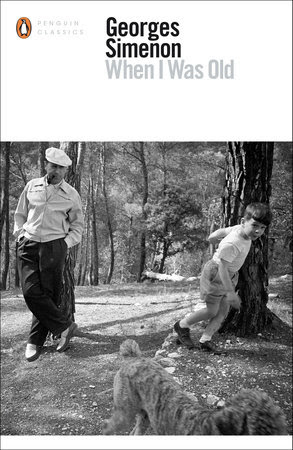
- When I Was Old (featuring Simenon's thoughts on aging, justice, and other topics. Note that the Penguin edition was translated by mystery writer Helen Eustis)
Labels:
Georges Simenon,
Helen Eustis,
Inspector Maigret
Monday, April 23, 2018
Dorothy B. Hughes's classic mystery library.
![]() |
| Claude Rains and Edward Norris in They Won't Forget (1937), adaptation of Ward Greene's Death in the Deep South |
Hughes did not include any works by Arthur Conan Doyle and Erle Stanley Gardner (although Hughes would publish a biography of Gardner), explaining that in the case of these and some other authors (such as Ellery Queen), their body of work constitutes the classic rather than a single book. Hughes's choices for her classic mystery library are the following:
- Eric Ambler, A Coffin for Dimitrios. "a hunt-and-search story with a background of the Near East leading to Paris"
- Edgar Box [Gore Vidal], Death in the Fifth Position. " . . . the world of the ballet, presented with perception and verisimilitude"
- Vera Caspary, Laura. "an enviable creator of plots which twist and turn and startle."
- Raymond Chandler, Farewell, My Lovely. "his making of poetry out of the tawdry was indeed something unforgettable"
- Agatha Christie, The Murder of Roger Ackroyd and And Then There Were None. "two classic books"
- Len Deighton, The Ipcress File. "Deighton . . . devised a new style."
- Helen Eustis, The Horizontal Man. "a true academic background against which the tragicomedy is played."
- William Faulkner, Intruder in the Dust. "a mystery sensation"
- Michael Gilbert, Close Quarters. "he has built a cathedral and its close, and has peopled it with verisimilitude."
- Graham Greene, Brighton Rock. "two sad insignificant persons revealed in their small moment of significance."
- Ward Greene, Death in the Deep South. "a classic of the regional and one of the first dealing with ethnic problems"
- Dashiell Hammett, The Maltese Falcon. "a classic romantic-adventure"
- H. F. [Gerald] Heard, A Taste for Honey. "Another of the instant classics"
- Francis Iles [Anthony Berkeley Cox], Before the Fact."a book whose plot must remain secret"
- Charlotte Jay [Geraldine Halls], Beat Not the Bones. "the primitive culture of Africa in collision with the 20th century"
- John le Carre [David Cornwell], The Spy Who Came in from the Cold. "tragic power"
- Meyer Levin, Compulsion. "a classic of major proportion"
- Marie Belloc Lowndes, The Lodger. " . . . a true crime story, in fiction form"
- Ngaio Marsh, Death of a Fool. "breath-taking"
- E. Phillips Oppenheim, The Great Impersonation. "a landmark"
- Dorothy L. Sayers, The Nine Tailors. "background became not just background, but important"
- Josephine Tey [Elizabeth MacKintosh], The Daughter of Time. "Simply written but brilliant in premise and performance."
Ad for They Won't Forget (from the film pressbook)
Thursday, November 05, 2015
Ten Years of The Bunburyist.
![]() |
| Elizabeth Foxwell in an investigative mode. |
Sadly I have needed to reduce the number of posts per month because of my publishing and job commitments, as well as the work entailed for my new blog on American women in World War I.
The following are the top 10 posts of The Bunburyist based on views. Do you have other favorites?
The Top 10 Posts on The Bunburyist, 2005–15:
10. "Fri Forgotten Books: Charlotte Armstrong's The Chocolate Cobweb (1948)"
9. "Clues 31.2: Collins, Harvey, Highsmith, Parker, South African and Spanish crime fiction"
8. "Cornerstone: The Horizontal Man, by Helen Eustis"
7. "Fri Forgotten Books: The Mystery of Central Park, by Nellie Bly (1889)." After I posted about this rare book and mentioned it on a women's studies listserve, the Library of Congress digitized its copy and made it available via the Internet Archive.
6. "A Jury of Her Peers" (on the first U.S. female jurors)
5. "Dr. Barbara Mertz, Trailblazer"
4. "The Dude Abides: The Big Lebowski and The Big Sleep"
3. "Cornerstone: Re-Enter Sir John (1932)"
2. "'The Grave Grass Quivers,' by MacKinlay Kantor (1931)"
1. "Dozen Best Detective Stories Ever Written"
Thursday, January 29, 2015
RIP, Helen Eustis (1916–2015).
Helen Eustis, Edgar winner for The Horizontal Man (1946) and the last living author on the Haycraft-Queen Cornerstone list of essential mysteries, died on January 11 at age 98. She was also known for The Fool Killer (1954, adapted for a 1965 film with Anthony Perkins). Eustis was a member of the Yaddo arts colony, a friend of Carson McCullers and Truman Capote, and a noted translator and short story writer. Her son, Adam Genkaku Fisher, has posted on her passing here. (Thanks to Sarah Weinman for the tip.)
Wednesday, November 05, 2014
Nefarious professors:
BYU's guide to (fictional) campus crime.
![]() |
| Edith (Lent) Taylor, Buffalo creative writing teacher and author of The Serpent under It (1973) Swarthmore Class of 1935 |
The expected authors are covered (e.g., Robert Barnard, Amanda Cross, Helen Eustis, Michael Innes, Jane Langton, Dorothy L. Sayers), as well as lesser known names and authors with unexpected academic milieus (e.g., Helen McCloy, David Frome, Emma Lathen, Richard and Frances Lockridge, Peter Lovesey, Gladys Mitchell, S. S. Van Dine, Hillary Waugh).
Tuesday, August 05, 2014
Remembering Dorothy Salisbury Davis: "House of Masks" (1952).
MWA Grand Master Dorothy Salisbury Davis died on August 3 at age 98. The June 1952 Suspense episode "House of Masks" (based, I think, on Davis's A Town of Masks) features Geraldine Fitzgerald resenting the interference of her sister in her life and promoting the presence of a shady gardener.
With the passing of Davis, there remains only one living writer on the Haycraft-Queen Cornerstone List: Helen Eustis.
Saturday, December 31, 2011
Happy 95th birthday, Helen Eustis.
![]() |
| Edward Albert in The Fool Killer (1965) |
Thursday, December 31, 2009
Happy birthday, Helen Eustis.
Helen Eustis—author of the Edgar-winning The Horizontal Man (1946) and The Fool Killer (1954), friend of Carson McCullers, and ex-wife of Smith poet-professor Alfred Young Fisher—turns 92 today in New York City.About the image: Anthony Perkins in The Fool Killer (1965, dir. Servando Gonzalez)
Saturday, September 12, 2009
Helen Eustis, continued.
My various posts about Edgar winner Helen Eustis (see here and here) have generated some inquiries, including contesting the report that she had passed away. I have heard now from Adam Genkaku Fisher, her son: Helen Eustis is still with us at age 91.About the image: Deck chair featuring the Penguin cover of Helen Eustis's The Horizontal Man, available from Art Meets Matter.
Tuesday, September 08, 2009
Little orphan book.
Part of the discussion of the Google Book Settlement is its treatment of orphan works—those where the copyright holder or his/her kin cannot be located—which, by and large, has been cast as a heroic effort to return out-of-print books to the mainstream.
I'm wondering how much diligence goes into tracking down rightsholders before a work is declared "orphaned" (I note the onus in the WSJ article on rightsholders to register works, rather than active searching for rightsholders). My skepticism is fueled by correspondence I receive as managing editor of Clues: A Journal of Detection. Because we publish on both classic and contemporary mystery authors—sometimes the journal is one of the few reliable sources on certain writers and we publish some unique pieces, such as one in the debut issue by John D. MacDonald—and because I have posted on this blog about neglected mysteries and authors, I receive inquiries about rightsholders. One example was in response to my post about The Horizontal Man's Helen Eustis; the individual was interested in turning Eustis's The Fool Killer into a graphic novel. Eustis's Contemporary Authors entry lists a son; a Google search revealed his full name; I found the blog for Eustis's son, Adam Genkaku Fisher, here. Total time I spent in obtaining this information? 5 minutes.
In addition, reprint requests for Clues articles have come my way—initially directed to the wrong people. And these requests come from the supposed digital rights experts.
So perhaps my skepticism about adequate research on rightsholders is justified as we grapple with members of a generation who believe if something isn't online, it doesn't exist and individuals who have a too-casual approach to copyright and are all too eager to profit from the hard work of authors without providing proper compensation.
Also note: This interesting article from the Chronicle of Higher Education regarding errors in Google's book search function.
I'm wondering how much diligence goes into tracking down rightsholders before a work is declared "orphaned" (I note the onus in the WSJ article on rightsholders to register works, rather than active searching for rightsholders). My skepticism is fueled by correspondence I receive as managing editor of Clues: A Journal of Detection. Because we publish on both classic and contemporary mystery authors—sometimes the journal is one of the few reliable sources on certain writers and we publish some unique pieces, such as one in the debut issue by John D. MacDonald—and because I have posted on this blog about neglected mysteries and authors, I receive inquiries about rightsholders. One example was in response to my post about The Horizontal Man's Helen Eustis; the individual was interested in turning Eustis's The Fool Killer into a graphic novel. Eustis's Contemporary Authors entry lists a son; a Google search revealed his full name; I found the blog for Eustis's son, Adam Genkaku Fisher, here. Total time I spent in obtaining this information? 5 minutes.
In addition, reprint requests for Clues articles have come my way—initially directed to the wrong people. And these requests come from the supposed digital rights experts.
So perhaps my skepticism about adequate research on rightsholders is justified as we grapple with members of a generation who believe if something isn't online, it doesn't exist and individuals who have a too-casual approach to copyright and are all too eager to profit from the hard work of authors without providing proper compensation.
Also note: This interesting article from the Chronicle of Higher Education regarding errors in Google's book search function.
Wednesday, December 31, 2008
Happy birthday, Helen Eustis.
Helen Eustis, best known for the Edgar-winning academic mystery The Horizontal Man (1946), was born today in Cincinnati in 1916. She followed up The Horizontal Man with The Fool Killer (1954; film 1965), about an ax murderer, and a collection of short stories, The Captains and the Kings Depart (1949). One story, "A Winter's Tale," appeared in EQMM in April 1986. She also was known for her work as a translator and for a children's book, Mr. Death and the Redheaded Woman (1983).
Eustis was the second wife of Smith poet-professor Alfred Young Fisher (whose first wife was M.F.K. Fisher); versions of him and fellow professor Newton Arvin appear in The Horizontal Man.
Labels:
Alfred Young Fisher,
Helen Eustis,
Newton Arvin
Friday, December 05, 2008
"New" author discoveries.
As J. Kingston Pierce tagged me over on The Rap Sheet for my author discoveries in 2008, I list some of them below, albeit with the caveat that this year, I made a concerted effort to read books I'd heard about as must-reads without regard to their original release date.
- Nicholas Blake, Thou Shell of Death. A sad but splendid mystery that deals with the aftermath of World War I, written by the pseudonymous British poet laureate Cecil Day Lewis.
- James Gould Cozzens, The Just and the Unjust. A wise and penetrating novel by a Pulitzer Prize winner on how a murder trial affects the residents of a small Pennsylvania town, in both political and personal terms.
- Helen Eustis,The Horizontal Man. Although its once ground-breaking twist ending may not surprise modern readers, this roman à clef about Smith College by a friend of Carson McCullers is still a terrific read.
- Frances [Newbold] Noyes Hart, The Bellamy Trial. Based on the Hall-Mills murder case that also inspired Fitzgerald's The Great Gatsby, this accomplished novel by a relative of Edith Wharton portrays the circus atmosphere of a sensational trial through the eyes of witnesses and journalists, including the myriad ways in which circumstances may not be what they seem.
- Drew Gilpin Faust, This Republic of Suffering: Death and the American Civil War. A wrenching look by the president of Harvard at how the survivors on both sides of the Civil War dealt with the impact of more than a half-million casualties—particularly appropriate in this CSI age as to the efforts to identify and repatriate remains. (Go here for a Faust presentation at the National Archives.)
Labels:
Drew Gilpin Faust,
Helen Eustis,
James Gould Cozzens
Tuesday, September 30, 2008
Cornerstone: The Horizontal Man by
Helen Eustis.
Note: This continues my occasional series on the Haycraft-Queen Cornerstone list (those mysteries deemed essential by Howard Haycraft and Ellery Queen).
Although the modern reader may guess the perpetrator, the twist ending was unique when the book was published. The title comes from lines of Auden's: "Let us honour if we can/The vertical man/Though we value none/But the horizontal one" (see Collected Poems 2, 1927–1932).
Eustis (1916–2015) attended Smith College, which seems clear is the prototype for the college in the novel. Barry Werth (in The Scarlet Professor 125) discusses models of gay professor Newton Arvin and poet Alfred Fisher (Eustis's one-time husband; he had divorced food writer M.F.K. Fisher in 1938 before marrying her) that appear in The Horizontal Man. Eustis also published The Fool Killer (1954) and short stories (collected in The Captains and the Kings Depart, 1949, and she received an O. Henry Prize for "An American Home," 1947). She also translated Georges Simenon's When I Was Old and was a friend of Carson McCullers.
Below: Listen to an excerpt of The Horizontal Man read by Barbara Rosenblat.
Shall I pretend overwhelming grief at the death of a man whom I knew for two months? Shall I ignore the fact that for me his murder has become an invaluable social and professional asset? — Helen Eustis, The Horizontal Man 80.An amorous poet-professor is murdered in his lodgings and a slew of faculty members and students are the likely suspects in Helen Eustis's Edgar-winning The Horizontal Man (1946). Among the possible culprits are a sexually rapacious divorcee; a rabbitty, repressed English instructor; a literary lion with a nervous breakdown in his background; and a hysterical student with a crush on the victim. Engaging aspects of the novel include the hotbed of intrigue that is a college campus and the unlikely detective team of a smart, plump female student and a young male reporter with a line of snappy patter.
Although the modern reader may guess the perpetrator, the twist ending was unique when the book was published. The title comes from lines of Auden's: "Let us honour if we can/The vertical man/Though we value none/But the horizontal one" (see Collected Poems 2, 1927–1932).
Eustis (1916–2015) attended Smith College, which seems clear is the prototype for the college in the novel. Barry Werth (in The Scarlet Professor 125) discusses models of gay professor Newton Arvin and poet Alfred Fisher (Eustis's one-time husband; he had divorced food writer M.F.K. Fisher in 1938 before marrying her) that appear in The Horizontal Man. Eustis also published The Fool Killer (1954) and short stories (collected in The Captains and the Kings Depart, 1949, and she received an O. Henry Prize for "An American Home," 1947). She also translated Georges Simenon's When I Was Old and was a friend of Carson McCullers.
Below: Listen to an excerpt of The Horizontal Man read by Barbara Rosenblat.
Labels:
academic mysteries,
Helen Eustis,
The Horizontal Man
Subscribe to:
Posts (Atom)