Showing posts with label E. Phillips Oppenheim. Show all posts

Monday, August 17, 2020

Seattle Public Library's Thrilling Tales podcast.

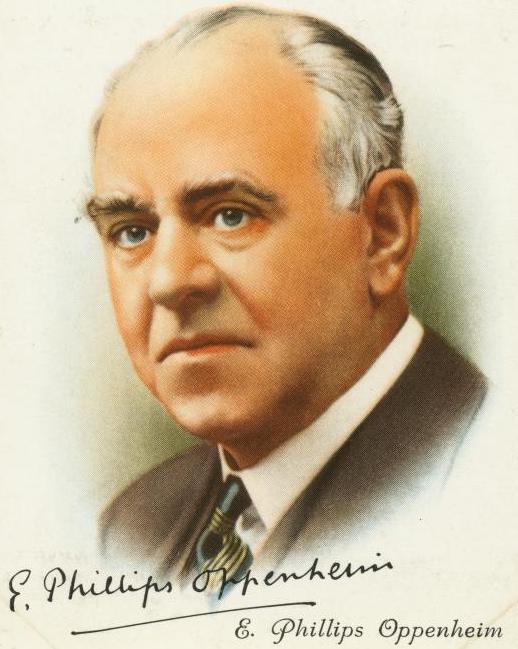
E. Phillips Oppenheim. NYPL

The Seattle Public Library offers the Thrilling Tales podcast with short story readings (in both audio and transcription form). One episode features E. Phillips Oppenheim's "The Reckoning with Otto Schreed" (1922).

Monday, April 23, 2018

Dorothy B. Hughes's classic mystery library.


Claude Rains and Edward Norris in They Won't Forget (1937),
adaptation of Ward Greene's Death in the Deep South
In the 13 Nov 1977 Los Angeles Times, author-critic Dorothy B. Hughes made 23 selections for a classic mystery library. Hughes defined a classic as "a book to which you return over and again ... primarily because for you it satisfies a hunger for the felicity of beauty and craft..."(N3). For Hughes, "style is the most important element in any mystery, let alone a classic" (N3).

Hughes did not include any works by Arthur Conan Doyle and Erle Stanley Gardner (although Hughes would publish a biography of Gardner), explaining that in the case of these and some other authors (such as Ellery Queen), their body of work constitutes the classic rather than a single book. Hughes's choices for her classic mystery library are the following:
  • Eric Ambler, A Coffin for Dimitrios. "a hunt-and-search story with a background of the Near East leading to Paris"
  • Edgar Box [Gore Vidal], Death in the Fifth Position. " . . . the world of the ballet, presented with perception and verisimilitude"
  • Vera Caspary, Laura. "an enviable creator of plots which twist and turn and startle."
  • Raymond Chandler, Farewell, My Lovely. "his making of poetry out of the tawdry was indeed something unforgettable"
  • Agatha Christie, The Murder of Roger Ackroyd and And Then There Were None. "two classic books"
  • Len Deighton, The Ipcress File. "Deighton . . . devised a new style."
  • Helen Eustis, The Horizontal Man. "a true academic background against which the tragicomedy is played."
  • William Faulkner, Intruder in the Dust. "a mystery sensation"
  • Michael Gilbert, Close Quarters. "he has built a cathedral and its close, and has peopled it with verisimilitude."
  • Graham Greene, Brighton Rock. "two sad insignificant persons revealed in their small moment of significance."
  • Ward Greene, Death in the Deep South. "a classic of the regional and one of the first dealing with ethnic problems"
  • Dashiell Hammett, The Maltese Falcon. "a classic romantic-adventure"
  • H. F. [Gerald] Heard, A Taste for Honey. "Another of the instant classics"
  • Francis Iles [Anthony Berkeley Cox], Before the Fact."a book whose plot must remain secret"
  • Charlotte Jay [Geraldine Halls], Beat Not the Bones. "the primitive culture of Africa in collision with the 20th century"
  • John le Carre [David Cornwell], The Spy Who Came in from the Cold. "tragic power"
  • Meyer Levin, Compulsion. "a classic of major proportion"
  • Marie Belloc Lowndes, The Lodger. " . . . a true crime story, in fiction form"
  • Ngaio Marsh, Death of a Fool. "breath-taking"
  • E. Phillips Oppenheim, The Great Impersonation. "a landmark"
  • Dorothy L. Sayers, The Nine Tailors. "background became not just background, but important"
  • Josephine Tey [Elizabeth MacKintosh], The Daughter of Time. "Simply written but brilliant in premise and performance."
  • Ad for They Won't Forget (from the film pressbook)


Monday, December 18, 2017

In praise of Oppenheim.

E. Phillips Oppenheim
Melody of the Redeeming Qualities blog pens an appreciation of the E. Phillips Oppenheim works The Long Arm of Mannister (1909; "he likes to take his victims to dinner and toy with them") as well as Mr. Billingham, the Marquis and Madelon (1927; "[e]veryone drinks lots of champagne cocktails"). She especially likes private inquiry agent and baroness Clara Linz of Advice Limited (1936; "most of her work has the potential to cause scandals and international financial crises"). Although she is no fan of The Deliberate Detective (1914; "this book is Bad"), she declares, "you can pry The Great Impersonation from my cold, dead hands."

Monday, December 04, 2017

"As Far as They Had Got"
(round-robin mystery, 1911).


"There, in the middle of the upper panel, was the print of a human hand—in blood!"
Arthur Morrison, "As Far as They Had Got" 1911
Long before the Detection Club's round-robin mystery The Floating Admiral (1931), there was "As Far as They Had Got," which appeared in the September 1911 issue of The Strand magazine and included Richard Marsh (The Beetle), Arthur Morrison (Martin Hewitt, Investigator), and spy novel pioneer E. Phillips Oppenheim among its authors. The Strand dubbed it a "Follow-My-Leader Story." Most of the authors provided a footnote that outlined an ending to the story, but they did not have access to these proposed endings as they wrote their particular section.

The story centers on two men out for sail on a river who become ensnared in the aftermath of the Moorgate Street robbery. The story takes a number of twists and turns.

Monday, June 30, 2014

E. W. Hornung's unpublished diary.

Libraries are always so interesting: a man's bookcase is something more interesting than the man himself, sometimes the one existing portrait of his mind.
—E. W. Hornung, The Crime Doctor

E. W. Hornung. NYPL
In English Literature in Transition, Edmund G. C. King (Open Univ) discusses the reading experience of British and Scottish soldiers in WWI, with particular attention to the wartime activities of E.W. Hornung (creator of Raffles, gentleman thief).

Sadly, Oscar—the only child of Hornung and Constance, Arthur Conan Doyle's sister—was killed in action at Ypres in July 1915. Seeking solace, Hornung served as a YMCA volunteer during the war—working in a canteen; maintaining a wartime library for soldiers in Arras, France, and a postwar one in the vicinity of Cologne, Germany; looking for friends of Oscar; and hoping to encounter Conan Doyle's serviceman son, Kingsley (who died of flu in 1918). His Notes of a Camp Follower on the Western Front (1919) tells about his war experiences and provides insight into what servicemen were reading (popular authors included Mary Elizabeth Braddon, Edward Bulwer Lytton, Marie Corelli, Anthony Hope, and E. Phillips Oppenheim). Interestingly, he reports only one reader for Wilkie Collins's The Woman in White. Pertaining to the works of his brother-in-law, he wrote, "Messrs. Holmes and Watson were the most flourishing of old firms, and Gerard the only Brigadier taken seriously at my counter" (Notes 141). His own output was not ignored:
"When I was up the line," said one of my friends, bubbling over with a compliment, "a chap said to me, 'You know that old—that—that elderly man who runs the Rest Hut? He's the author of Raffles.'"
Adds Hornung in mock outrage, "Elderly! One would as lief be labelled Virtuous or Discreet" (Notes 144–45). Hornung died of pneumonia in 1921 at 54, hardly an advanced age.

King relates that Hornung kept a diary between December 1917 and March 1918 that took the format of letters to his wife. He drew on this diary to write Notes, but King indicates that the diary reveals more about Hornung's reasons for war service than Notes does. Hornung's friend Shane Chichester preserved a typescript of the diary, which is now in the University of Birmingham's Cadbury Research Library along with other papers. King also provides a heart-warming glimpse of Hornung at work via the World War I memoir of Carlos Paton Blacker, Oscar's Eton classmate who became a noted psychiatrist.

King's article follows "The A. J. Raffles Stories Reconsidered: Fall of the Gentleman Ideal" by Jeremy Larance from the first 2014 issue of English Literature in Transition.

Wednesday, June 04, 2014

Coming from U-Chicago Press:
Oppenheim, Westlake.

The arrival of the fat fall catalog from University of Chicago Press indicated that some goodies are in store for mystery fans:
  • New paperback editions of spy fiction and thriller pioneer E. Phillips Oppenheim's The Great Impersonation (1920) and The Spy Paramount (1935). Both are out in September, distrib. for the British Library.

Photo from The Great Impersonation (1935),
starring Edmund Lowe and Valerie Hobson

Monday, February 04, 2013

Mystery reading by Justice Holmes and friends.

He had just discovered [E. Phillips] Oppenheim and had been revelling in the world of international intrigue into which Oppenheim had transplanted him.

—1932 research material on Oliver Wendell Holmes Jr. by Mark DeWolfe Howe
Oliver Wendell Holmes Jr.,
ca. 1924. Library of Congress,
Prints and Photographs Div.
Justice Sonia Sotomayer and Justice Ruth Bader Ginsburg's fondness for Nancy Drew has precedence on the Supreme Court. Harvard Law School Library's impressive digital project on Supreme Court Justice Oliver Wendell Holmes Jr. sheds further light on his mystery reading (Holmes once confessed his "ignoble liking" for detective stories to British jurist Sir Frederick Pollock). In one letter, he states, "I like what I have read of John Dickson Carr—(author of The Lost Gallows)" [1931]. An inventory of Holmes's library after his death in 1935 lists John Buchan's Greenmantle (1916) and The Three Hostages (1924), Dashiell Hammett's Red Harvest (1929), Oppenheim's A Prince of Sinners (1903) and Prodigals of Monte Carlo (1926), Dorothy L. Sayers's Have His Carcase (1932), and Edgar Wallace's The Man at the Carlton (1931). He also had a copy of Anna Katharine Green's The Leavenworth Case (1878, part of the Haycraft-Queen list of essential mysteries) with the following inscription by the author: "To Justice Oliver Wendell Holmes with birthday congratulations from Anna Katharine Green Rohlfs. Buffalo, March, 1926."

Some of Holmes's friends were equally enthusiastic about mysteries. In one letter, his British Marxist-socialist friend Harold Laski notes Freeman Wills Crofts's Inspector French's Greatest Case (1925), "which I commend warmly to you if it comes your way" and later urges Holmes to read Crofts's The Cask (1920; both books are on the Haycraft-Queen list). In another letter, Laski expresses appreciation for Mary Davies and the Manor of Ebury by Charles T. Gatty; in yet another letter, he recommends Philip MacDonald's The White Crow (1928) and The Rasp (1924; the latter is on the Haycraft-Queen list).

Pollock sent Holmes a list of his recommended detective stories, with a note by the names of Sayers and Agatha Christie that stated, "anything by either of these writers may be presumed to be good." Pollock's list included Margery Allingham, G. D. H. Cole, R. Austin Freeman, Ronald A. Knox, Anthony Rolls, Henry Wade, and Victor L. Whitechurch. It appears that Holmes did not need Pollock's prompting regarding Christie, as evidenced by the following passage from Some Table Talk of Mr. Justice Holmes and the Mrs. (1935): "Mrs. Agatha Christie may be pleased some day to know that at this moment [May 1933] she was sharing his attention and his praise with Aristotle."
Wednesday, December 05, 2012

Spies in fiction on SpyCast.

William Le Queux,  NYPL
In this podcast, University of Toronto professor Wesley Wark and International Spy Museum historian Mark Stout discuss the history of spy fiction, including mention of William Le Queux, E. Phillips Oppenheim, Erskine Childers (author of The Riddle of the Sands, 1903), Graham Greene, Peter Cheyney, Ian Fleming, and John le Carre.

Monday, March 07, 2011

Steal this book.

As the October 15, 1922, Library Journal reported in "Favorite Books of the Lightfingered," the books of mystery writers were the most
Sax Rohmer, from the
New York Tribune,
Apr 18, 1920
popular ones taken from the Grand Rapids Public Library, along with those of adventure and western authors. Among those most popular with thieves:

Zane Grey, including 3 copies of Rainbow Trail (1915)

E. Phillips Oppenheim

• Mary Roberts Rinehart, Amazing Interlude (1918) and More Tish (1921)

Sax Rohmer, The Golden Scorpion (1919; "a galloping, breath-taking yarn" according to its advertisements)

Thursday, June 24, 2010

Author portraits at Sotheby's.

Among other results, the June 17th auction at Sotheby's resulted in $5,000 for a signed pen-and-ink portrait of Arthur Conan Doyle;  a whopping $98,500 for an inscribed pen-and ink portrait of F. Scott Fitzgerald; and $2500 for a lot of inscribed British and Irish author portraits, which included G. K. Chesterton and E. Phillips Oppenheim.
About the image: E. Phillips Oppenheim, NYPL

Wednesday, March 24, 2010

Stark House reprints Oppenheim's
The Amazing Judgment (1897).

Happy to see that Stark House Press has reissued E. Phillips Oppenheim's hard-to-find novel The Amazing Judgment (1897) and Mr. Laxworthy's Adventures (1913); according to this review in the August 9, 1913, issue of New Zealand's Evening Post, the latter "holds the anxious and unwavering attention of the reader throughout." Oppenheim (1866–1946) was a favorite author of President Woodrow Wilson and Supreme Court Justice Oliver Wendell Holmes Jr., as well as an inspiration for the thrillers of John Buchan.

About the image: E. Phillips Oppenheim, NYPL

Friday, July 18, 2008

Woodrow Wilson, mystery fan.

Woodrow Wilson, 28th president of the United States, was quite the mystery fan. "I read detective stories to forget," he wrote to Nancy Saunders Toy in December 1914, "as a man would get drunk!" He added in Eugene C. Brooks's Woodrow Wilson as President (1916), “There are blessed intervals when I forget by one means or another that I am President of the United States. One means by which I forget is to get a rattling good detective story, get after some imaginary offender and chase him all over…” (530).

Authors and works mentioned by scholars as Wilson favorites include Joseph Smith Fletcher, Mary Roberts Rinehart, and E. Phillips Oppenheim's The Great Impersonation (1920). Wrote Christopher Morley in The Ironing Board (1949), “I remember Mr. Wilson, after leaving the White House, telling me he couldn’t find enough really readable detective stories. So I sent him my precious Fugitive Sleuth [by Hulbert Footner]” (168).

Tuesday, July 15, 2008

Justice Holmes, mystery fan.

“The last few days my secretary has been away and I have taken the opportunity to read some detective stories for which I have an ignoble liking.”
Justice Oliver Wendell Holmes Jr. to Frederick Pollock, August 16, 1931, The Essential Holmes, ed. Richard Posner (Chicago: U of Chicago P, 1992) 19.

“…Truth be damned—give me [E. Phillips] Oppenheim.”
Justice Oliver Wendell Holmes Jr. (commenting on Theodore Dreiser) to Felix Frankfurter, November 12, 1932, Holmes and Frankfurter: Their Correspondence, 1912–1934, ed. Robert M. Mennell and Christine L. Compson (Hanover: UP of New England, 1996) 273.

Monday, October 22, 2007

Happy birthday to the "Prince of Storytellers."

E. Phillips Oppenheim, often called the father of the thriller and "the Prince of Storytellers," was born today in 1866. He wrote 150 novels, starting off in 1887 with Expiation, and inspired fellow writer John Buchan. His immense success with works that combined espionage, romance, and mystery supported a luxurious lifestyle on the Riviera.

According to Michael Korda's Making the List, Oppenheim first hit the U.S. bestseller list in 1918 with The Pawns Count. His best known work is probably The Great Impersonation (1920), in which the reader is uncertain if the main character is a nasty enemy spy or a good guy until the end. His detective works include The Cinema Murder (1917); Nicholas Goade, Detective (1927); General Besserley's Puzzle Box (1935); Advice Limited, featuring sleuthing baroness Clara Linz (1935); and Curious Happenings to the Rooke Legatees (1937). I liked The Adventures of Joseph P. Cray (1925), in which the ex-YMCA volunteer Cray confronts and usually bests con artists and World War I profiteers. Oppenheim died in 1946.

The Great Impersonation was filmed in 1935 and 1942 and dramatized for radio in 1949. Go here to see a list of films of other Oppenheim works. Secrets and Sovereigns, a collection of Oppenheim's lively short stories, is available from Stark House Press.