
Monday, June 20, 2011
Happy 81st birthday, Catherine Aird.

Thursday, June 16, 2011
Happy birthday, Isabelle Holland.
 |
| Mel Gibson in The Man without a Face |
Aldington appears in A Death at St. Anselm's (1984), Flight of the Archangel (1985), A Lover Scorned (1986), A Fatal Advent (1989), and The Long Search (1990). Holland's The Man without a Face (1972) was adapted as a 1993 film with Mel Gibson.
Wednesday, June 15, 2011
New painting of Colin Dexter.
The Oxford Mail discusses the first portrait painting of Morse creator Colin Dexter. It was produced by actress Celia Montague, who appeared in the "Twilight of the Gods" episode of Inspector Morse.
Tuesday, June 14, 2011
Collection of pulp covers on view in NYC.
 | |
| "Blood on My Doorstep" by Rafael De Soto for New Detective Magazine Jul 1949. Part of the Robert Lesser Collection |
Monday, June 13, 2011
Honoring Hitchcock composer Bernard Herrmann.

Herrmann's distinguished career includes scores for The Bride Wore Black, Cape Fear, Citizen Kane, Jane Eyre, North by Northwest, On Dangerous Ground, Psycho, Vertigo, and Taxi Driver. A June 29 celebration is planned by the WQXR program Movies on the Radio, and concerts of Herrmann's works are scheduled for this month in places such as Bristol (UK), Frankfurt, Munich, Rio de Janeiro, and San Francisco. (Hat tip to Silva Screen)
Thursday, June 09, 2011
Ctr for Fiction: Peter Straub on writing.

Wednesday, June 08, 2011
Anna Massey on Hitchcock.
 |
| Anna Massey in Frenzy |
Tuesday, June 07, 2011
Chester Himes and Doubleday.
 |
| Chester Himes, by Carl Van Vechten, 1946. LOC Prints & Photographs Div. |
Monday, June 06, 2011

Friday, June 03, 2011
The periodic table of storytelling.
 |
| An essential element in ComputerSherpa's Periodic Table of Storytelling |
Thursday, June 02, 2011
"Bond is particularly anxious ... [re] weapons [of] Russian agents."
 |
| Ian Fleming, NYPL |
Update. Guardian Books blog on "James Bond's Changing Incarnations," including a link to the 1962 Fleming essay "How to Write a Thriller."
Wednesday, June 01, 2011
Cold war exhibition, RAF Museum.

Tuesday, May 31, 2011
Conan Doyle and war.
 |
| Conan Doyle in uniform from The Sketch Jan 1902 |
Monday, May 30, 2011
The last full measure.
 |
| George M. Cohan, NYPL |
• "Over There," by George M. Cohan, perf. Nora Bayes, 1917.
• "Address at Hoboken on return for burial of 5,212 American soldiers, sailors, marines, and nurses," by President Warren G. Harding, 1921. ("Many sons and daughters made the sublime offering and went to hallowed graves as the nation's defenders.")
• Lincoln's Gettysburg address, perf. Harry E. Humphrey, 1914.
• "Semper fidelis march," perf. Sousa's Band, 1904.
• "Anchors Aweigh," perf. U.S. Marine Band, 1921.
• "Private Tommy Atkins," perf. Victor Military Band, 1914.
• "It's a Long Way to Tipperary," perf. Victor Military Band, 1914.
• "The Laddies Who Fought and Won," perf. Harry Lauder, 1917.
• "Oh, How I Hate to Get Up in the Morning," perf. Arthur Fields, 1918.
Wednesday, May 25, 2011
Forsyth's The Day of the Jackal at 40.
 |
| Edward Fox in The Day of the Jackal (dir. Fred Zinnemann, 1973) |
Tuesday, May 24, 2011
Westminster Detective Library: Help requested.
 |
| Harriet Prescott Spofford, n.d. Library of Congress, Prints and Photographs Div. |
Among the goodies currently online:
• "My Mysterious Neighbors" by Mrs. M[ary]. A[ndrews]. Denison (1858). Massachusetts-born author of the humorous (and successful) That Husband of Mine (1874); married to Charles Wheeler Denison, editor of the antislavery journal The Emancipator. "My blood curdled. Was I living day by day next to a murderer—to a brace of murderers?"
• Various pieces by Charles Dickens, including "Two 'Detective' Anecdotes" (1851)
• "The Trailor Murder Mystery" (1846) by Abraham Lincoln. "[T]he Postmaster at Springfield [IL] received a letter . . . stating that William [Trailor] had returned home without Fisher, and was saying, rather boastfully, that Fisher was dead, and had willed him his money, and that he had got about fifteen hundred dollars by it. The letter further stated that William’s story and conduct seemed strange..."
• "A Story of Circumstantial Evidence" (1834) by Daniel O'Connell.
"... the prisoner was called on for his defence. He called—to the surprise of everyone—the murdered man."
• "In a Cellar" (Atlantic Monthly, 1859) by Maine-born Harriet Prescott Spofford. Important early detective story by a US female writer
Panek and Bendel-Simso hope to have at least 150 more pieces online before the fall. They also welcome comments, clues to finding additional stories, and volunteer editors to assist in all areas of the project. Contact the editor here.
Monday, May 23, 2011
Penelope Keith as Agatha Raisin, BBC Radio 4 Extra.

Sunday, May 22, 2011
Smithsonian: Christie's home, Christie on film.
Smithsonian magazine assesses Christie screen adaptations such as And Then There Were None with Louis Hayward and Barry Fitzgerald (1945); Love from a Stranger with Basil Rathbone (1947, version of
"Philomel College"); Murder She Said (1961, adaptation of 4:50 from Paddington) with Margaret Rutherford as Miss Marple and Joan Hickson, the future Miss Marple; and The Alphabet Murders with Tony Randall (1965, adaptation of The ABC Murders). It also covers her Devon house Greenway. (Hat tip to Karen Jackson)
 |
| Margaret Rutherford, left, and Joan Hickson in Murder She Said |
Thursday, May 19, 2011
"Dick Tracy in B-Flat" with Bob Hope;
Knight's "Death Blew Out the Match."
 |
| Bob Hope, NYPL |
Wednesday, May 18, 2011
Lord Peter Wimsey on BBC Radio 4 Extra.
 |
| Ian Carmichael as Lord Peter Wimsey in Clouds of Witness (dir. Hugh David, 1972) |
Tuesday, May 17, 2011
Yaffe, Asimov, et al. on the importance of libraries.
 |
| Frederic Dannay (aka Ellery Queen), left, and James Yaffe, 1943 Library of Congress, Prints & Photographs Division |
E. B. White, who wrote, "Books hold most of the secrets of the world"; and mystery writer-playwright-screenwriter James Yaffe, who wrote, "Through books we can realize, in part, our wild ambitions." The collection of responses has been digitized and can be found here. (Hat tip to Letters of Note)
Monday, May 16, 2011
Latest Dove Award winners:
P. D. James, Catherine Ross Nickerson.
During the April 2011 Popular Culture Association conference the PCA's Detective/Mystery Caucus announced its latest George N. Dove Award recipients for contributions to the serious study of mystery and crime fiction: P. D. James and Emory University's Catherine Ross Nickerson (the latter the author of The Web of  Iniquity: Early Detective Fiction by American Women, 1998, and editor of the Cambridge Companion to American Crime Fiction, 2010). Past winners of the Dove Award include H. R. F. Keating, Crippen & Landru's Douglas G. Greene, University at Albany professor-author Frankie Y. Bailey, and yours truly. For further information on the Dove Award, including details on the award citations to James and Nickerson, contact Marty S. Knepper, Morningside College.
 Iniquity: Early Detective Fiction by American Women, 1998, and editor of the Cambridge Companion to American Crime Fiction, 2010). Past winners of the Dove Award include H. R. F. Keating, Crippen & Landru's Douglas G. Greene, University at Albany professor-author Frankie Y. Bailey, and yours truly. For further information on the Dove Award, including details on the award citations to James and Nickerson, contact Marty S. Knepper, Morningside College.
Friday, May 13, 2011
Eric Ambler's Topkapi on BBC Radio 4 Extra.

Wednesday, May 11, 2011
The Avengers after 50 years.

Tuesday, May 10, 2011
Fine Books & Collections: Lovecraft's RI hangouts.
 |
| Providence Athenaeum ca. 1900. Library of Congress, Prints & Photographs Div. |
H. P. Lovecraft (such as the Providence Athenaeum) in this piece in the May issue of Fine Books & Collections, which also discusses the question of Lovecraft's first book.
Monday, May 09, 2011
Happy birthday, Rudolph Fisher.
 |
| New York City, 1924. From left to right: Langston Hughes, Charles S. Johnson, E. Franklin Frazier, Rudolph Fisher, Hubert T. Delaney. NYPL. |
Sunday, May 08, 2011
Happy birthday, Edmund Wilson.
 |
| Edmund Wilson, ca. 1936. NYPL. |
Friday, May 06, 2011
Fri Forgotten Bks: Murder in the Mist by Zelda Popkin (1940).
 |
| Zelda Popkin, from her autobiography Open Every Door (1956) |
—Zelda Popkin, Murder in the Mist 143
As May is Jewish American Heritage Month, I chose for this week's forgotten books Murder in the Mist by Zelda Popkin, daughter of Lithuanian Jewish immigrants, who wrote in her autobiography, "I have found being a Jew attractive and interesting" (26).
New York department store detectives Mary Carner and Christopher Whittaker are on their honeymoon when they check into a Massachusetts tourist hotel and find the body of an artist's model. The model's small daughter insists a witch killed her mother; Mary is more interested in word of a spurned lover; a jealous wife; and a new, younger boyfriend. Surrounded by self-centered artists, oddball guests, and gossipy staff, Mary and Chris piece together the story of a sad life, with Mary stating "I see murder as a struggle for possession" (234).
Mary has no problem dressing down an incompetent chief of police but regards her own detecting talents modestly: "My severest critics tell me that I just sit and wait for clues to drop into my lap. They feel I should go chasing around like Perry Mason or pontificate about little gray cells like Monsieur Poirot. But I'm not a story-book detective. I'm a thief spotter" (232). The lively prose (Chris has a tendency to say "God damn" and provides a hilarious commentary on art appreciation in one scene), a well-constructed puzzle, and keen insight into character keep the reader turning the pages.
The remarkable Zelda Popkin (1898–1983) was the first female general assignment reporter for the Wilkes-Barre [PA] Times-Leader at age 16. She wrote a standalone, So Much Blood (1944), and five mysteries with Mary Carner: Death Wears a White Gardenia (1938), Time Off for Murder (1940), Murder in the Mist (1940), Dead Man's Gift (1941), and No Crime for a Lady (1942). Popkin's A Death of Innocence (1971) was adapted as a CBS TV movie in 1971 and starred Shelley Winters as the mother of a murder suspect. Her best-known books are probably The Journey Home (1945), about a serviceman returning from World War II, and Small Victory (1947), one of the earliest U.S. novels dealing with the Holocaust. She assisted in rescuing Jews from the Nazis, worked for the Red Cross in occupied Germany, witnessed the desperate plight of displaced persons, and reported that a food parcel was given to the wife of the ill dancer Nijinsky. Quiet Street (1951) reflects her visit to the strife-torn Holy Land where her sister lived.
Wednesday, May 04, 2011
U.S. writers on Time covers.
 |
| John P. Marquand, from The Rotarian (Aug 1949) |
Has a writer ever been selected as Time's Person of the Year? I can't recall.
Tuesday, May 03, 2011
Law professor: Law students can learn from detective stories.
When lawyers are not being villainized in popular culture, they are often portrayed as having many of the same admirable traits as a shrewd detective.In "Detecting Doctrines: The Case Method and the Detective Story" (Yale Journal of Law & the Humanities 23.2 [2011], 101–48), U-Toronto law professor Simon Stern suggests that the detective story
— Simon Stern, "Detecting Doctrines" 101
 |
| Illustration of Randolph Mason by Dan Sayre Groesheck, from Melville Davisson Post's "The Corrector of Destinies" Pearson's Magazine Feb 1907 |
Monday, May 02, 2011
New book on Collins and Caspary.

Thursday, April 28, 2011
Carnegie Mellon's Posner Collection.
 |
| "I clapped a pistol to his head." Illust. Sidney Paget The Adventures of Sherlock Holmes |
• The Adventures of Sherlock Holmes, first ed. (1892), by Arthur Conan Doyle, illus. Sidney Paget
• The Memoirs of Sherlock Holmes, first ed. (1894), by Arthur Conan Doyle, illus. Sidney Paget
• The Strange Case of Dr. Jekyll and Mr. Hyde, limited ed. (1952), by Robert Louis Stevenson, illus. Edward A. Wilson
• The Time Machine: An Invention (1895), by H. G. Wells (dedicated to W. E. Henley)
Wednesday, April 27, 2011
Poe Museum exhibition, "The Birth of Mystery."
 |
| Edgar Allan Poe, 1848. Library of Congress, Prints and Photographs Division |
Tuesday, April 26, 2011
Tribute to Ernie Kovacs.
 |
| The legendary Nairobi Trio |
Monday, April 25, 2011
Graphic novel version, The Sign of the Four.

Thursday, April 21, 2011
Cornell to preserve early accounts of U.S. trials.
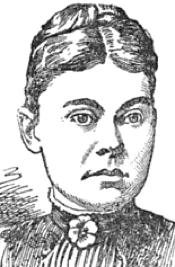 |
| Rendering of Lizzie Borden Phrenological Journal, Dec 1892. The phrenologists judged that her face showed "courage, selfishness, and executive ability." |
Wednesday, April 20, 2011
A history of the Illustrated Police News.

Tuesday, April 19, 2011
Silva Screen remasters Fear Is the Key (1972).
 |
| Barry Newman in his muscle car in Fear Is the Key (1972, dir. Michael Tuchner) |
Monday, April 18, 2011
Happy birthday, mystery composer Miklos Rozsa.
Distinguished film composer Miklos Rozsa was born today in Budapest in 1907. His mystery-related film scores
include Double Indemnity (1944; Oscar nominee, Best Score), Blood on the Sun (1945), Spellbound (1945; Oscar winner, Best Score), The Killers (1946; Oscar nominee, Best Score), The Naked City (1948), A Woman's Vengeance (1948), The Bribe (1949), The Asphalt Jungle (1950), Time after Time (1979), and Eye of the Needle (1981). He died in 1995.
To hear some clips from his work, visit the following links:
• The Asphalt Jungle
• Double Indemnity
• The Naked City
• Spellbound
• Time after Time
 |
| Barry Fitzgerald, left, and Don Taylor in The Naked City |
To hear some clips from his work, visit the following links:
• The Asphalt Jungle
• Double Indemnity
• The Naked City
• Spellbound
• Time after Time
Thursday, April 14, 2011
Greene-influenced journal Night and Day returns.

Wednesday, April 13, 2011
Happy birthday, Bill Pronzini.
 |
| Erle Stanley Gardner's Exploits of the Patent Leather Kid, ed. Bill Pronzini (2011). Crippen and Landru |
Tuesday, April 12, 2011
Edgar Allan Poe, self-publisher?
 |
| Edgar Allan Poe, 1848. Library of Congress, Prints and Photographs Division |
Monday, April 11, 2011
John Buchan this week on BBC Radio 4 Extra.

Thursday, April 07, 2011
Exhibition on the roles and perceptions of journalists.

Wednesday, April 06, 2011
Mystery-related films considered lost.
 | |||
| Pauline Frederick, star of Lydia Gilmore, Woman in the Case, and The Paliser Case. NYPL |
• Sherlock Holmes and the Great Murder Mystery (1908). SH and a gorilla?
• Lydia Gilmore (1915). Philandering husband murders his lover's spouse; wife attempts cover-up.
• The Woman in the Case (1916). Is a suicide actually murder?
• Col. Heeza Liar, Detective (1917). One in a series of cartoons with a Colonel Blimp-type character.
• The Paliser Case (1920). The murder of a treacherous man throws suspicion on the woman he lured into a sham marriage.
• The Radio Detective (1926). Adventure serial with Boy Scouts versus gangsters.
• Kismet (1930–31, dir. William Dieterle). Thief is embroiled in a plot against a caliph.
• Murder Will Out (1939). A valuable piece of jade causes a series of murders.
Tuesday, April 05, 2011
Hammer's 1940s–50s crime films.
 |
| Ad for A Case for PC 49. Hammerfilms. |
Monday, April 04, 2011
The Road Murder this week on BBC Radio 4 Extra.

Thursday, March 31, 2011
Childers's Riddle of the Sands (1903) at NYU.
On April 14, NYU's Glucksman Ireland House will celebrate the Haycraft-Queen Cornerstone work The Riddle of the Sands (1903)
by Erskine Childers (who ran guns before the 1916 Easter Rising and was executed in 1922 during the Irish civil war; his son later became president of Ireland). Penguin has reissued this tale of espionage. Childers's great-grandson, also named Erskine Childers, will read from his relative's work.
 |
| Simon MacCorkindale, left, and Michael York in The Riddle of the Sands (dir. Tony Maylam, 1979). |
Wednesday, March 30, 2011
Amateur detectives of 100 years ago.
A NYT article of March 12, 1911, listed "tales that will test the ingenuity of experts in the literature of mystery," but not all were universally embraced by the reviewer. The books were the following:
• The Dazzling Miss Davison by Florence Warden [actress-author Florence Alice Price James] (1910). Is the beautiful Miss Davison a pickpocket and a shoplifter, under the "hypnotic control [of] some very capable crook"? Filmed in 1917.
• The Paternoster Ruby by Charles Edmonds Walk (1910). A detective investigates the murder of a skinflint who owned a priceless jewel.
• The De Bercy Affair by Gordon Holmes [Louis Tracy] (1910, illus. Howard Chandler Christy). An actress is murdered; suspects include her wealthy fiance and anarchists. A "well-constructed detective tale, with plenty of false clues to lead the reader astray" [and a] "Chief Inspector, who is a much more human and attractive person than the customary detective of fiction."
• The Key to Yesterday by Charles Neville Buck (1910). An artist with no memory of his past begins to look into what he once was. Filmed in 1914. Buck has "to enjoin his characters from attempting such curious stunts with their eyes—as when his heroine stifles 'a mutinous impulse of her pupils to riffle into amusement.'"
• The Quests of Paul Beck by M. McDonnell Bodkin (1910). A dozen murders that have baffled others are solved by the detective of the title; Bodkin was a judge and served in the Irish Parliament. His notable female detective is Dora Myrl (Dora Myrl, the Lady Detective, 1900)—a "Sherlock Holmes in petticoats," according to the Morning Leader.
 |
| "I'll shoot," she announced in a tense tone, "so help me, I'll shoot." Illustration by J. V. McFall from The Paternoster Ruby. |
• The Paternoster Ruby by Charles Edmonds Walk (1910). A detective investigates the murder of a skinflint who owned a priceless jewel.
• The De Bercy Affair by Gordon Holmes [Louis Tracy] (1910, illus. Howard Chandler Christy). An actress is murdered; suspects include her wealthy fiance and anarchists. A "well-constructed detective tale, with plenty of false clues to lead the reader astray" [and a] "Chief Inspector, who is a much more human and attractive person than the customary detective of fiction."
• The Key to Yesterday by Charles Neville Buck (1910). An artist with no memory of his past begins to look into what he once was. Filmed in 1914. Buck has "to enjoin his characters from attempting such curious stunts with their eyes—as when his heroine stifles 'a mutinous impulse of her pupils to riffle into amusement.'"
• The Quests of Paul Beck by M. McDonnell Bodkin (1910). A dozen murders that have baffled others are solved by the detective of the title; Bodkin was a judge and served in the Irish Parliament. His notable female detective is Dora Myrl (Dora Myrl, the Lady Detective, 1900)—a "Sherlock Holmes in petticoats," according to the Morning Leader.
Tuesday, March 29, 2011
Jonathan Miller and an M. R. James ghost story.
 |
| Michael Hordern in "Whistle and I'll Come to You," BBC Omnibus, 1968. |
Monday, March 28, 2011
Jurispeepidence.
 |
| "Crime and Peepishment" by Diane H. Esher 2010 Peeps in Law, Pt Deux, ABA Journal |
Thursday, March 24, 2011
Death and the Good Life by Richard Hugo (1980).
The Neglected Books blog looks at the mystery Death and the Good Life about an ex-cop investigating the murders of two victims by ax. It's written by Seattle-born Richard Hugo (1923–82)—poet, University of Montana professor, and self-described "world's worst bombardier" during World War II (qtd. in Dictionary of Literary Biography).
Subscribe to:
Posts (Atom)