Monday, October 14, 2013

Clues 31.2: Collins, Harvey, Highsmith, Parker, South African and Spanish crime fiction.

Clues 31.2 has been published. The following is a summary of the contents (with links on the article titles). To order the issue or subscribe to Clues, visit this Web page or download the subscription flyer.

Introduction: Journeys through Crime, Time, and Space. JANICE M. ALLAN

From Enigmas to Emotions: The Twentieth-Century Canonization of Crime Fiction. MAURIZIO ASCARI (Univ of Bologna). Starting from the early-twentieth-century criticism of the “clue-puzzle” tradition, the author investigates the progressive return of emotions to the scene of both creative and critical crime writing. The analysis encompasses aspects of the twentieth-century canonization of crime fiction, dispelling some lingering critical prejudices and presenting the genre as complex.

Enlightenment, Counter-Enlightenment: Detection, Reason, and Genius in Tales of Edgar Allan Poe and Arthur Conan Doyle. GREG SEVIK (Cayuga Community College, NY). The author explores the complex relationship between detective fiction and traditions of the Enlightenment and Counter-Enlightenment, including romanticism. Given this background, he argues that detective stories by Edgar Allan Poe and Arthur Conan Doyle highlight the productive tension within Western reason among rule-bound rationality, critical reflection, and the inexplicability of genius.

True Crime in Bermondsey: Representations of Maria Manning. ANNA KAY (Univ of Melbourne). The author examines the literary representations of the nineteenth-century murderess Maria Manning, arguing that the frequently complex and contradictory images that emerged of Manning illuminate broader insights into Victorian conceptions of gender, sexuality, and criminality.

Wilkie Collins’s The Law and the Lady and Feminine Reason:
“Quite incredible, and nevertheless quite true!” TABITHA SPARKS (McGill Univ, Canada). The author examines Collins’s 1875 detective novel The Law and the Lady as a site of conflict between institutional, legal power and feminine resistance to it, with a disabled character upsetting the rigid gender and social norms that underwrite the novel’s central mystery.

“What we call civilization”: Raymond Chandler’s Geographic Critique of Socioeconomic Inequalities in the Philip Marlowe Novels—A Barthesian Reading. PETER CHOMKO. In his Philip Marlowe novels, Raymond Chandler subverts the formulaic narrative structure common to much mainstream crime fiction and, in doing so, opens up to the popular imagination new ways of deconstructing many mid-century myths about Los Angeles. Unlike the fictional detectives who preceded him, Marlowe does not solve crimes so much as expose them, bringing to light the corrupt superstructure of inequality and injustice that shapes—and is shaped by—the Los Angeles landscape.

Liminality and Patricia Highsmith’s The Talented Mr. Ripley. PETER MESSENT (Univ of Nottingham, UK). The author examines Patricia Highsmith’s The Talented Mr. Ripley to illustrate the role of liminality in her text. Highsmith explores the relationship among violent crime, deception, and the free-floating nature of subjectivity to foreground the ability to move between selves. Such transitions destabilize any notion of the grounded self and, moreover, radically challenge the understanding of the meaning of
civilization and culture.
 
Literary Allusions in Robert B. Parker’s Spenser Series. MARTY S. KNEPPER (Morningside College, IA). Although Robert B. Parker and his private-eye hero Spenser had no great love of academics, they both loved reading. The first-person narrative and dialogue in the Spenser series display a broad range of literary references, serving various artistic purposes and giving pleasure to book-loving readers. (This article includes an appendix that lists appearances of literary allusions in the Spenser series)

Masochism and the Novela Negra: The Case of Francisco González Ledesma. SHELLEY GODSLAND (Univ of Birmingham, UK). The author argues that the novella negra exposes and explores the masochism of its tough male investigator, as did its predecessor, the American hard-boiled detective. In Expediente Barcelona (1983) by Francisco González Ledesma, the protagonist’s masochistic attitudes and behaviors are illuminated through discussion of Freudian and other thinking on masochism.

“There’s nothing people won’t do to one another, if the circumstances are right”: Male Rape and the Politics of Representation in John Harvey’s Police Procedural Easy Meat. CHARLOTTE BEYER (Univ of Gloucestershire, UK). The author discusses portrayals of male rape and in John Harvey’s police procedural novel Easy Meat(1996), exploring how the novel interrogates the representation of sexual crime, male rape, and masculinity in crime fiction. By examining Harvey’s portrayal of masculinity and sexuality in Easy Meat, the author explores the ways in which crime fiction problematizes the politics of representing sexual crime.

Crime Fiction and the Armchair Traveler: The Case of Martin Walker’s Bruno Courrèges Series. JOHN SCAGGS (Southwestern College, KS). The defining characteristic of Martin Walker’s Bruno Courrèges novels is their detailed sense of place. The author examines how the sense of place is created in the novels and suggests that, rather than merely being a simple backdrop against which the plots of the novels unfold, it is an integral part of their themes and narrative structures.

“You Think It’s Possible to Fix Broken Things?”: Terror in the South African Crime Fiction of Margie Orford and Jassy Mackenzie. MARLA HARRIS. Drawing on the work of Robert J. C. Young, the author argues that Jassy Mackenzie and Margie Orford’s crime novels of post–apartheid South Africa offer coping strategies in the face of inexplicable violence. As they fundamentally are about living with terror and terrorism, they resonate with contemporary American readers.

REVIEWS
Saturo Saito. Detective Fiction and the Rise of the Japanese Novel, 1880–1930. Elizabeth Blakesley

Michael Dirda. On Conan Doyle: Or, The Whole Art of Storytelling. Natalie Hevener Kaufman

Melissa Schaub. Middlebrow Feminism in Classic British Detective Fiction: The Female Gentleman. Rosemary Erickson Johnsen

Peter Baker and Deborah Shaller, eds. Detecting Detection: International Perspectives on the Uses of a Plot. Mimosa Summers Stephenson

Thursday, October 10, 2013

Peter Robinson on A Month in the Country.

On BBC Radio 4's A Good Read program, Inspector Banks creator Peter Robinson participates in the discussion of Jonathan Lethem's Motherless Brooklyn, Dodie Smith's I Capture the Castle, and J. L. Carr's A Month in the Country. Robinson calls the latter work (about a man traumatized by World War I) a "neglected classic" and "poetic." (Below: a clip from 1987's A Month in the Country with Colin Firth and Patrick Malahide)


Wednesday, October 09, 2013

James Lee Burke on latest Robicheaux novel.

On Montana Public Radio James Lee Burke talks about his new Dave Robicheaux novel Light of the World and a little about what's next for him.

Tuesday, October 08, 2013

Rinehart's "The Bat" with Helen Hayes (1960).

Yet another adaptation of the successful Avery Hopwood-Mary Roberts Rinehart play The Bat about a notorious killer menacing a household, this March 1960 episode of the Dow Hour of Great Mysteries features Helen Hayes, Jason Robards, and Margaret Hamilton. (See earlier post on the 1959 film with Vincent Price and Agnes Moorehead.)

Monday, October 07, 2013

The subversive Black Narcissus (1947).

Kathleen Byron in
Black Narcissus
In a BBC Radio 3 essay, critic Peter Bradshaw provides an astute appreciation of what he calls the "subversive" film of Rumer Godden's Black Narcissus (dir. Michael Powell and Emeric Pressburger, 1947).

Wednesday, October 02, 2013

Happy birthday, Jack Finney.

Author Jack Finney (Invasion of the Body Snatchers, Time and Again, etc.) was born today in Milwaukee in 1911; he died in 1995. Will we finally see a film of Time and Again, as Lionsgate now has purchased the rights?

Some links to celebrate the day:

NPR appreciations of Body Snatchers (Maureen Corrigan, James Rollins) and Time and Again (Susan Jane Gilman)

• Bowery Boys blog post on the New York City history featured in Time and Again

• Finney radio play "After the Movies" for radio series Suspense, first with Ray Milland (Dec 1950, no. 26 on this page) and second with Body Snatchers' Kevin McCarthy (Sept 1959, no. 29 on this page)

• April 1955 episode (below) of Science Fiction Theater, "Time Is Just a Place," which was adapted from the Finney short story "Such Interesting Neighbors" (1951)

Tuesday, October 01, 2013

Short Cut to Hell (dir. James Cagney, 1957).

For Graham Greene's birthday tomorrow, listen to this NPR piece on Greene's unfinished murder mystery The Empty Chair and look at this promotional clip from Short Cut to Hell (1957), an adaptation of
Short Cut to Hell's Robert Ivers, right,
with Claire Trevor in "Ma Barker and
Her Boys," The Untouchables
Greene's novel A Gun for Sale and a remake of the Alan Ladd/Veronica Lake classic This Gun for Hire (1942). It was the only film directed by James Cagney. Although the film was not a success and Cagney indicated that directing bored him, he proved able at the job.

Thursday, September 26, 2013

Richard Lockridge speaks on the Norths.

Barbara Britton and
Richard Denning as
Pam and Jerry North
To celebrate today's birthday of Richard Lockridge (1898–1982), a journalist and co-creator of the sleuthing couple Pam and Jerry North, listen to this 17-minute talk by him from the June 1954 Books and Authors Luncheon (found in the WNYC Radio archive). He is introduced at about 18.30 minutes into the program and speaks about the genesis of the Norths in the pages of the New Yorker, which involves anecdotes on life with his wife, Frances. He praises Frances's plotting ability and mentions that 3.1 million people are expected to listen to the Mr. and Mrs. North radio program that night. He also states that gas is 20 cents a gallon (remember those days?).

Also on the program: critic and Columbia University professor Jacques Barzun, talking about his book God's Country and Mine (on the United States, which he calls "the greatest hodge-podge that has ever been").

Wednesday, September 25, 2013

Norma Herrmann on her husband's work.

This short interview on the BBC Radio3 InTune program with Norma Herrmann, widow of composer Bernard, provides insight on Herrmann's initial reaction to Martin Scorsese regarding Taxi Driver and his relationship with Hitchcock (includes some clips from Herrmann's compositions for North by Northwest and Psycho).

Tuesday, September 24, 2013

Lock Up: "Sentenced to Die" (1960).

The TV series Lock Up (1959–61) drew on the cases of Philadelphia attorney Herbert L. Maris for its material. The episode "Sentenced to Die" features Macdonald Carey as Maris, who takes on a client convicted of killing his former boss. The episode costars Angie Dickinson and was directed by Christian Nyby (Adam-12, Emergency!).

Monday, September 23, 2013

BBC Radio 3 discussion of The Innocents (1961).

The BBC Radio 3 program Night Waves has a fascinating discussion of the 1961 film The Innocents (adapted by Truman Capote and Rumpole's John Mortimer from Henry James's "The Turn of the Screw"). Panelists include Peter Wyngarde and Clytie Jessop, who appeared in the film as Peter Quint and Miss Jessel respectively.

Wednesday, September 18, 2013

British Library Fellow on the first audiobooks.

Matt Rubery, an Edison Fellow at the British Library, provides an interesting account of the first audiobooks in the United States (1934) and Britain (1935). One of the earliest British audiobooks? Agatha Christie's The Murder of Roger Ackroyd.

Tuesday, September 17, 2013

Happy birthday, John Creasey: The Baron (1966-67).

To celebrate today's birthday of the indefatigable John Creasey (1905–73, who published at least 500 mystery works), look at "The Seven Eyes of Night," an episode of The Baron, a TV series (loosely) based on Creasey's character John Mannering. In this incarnation, antiques dealer/secret agent Mannering (Steve Forrest) pursues con artists (including an unscrupulous Jeremy Brett) who fleeced him out of a large sum of money. 

Monday, September 16, 2013

Elmore Leonard on marketing his works.

After author Elmore Leonard died on August 20, the manuscript archivist at Indiana University's Lilly Library posted on the library blog about the small Leonard collection at the library, including an excerpt from a Leonard letter to his agent: "So what I'm going to do now is plot better stories. I'll show 'em."

Update. Here are some clips of Elmore Leonard from WNYC's Leonard Lopate Show.

Thursday, September 12, 2013

WQXR: "The Dark Drama of Film Noir."

The Asphalt Jungle, just one film
scored by Miklos Rozsa
A recent rebroadcast from the WQXR radio series Movies on the Radio was "The Dark Drama of Film Noir," focusing on film composers Adolph Deutsch, Bernard Herrmann, Miklos Rozsa, and Max Steiner.

Tuesday, September 10, 2013

Sherlock Holmes' Fatal Hour (1931).

This film, once considered lost, is based on Arthur Conan Doyle's "The Final Problem" and "The Adventure of the Empty House" and features Arthur Wontner as Sherlock Holmes. The U.S. title is Sherlock Holmes' Fatal Hour; the British title is The Sleeping Cardinal. The director is Leslie S. Hiscott, who also brought A. E. W. Mason's Inspector Hanaud to the screen.

Monday, September 09, 2013

Newly digitized Baker Street Four-Wheeler.

Christopher Morley. Library of
Congress, Prints & Photos Div.
The Houghton Library blog at Harvard brings word of its digitization of A Baker Street Four-Wheeler: Sixteen Pieces of Sherlockiana (1944, ed. Edgar W. Smith), which features goodies such as "Sonnet to Sherlock" by author-critic Anthony Boucher and "Sherlock Holmes's Prayer" by BSI founder Christopher Morley. "Strengthen me," writes Morley as Holmes, "not to astonish the good Watson merely for theatrical pleasure." Although this work lists "The Man Who Was Wanted" as a tale penned by Arthur Conan Doyle, it was not; go here for an explanation of its history.

Saturday, September 07, 2013

Sept 1913: Conan Doyle's The Poison Belt appears in NY.

For who, having once met the Professor, would not desire to continue the acquaintance?

—NYT rev of Conan Doyle's The Poison Belt, Oct 26, 1913
Ad for The Poison Belt, the Evening World,  Sept 6, 1913
One hundred years ago today, Arthur Conan Doyle's new Professor Challenger adventure, The Poison Belt, began running in the Sunday World. The Strand magazine had published it earlier in the year. (Thanks to PhiloBiblos)

Friday, September 06, 2013

Hardy Boys author Leslie McFarlane recalled.

The Canadian Broadcasting Corp. remembers the death on September 6, 1977, of highly successful Canadian author Leslie McFarlane with this 1972 interview; he wrote some of the Hardy Boys and the Dana Girls mysteries, among other works.

Below: Target Berlin (1944), with a script by Leslie McFarlane.

Tuesday, September 03, 2013

Remembering Julie Harris:
House on Greenapple Road (1970).

In House on Greenapple Road Marian Ord (Janet Leigh), wife of advertising salesman George (Tim O'Connor), goes missing; and Lt. Dan August (Christopher George) finds a bloody kitchen and a complex case when he begins to investigate. Julie Harris, who died on August 24, appears as George's sister Leona; also featured are Ed Asner, Walter Pidgeon, Eve Plumb, Barry Sullivan, William Windom, and Keenan Wynn. This TV movie (produced by Quinn Martin and based on the book by Harold R. Daniels) inspired the later series Dan August with Burt Reynolds.

Thursday, August 29, 2013

Australian mystery.

The Sounds of Australia is a program of the National Film and Sound Archive of Australia that seeks to preserve sound recordings of cultural and historical significance to the country. This collection includes the radio crime serials Night Beat and Dossier on Dumetrius. The archive is searching for the silent film The Blue Mountains Mystery (1921).  

Below: trailer for the upcoming season of Miss Fisher's Murder Mysteries, based on the novels by Kerry Greenwood with flapper detective Phryne Fisher.

Tuesday, August 27, 2013

The Brothers Rico (1957).

In The Brothers Rico, a former Mob accountant (Richard Conte) finds himself entangled with his ex-employers when his brothers (James Darren, Paul Picerni) fail to go along with Mafia plans. The film, based on the novella Les Frères Rico by Georges Simenon and featuring screenplay work by Dalton Trumbo, also stars Kathryn Grant (aka Mrs. Bing Crosby).

Monday, August 26, 2013

Peter Guttridge on 1963 Great Train Robbery.

In this podcast from the UK's National Archives, mystery author Peter Guttridge discusses the £2.6 million heist from the Glasgow-London mail train that occurred in August 1963. Not all of the thieves were caught.

Tuesday, August 20, 2013

Chicago Confidential (1957).

Art from Chicago Confidential ad. 
(Motion Picture Exhibitor (11 Sept. 1957)

In Chicago Confidential, which debuted this month in 1957, DA Brian Keith suspects that a criminal organization is behind the murder of a union figure rather than the person implicated in the crime. Based on the book by journalists Jack Lait and Lee Mortimer, the film also stars Beverly Garland and Elisha Cook Jr.

Monday, August 19, 2013

Lillian de la Torre on life lessons learned.

Lillian de la Torre.
Special Collections
,
Colorado College
In this episode of the radio program This I Believe (hosted by Edward R. Murrow and preserved in the Tufts Digital Library), Edgar nominee Lillian de la Torre (aka Lillian McCue, 1902–93) talks about lessons learned in her life such as "pull [your] own weight in the boat" and "your mind will die if you lose your curiosity."

This Bunburyist post is on de la Torre's "Goodbye, Miss Lizzie Borden" (adapted as "The Older Sister" for Alfred Hitchcock Presents).

Wednesday, August 14, 2013

H. F. Heard speaks on moral laws.

Study of Heard's work
by Alison Falby
Cambridge Scholars Publ
H. F. Heard (aka Gerald Heard, author of the Haycraft-Queen Cornerstone mystery A Taste for Honey and its two follow-ups) talks about moral laws and fears that block the way to happiness in the 1950s program This I Believe (hosted by Edward R. Murrow and preserved in the Tufts Digital Library).

Tuesday, August 13, 2013

Girl in the News (1940).

In Girl in the News, Margaret Lockwood plays a nurse accused of killing her patient. Directed by Carol Reed (The Third Man), the film is based on the novel The Girl in the News (1937) by the Detection Club's Roy Vickers with a screenplay by Sidney Gilliat (screenwriter for The Lady Vanishes, Night Train to Munich, Green for Danger).

Sunday, August 11, 2013

Dr. Barbara Mertz, trailblazer.

Barbara Mertz, right, with Charlotte MacLeod, 1989
Photo by Elizabeth Foxwell
It is impossible to grasp that the ebullient Barbara Mertz, aka MWA Grand Master Elizabeth Peters and Barbara Michaels, has left us at age 85. I first met her when I interviewed her for a University of Maryland journalism class. After 2 hours I emerged, somewhat dazedly (a typical state of affairs in Mertzdom), with a 17-page, single-spaced transcript and a friendship that would endure for nearly 30 years. To her I owe a great deal, not least my career in mystery and—like many other writers—warm memories of her encouragement, support, and singular presence.

Barbara's storming of considerable bastions in her life and career has benefited women from many walks of life as well as mystery readers and writers. When she was a graduate student in Egyptology at the University of Chicago, she was asked, more than once, why she was taking the place of a man, and why was she there anyway, because she was "just going to get married." She was divorced at a time when single parents were regarded as strange creatures, and she worked hard to support two children by publishing a minimum of two books per year and reviewing books. Well into her seventies, Barbara was descending into Egyptian tombs and maintaining a schedule that would make someone a quarter of her age relapse onto a Victorian fainting couch. Always embroiled in some offbeat enterprise, she once took me with her to purchase a cowboy hat, because she was embarking on a tour with Sharyn McCrumb and Joan Hess that would feature their country-music song stylings.

Given today's popularity of intrepid Victorian archaeologist Amelia Peabody Emerson and her inimitable spouse and son, as well as Barbara's Agatha Award for the Jacqueline Kirby novel Naked Once More, it is easy to forget that she had to fight to write humorous mysteries. Unease existed in the publishing world about reader receptivity to humor, and she had to adopt the Peters pseudonym for these books while maintaining the Michaels pen name for her twists on the Gothic novel. She created a stir with Borrower of the Night when art-historian heroine Vicky Bliss ditched two handsome men for a more attractive new job.

Wednesday, August 07, 2013

Product of the Day:
"Tools of the Consultant Detective" T-shirt.

It's hard to resist this T-shirt by artist David Fernandez Huerta with the Great Detective's "tools of the trade" (sadly, the remarkable dog Toby does not seem to have been included). Fernandez Huerta has stated that he designed it with the exhibition "Oficis Extraordinaris" at the 2013 Valencia Book Fair in mind. The design also is available on some other products.

Tuesday, August 06, 2013

Went the Day Well? (1942).

In Went the Day Well? British citizens confront a Nazi invasion of their village. Newly restored by the British Film Institute, the film is based on the story "The Lieutenant Died Last" by Graham Greene and is directed by Alberto Cavalcanti. The cast includes Dame Thora Hird and David Farrar.

Monday, August 05, 2013

James M. Cain speaks on authors' rights.

This WNYC radio program with James M. Cain from October 20, 1946, discusses his plan for an American Authors' Authority designed, according to Cain in the Saturday Review, "to give a writer better terms, from publishers, employer, government and everybody else." This proposal was labeled as communist by writers such as John Dos Passos, John Erskine, Clare Boothe Luce, and Ayn Rand, who formed the American Writers' Association with other writers to block it. The Authors League (now known as the Authors Guild) seems to have been caught in the middle of the debate.

Ultimately Cain's plan was unsuccessful. Read the Saturday Review editorial on the topic, followed by the debate between Cain and James T. Farrell (author of the Studs Lonigan series) in the magazine:
Saturday Review editorial: ". . . the Authors' Authority proposal is dangerous and unworkable."
Cain--1st part, 2nd part: ". . . a group of freedom's passionate defenders have got together to resist a scowling villain with schemes like Dr. Goebbels's, meaning me."
Farrell response: ". . . Cain proposed to use the Screen Writers' Guild and the Radio Writers' Guild as instruments of coercion."
An additional note: Cain states during the program that his first novel (which would be The Postman Always Rings Twice) sells 500,000 copies per year.

Thursday, August 01, 2013

Foxwell review: Victorian crimes in fiction.

Today in the Washington Independent Review of Books is my review of Judith Flanders's The Invention of Murder: How the Victorians Revelled in Death and Detection and Created Modern Crime.

Wednesday, July 31, 2013

The ABA's picks, 25 greatest law novels.

The Aug 2013 ABA Journal features the "25 Greatest Law Novels Ever." These include:

An American Tragedy, Theodore Dreiser 
• Anatomy of a Murder,
Robert Traver 
• Bleak House, Charles Dickens
• The Caine Mutiny, Herman Wouk
• The Firm, John Grisham
• Native Son, Richard Wright
• The Ox-Bow Incident
,
Walter Van Tilburg Clark
The Paper Chase, John Jay Osborn Jr.
Presumed Innocent, Scott Turow
QB VII, Leon Uris
Their Eyes Were Watching God, Zora Neale Hurston
To Kill a Mockingbird, Harper Lee

Some judges wrote essays on notable omissions such as Michelle Zierler on In Cold Blood by Truman Capote and Roz Myers on the Haycraft-Queen Cornerstone novel The Just and the Unjust by James Gould Cozzens. As an admirer of Cozzens's prose, I would not call his style "fusty," as Myers does. I'm also startled that not one Erle Stanley Gardner novel has been selected. (thanks to the Law and Humanities blog)

Tuesday, July 30, 2013

Rinehart's Hilda Adams, on screen.

Two films that star Mary Roberts Rinehart's nurse-sleuth Hilda Adams are Miss Pinkerton (1932), featuring "staggering suspense!" with Joan Blondell and George Brent, and The Nurse's Secret (1941), with Lee Patrick (the character is called "Ruth Adams" in this version).  


Monday, July 29, 2013

Prelim info, Ellroy companion (ed. Foxwell).

There is some preliminary information posted on James Ellroy: A Companion to the Mystery Fiction, written by Jim Mancall (Wheaton College, MA); it is volume 6 in the series I edit for McFarland. It most likely will be out in winter 2014, but can be preordered. The Midwest Book Review has called these companion books an "outstanding literary studies series."

Update. The Ellroy companion was published on January 2, 2014, and is now available for ordering. Writer-critic Dick Lochte calls it "a clear, comprehensive guide to the Demon Dog’s dark, complex literary world."

Wednesday, July 24, 2013

Watch a panel on international noir.

See below to watch a June 25 panel on international noir from New York's Mercantile Library, moderated by Sarah Weinman and featuring Philippine-born writer-professor Jessica Hagedorn, Austrian author Wolf Haas, and Australian writer Zane Lovitt.

Tuesday, July 23, 2013

The October Man (1947).

In The October Man, a chemist with a head injury from a bus accident is suspected of murder. Master spy novelist Eric Ambler wrote the screenplay and served as producer, and the film was directed by Roy Ward Baker (The Avengers, A Night to Remember, The Persuaders, The Saint).

Monday, July 22, 2013

The return of Michael Arlen.

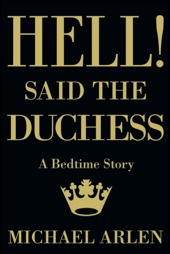
Valancourt Books has reissued Michael Arlen's supernatural Hell! Said the Duchess: A Bedtime Story about a duchess suspected of killing several young men in London. It's the first time back in print since 1934. Arlen is best known for The Green Hat (1924) and for the creation of the Falcon, who was featured in films with George Sanders and his brother, Tom Conway, and a later TV series.

Wednesday, July 17, 2013

The singing Supreme Court justice.

Learned Hand.
LOC Prints & Photos Div
The ever-entertaining Green Bag journal offers a selection of Supreme Court Justice Learned Hand's greatest folk hits (liner notes here). It's probably just as well that he kept his day job.

Tuesday, July 16, 2013

MacDonald x 2: "The Fatal Impulse" (1960).

In this November 1960 episode of Boris Karloff's Thriller TV series, someone bent on political assassination places a bomb in a woman's purse, but the police are hot on the trail. Featuring Robert Lansing, Elisha Cook Jr., and Mary Tyler Moore, it is adapted by author-screenwriter Philip MacDonald (The List of Adrian Messenger, etc.) from the novella "The Impulse" by John D. MacDonald (Cape Fear, etc.) that appeared in the June 1955 issue of Cosmopolitan.

Monday, July 15, 2013

Seldes on censorship of The Blackboard Jungle (1955).

Gilbert Seldes, by Carl Van
Vechten. Library of Congress,
Prints & Photos Div.
In this October 3, 1955, episode from the radio program The Lively Arts, critic Gilbert Seldes speaks about the censorship of the film The Blackboard Jungle (adapted from the novel by Evan Hunter). It was withdrawn from the Venice Film Festival at the time, said to be due to pressure from Ambassador Clare Boothe Luce.

Wednesday, July 10, 2013

Happy 84th bday, George Clayton Johnson.

Born in Cheyenne, Wyoming, 84 years ago today, George Clayton Johnson has compiled some impressive credits (among them: author, Logan's Run; screenwriter for Honey West, Kung Fu, Mr. Novak, Ocean's Eleven, Route 66, Star Trek, and The Twilight Zone). He appears below in a Jan. 2013 talk at the Karl Hess Club in Los Angeles, discussing his career and stating, "I wanted to be Ray Bradbury."

Tuesday, July 09, 2013

Cozzens's "Clerical Error" (1983).

In this April 1983 episode of Tales of the Unexpected, some shady booksellers attempt to extort a dead man's family—with unexpected results. Poirot's Hugh Fraser appears in this adaptation of James Gould Cozzens's "Foot in It" (Redbook Aug. 1935; repr. as "Clerical Error" in venues such as the June 1950 EQMM, Ellery Queen's The Literature of Crime, and Marcia Muller and Bill Pronzini's Chapter and Hearse). Cozzens (1903–78), author of the Haycraft-Queen Cornerstone novel The Just and the Unjust and the Pulitzer Prize winner Guard of Honor (admired by Raymond Chandler), was dubbed "the Garbo of U.S. letters" by Time magazine in 1957.

Monday, July 08, 2013

Rex Stout on the FBI and his career.

In the WNYC Radio archive is this 15-minute talk by Rex Stout (then-president of the Authors League of America, now known as the Authors Guild) from the Feb. 1966 program Books and Authors Luncheon. His remarks occurred a few months after the publication of his Nero Wolfe novel The Doorbell Rang that deals with the FBI and attracted quite a bit of attention because, says Stout, "I had the nerve to poke J. Edgar Hoover in the nose."

On his career, Stout says:
I realized that if I went on trying to make serious comments about human character and human problems, I would never turn out to be a Dostoevsky or a Balzac. So to hell with it, I quit. And I decided just to write stories and to try to make them as good stories as I could.
He also reports receiving a fan letter from Bertrand Russell and asserts that he is the only mystery author to have been translated into Ceylonese (the language of Ceylon, now known as Sri Lanka), besting Agatha Christie and Erle Stanley Gardner in this regard.

Stout is introduced by New York Herald Tribune book editor Maurice Dolbier. The program also features Helen Hayes and Supreme Court Justice William O. Douglas. For Wolfe Pack commentary on The Doorbell Rang, go here.

Friday, July 05, 2013

Christopher Fowler on Hammer Chillers.

Scheduled for release today as part of the Hammer Chillers audio series is "The Devil in Darkness" by Christopher Fowler (author of the Bryant and Mays mysteries), in which a stuck elevator has sinister results.

Tuesday, July 02, 2013

Anthony's The Tamarind Seed (1974).

Saluting tomorrow's 85th birthday of British spy author Evelyn Anthony (aka Evelyn Ward-Thomas), this week's film selection is The Tamarind Seed--adapted by Blake Edwards from Anthony's book about a Russian agent romancing a British woman for possibly ulterior motives. Edwards also directed the film, which stars his wife, Julie Andrews. The rest of the cast includes Omar Sharif, Anthony Quayle, and Oskar Homolka.

Monday, July 01, 2013

Trent's Last Case on Why I Really Like This Bk.

E. C. Bentley, from
The Bookman (1913)
The latest episode of Kate Macdonald's podcast Why I Really Like This Book is on E.C. Bentley's Trent's Last Case (1913), which Macdonald calls "a cracking good mystery." Macdonald is the author of the John Buchan companion in the series I edit for McFarland.

Wednesday, June 26, 2013

Alexander McCall Smith on serial publication.

Charles Dickens, NYPL
In this essay on BBC Radio 3, Alexander McCall Smith, creator of Botswana sleuth Precious Ramotswe, muses on the challenges of writing serial fiction (with examples from Charles Dickens) and states: "I fail to meet the standards he sets."

Tuesday, June 25, 2013

Boucher et al.'s Macabre (1958).

A doctor races against time to find his daughter, who has been kidnapped and buried alive. The film, which stars Jim Backus and is directed by horror meister William Castle, is based on the book The Marble Forest by Theo Durrant (aka author-critic Anthony Boucher and other members of the Northern California chapter of MWA. Thanks to Jerry House and Jeffrey Marks's Anthony Boucher: A Bio-Bibliography for additional details on The Marble Forest).

Monday, June 24, 2013

Presidential assassination by arsenic?

James Buchanan. 
Library of Congress,
Prints & Photos Div
The House of Representatives highlights the "Mysterious National Hotel Disease" that claimed the life of Pennsylvania representative David F. Robison on this date in 1859. Robison was one of several victims of what was rumored to be a plot to assassinate President James Buchanan by arsenic.

Wednesday, June 19, 2013

British and US skullduggery, Revolutionary War.

Book by Jessica Warner
on John the Painter
GWU's National Security Archive provides highlights from the CIA's in-house journal Studies in Intelligence (obtained through the Freedom of Information Act), including this interesting article on the British attempts to infiltrate the US mission in Paris during the Revolutionary War. The article also features some US clandestine activities against the British such as an operation to burn the Portsmouth (UK) dockyard by a Scot dubbed "John the Painter."

Tuesday, June 18, 2013

The Notorious Landlady (1962).

In The Notorious Landlady, US diplomat Jack Lemmon suspects that his landlady (Kim Novak) has murdered her husband. Fred Astaire costars. The screenplay is by M*A*S*H's Larry Gelbart and director-screenwriter Blake Edwards, based on the 1956 Collier's story "The Notorious Tenant" by British author Margery Sharp (best known for The Rescuers).

Monday, June 17, 2013

The religions of comic book characters.

Jimmy Olsen, Lutheran.
Wondering about the religious affiliations of Commissioner Gordon, Dick Tracy, Fu Manchu, The Space Turnip, and other comic book characters? You now can consult this handy database. (thanks to AHA blog)

Friday, June 14, 2013

Update, Bly's The Mystery of Central Park (1889).

Cover of The Mystery of Central Park
by Nellie Bly (1889)
My earlier post on Nellie Bly's only mystery novel, The Mystery of Central Park, may have had some results. The Library of Congress informed me that it has digitized its copy of the novel, which is now available through the Internet Archive. This is excellent news, as there are only three copies in US libraries.

Wednesday, June 12, 2013

Doctoral scholarship avbl for EU residents, work on Conan Doyle.

There is an exciting opportunity for UK and EU residents interested in doing doctoral work on Arthur Conan Doyle. From Christopher Pittard, a member of the Clues editorial board:
Conan Doyle, NYPL
The Centre for Studies in Literature at the University of Portsmouth (UK) invites applications for one student to undertake a fully funded AHRC Collaborative Doctoral studentship on the topic of "Possession and Obsession: The Case of Arthur Conan Doyle," supervised by Dr. Christopher Pittard and Dr. Patricia Pulham (University of Portsmouth), and Dr. Jane Mee (Portsmouth City Council). As part of this collaborative project, the successful candidate will also work closely with Portsmouth City Council in developing the use of the Arthur Conan Doyle collection (Lancelyn Green bequest), an extensive archive of Doyle memorabilia, and organising public outreach events related to the collection, gaining transferable skills and experience for use in the cultural services and related sectors. The AHRC will pay for fees and an annual maintenance grant of £14,276.

The broad aims of the project are:
• To examine Doyle’s relation to late nineteenth- and early twentieth-century literary and cultural contexts, with reference to questions of reading communities, modes of textual production, and the historical origins of fan identity.

• To consider the cultural relationship between late Victorian fandom and twentieth- and twenty-first century constructions and appropriations of Doyle, addressing issues of authorship, intellectual property, and theoretical models of fandom.
Applications and details of proposed research projects should be made through the University of Portsmouth Web site (under the "Research Degrees" section). Proposals need to indicate that the applicant is applying for the "Possession and Obsession" studentship. Application deadline is July 5. Questions should be directed to Pittard.

Tuesday, June 11, 2013

The St. Louis Bank Robbery
(w/Steve McQueen, 1959).

In the gritty The St. Louis Bank Robbery, Steve McQueen is drawn into a plot for a heist (based on a real case from 1953). The film's directors are John Stix and Oscar winner Charles Guggenheim, father of documentary filmmaker Davis Guggenheim (An Inconvenient Truth).

Monday, June 10, 2013

What's next? A graphic-novel Perry Mason?

Nathaniel Burney provides a lively look at criminal law via a comics format in The Illustrated Guide to Criminal Law; he talks about the book here. Sneak a peek at the upcoming follow-up, The Illustrated Guide to Criminal Procedure. These are probably destined as presents for the budding law school student, alongside of Scott Turow's One L. (thanks, Law & Humanities blog)

Wednesday, June 05, 2013

Through the lens with George Bernard Shaw.

George Bernard Shaw.
Library of Congress,
Prints and Photographs Div.
An interesting online exhibition by the London School of Economics archives looks at playwright George Bernard Shaw as a skilled photographer. Photo subjects include sci-fi and mystery author Grant Allen (I introduced the Valancourt Books edition of Allen's Miss Cayley's Adventures), writer Rebecca West, and artists Augustus John (father of Ian Fleming's half-sister Amaryllis) and Neville Stephen Bulwer Lytton (grandson of novelist Edward). Also featured are some photos by Shaw's friends such as T. E. Lawrence (aka Lawrence of Arabia) and Shaw productions such as Major Barbara with Wendy Hiller.

Tuesday, June 04, 2013

Bulwer Lytton's The Ghost of Rashmon Hall (1947).

Anne Howard and Valentine Dyall in 
The Ghost of Roshmon Hall (1947)

In The Ghost of Rashmon Hall, a psychic investigator (The Man in Black's Valentine Dyall) grapples with the presence of three poltergeists in a London house. The film is adapted from "The Haunted and the Haunters" (1859) by Edward Bulwer Lytton, who wrote proto-mysteries such as Eugene Aram (1832) and is best known these days for this writing contest.

In this article for Nineteenth-Century Contexts, Mark Knight discusses Bulwer Lytton's interest in the occult and his revision of "The Haunted and the Haunters" that reflected his attempt to reconcile leading philosophical theories of his day. It is possible that he based his fictional house on the one at London's 50 Berkeley Square, long reputed as a hotbed of paranormal activity. The story also is notable for Bulwer Lytton's choice to set it in a urban environment rather than the then-customary remote locale of such stories.

Stills from the film may be viewed at this site devoted to the work of director Harold Baim.  

Monday, June 03, 2013

It came from the archives: Fitzgerald's ledger.

The Irvin Dept of Rare Books and Special Collections at the University of South Carolina has digitized F. Scott Fitzgerald's ledger in which he recorded his earnings from writing, as well as income by his wife, Zelda. Entries range from the listing of his first published short story ("Babes in the Woods," Smart Set, Sept. 1918) and notations on the income from his novels to the record of his appreciation of journalist and author Ring Lardner (New Republic, Oct. 1933) and the radio piece "Let's Go Out and Play" (1935).

F. Scott Fitzgerald.
Library of Congress,
Prints and Photographs Div. 
The ledger also includes an autobiographical timeline. Although many may not be interested in the fact that Fitzgerald had colic when he was a baby and find his references to being drunk or "tight" repetitive, he notes in the 1909 entries, "Wrote the Mystery of the Raymond Mortgage." (This flawed mystery tale, later reprinted in EQMM, is found in The Apprentice Fiction of F. Scott Fitzgerald, ed. John Kuehl; I discuss it in my 1999 piece for Mystery Scene, "F. Scott Fitzgerald: Mystery Writer?") There is a tantalizing notation on one of the "ten years old" pages, "He began a history of the U.S. and also a detective story about a necklace that was hidden in [sic] a trapdoor under the carpet," but the latter does not seem to have come to fruition (a trap door concealed by a carpet does appear in Fitzgerald's Pat Hobby story "No Harm Trying").

There are lively bits such as the reaction of his grade school classmates to him ("Will someone poison Scotty or find some means to shut his mouth") and sadder details such as "Zelda transferred to Sheppard [psychiatric facility in Maryland] in katatonic [sic] state."

Update. Princeton has digitized the corrected galleys to The Great Gatsby. (thanks, PhiloBiblos)

Thursday, May 30, 2013

25 years of Malice.

There's a new 25-year history of the Malice Domestic convention, Not Everyone's Cup of Tea, available from Wildside Press. I was a cofounder of the convention and wrote a piece on the Malice anthologies. There are photos and plenty of other goodies included, written by distinguished authors such as Rhys Bowen, Charlaine Harris, Carolyn Hart, Peter Lovesey, and Peter Robinson.

Wednesday, May 29, 2013

Chesterton, Sayers articles of interest.

Illustration of Chesterton from
Hearst's International (Nov 1921)
Appropriate for today (the birthday of G. K. Chesterton), VII: An Anglo-American Literary Review has posted the following articles online:

• "Two Essays on George MacDonald by G. K. Chesterton" introd. Daniel Gabelman (Scottish novelist MacDonald, best known for At the Back of the North Wind [1871], was the grandfather of mystery author-screenwriter Philip MacDonald). In one essay, Chesterton calls George MacDonald "one of the most remarkable men of our time."

 • "Dorothy L. Sayers's Writings about Work, the Economy and Social Conditions: An Annotated Bibliography" by Christine M. Fletcher

Caroline Barta's "'That Precarious Balance': Harmonizing Temperance in Dorothy L. Sayers's Gaudy Night" is not yet posted from the 2012 issue.

Tuesday, May 28, 2013

"Dark Stranger" (1955).

In "Dark Stranger" (the first episode of the TV anthology series The Star and the Story), writer Edmond O'Brien finds that the murder plot in his novel has come to life. Costarring are Joanne Woodward, Evelyn Ankers, and Dan Tobin.

Wednesday, May 22, 2013

It came from the archives: G. K. Chesterton.

G. K. Chesterton, NYPL
Displaying distinctive penmanship, G. K. Chesterton wrote this gracious letter to the Barcelona club Ateneu Barcelones in May 1926 (found in the Manuscrits de la Bibloteca de l'Ateneu Barcelones). Ian Ker's biography of Chesterton indicates that PEN's Catalan branch had invited Chesterton to Barcelona; his engagements included a speech on "England Seen from the Outside" at Barcelona University.

Tuesday, May 21, 2013

The Long Arm (aka The Third Key, 1956).

In The Long Arm, Jack Hawkins stars as Scotland Yard superintendent Tom Halliday, who is on the trail of a safecracker and murderer. The film is directed by The Cruel Sea's Charles Frend, with story and screenplay by journalist-producer Robert Barr.

Monday, May 20, 2013

Product of the Day: Clues T-shirt.

Show your support for the study of mystery/detective fiction with this stylish Clues T-shirt. A portion of the proceeds goes to Bowling Green State University's Ray and Pat Browne Popular Culture Library to assist the library in buying mystery materials and maintaining its collections (Pat was the founding editor of Clues). The T-shirt and other Clues items are available at Zazzle's Clues store.

Wednesday, May 15, 2013

Return of Revelations of a Lady Detective (1864).

Just out in paperback from University of Chicago Press is the British Library's reissue of Revelations of a Lady Detective (1864, attrib. William Stephens Hayward). This is an important early work featuring a female detective. This edition is only for sale in North and South America; UK residents can buy it from the British Library here.

Tuesday, May 14, 2013

Triple Cross (1966).

In Triple Cross, Christopher Plummer stars as roguish ex-safecracker Eddie Chapman (the subject of Ben Macintyre's Agent Zigzag), who agrees to spy for the Germans—and the British—during World War II.

Monday, May 13, 2013

Today in 1965: The Defenders' final episode.

E. G. Marshall in
The Defenders
The Paley Center for Media remembers that today in 1965, the legal drama The Defenders (with E. G. Marshall) broadcast its final episode (which featured Robert Duvall).

Monday, May 06, 2013

Take a (virtual) bite of vampire fiction study.

Jeremy Brett in Dracula (1978)
NYPL
Edge Hill University in the United Kingdom will conduct a MOOC (Massive Open Online Course) on "Vampire Fictions" that will trace the genre from its 19th-century beginnings to the present. It will start September 3, 2013, and run for 12 weeks. MOOCs, a fairly recent method of online learning, are free to those who do not wish to earn course credit—those who do are required to complete assignments and pay a fee. (Hat tip to Minna Vuohelainen)

Thursday, May 02, 2013

Great Lives: Conan Doyle.

Arthur Conan Doyle.
NYPL
The latest subject in the BBC Radio 4 series Great Lives is Arthur Conan Doyle, selected by author Gyles Brandreth, who calls the creator of Sherlock Holmes "the champion of the good." Also commenting is Conan Doyle biographer Andrew Lycett.

Wednesday, May 01, 2013

Mike Hammer, anticommunist.

Ralph Meeker as Mike Hammer
in Kiss Me Deadly (1955)
Over on the International Spy Museum's blog, historian Mark Stout and author Michael Barson discuss books published since the 1950s that have dealt with the Soviet threat to the United States, including Mickey Spillane's One Lonely Night (1951).