Wednesday, May 14, 2014

Rose Macaulay's Mystery at Geneva (1922).

"They must be found, gentlemen. Alive or (unthinkable thought) dead, they must be found. The Assembly must do nothing else until this sinister mystery is unravelled. We must employ detectives. We must follow every clue."
Miss Longfellow said, "My! Isn't it all quite too terribly sinister!" (Rose Macaulay, Mystery at Geneva 110)
Rose Macaulay by W. W. Seaton
Shadowland Mar-Aug 1923
In catching up with U-Ghent professor Kate Macdonald's podcast Why I Really Like This Book, I was intrigued by the episode on Dame Rose Macaulay's Mystery at Geneva (1922). I was familiar with Macaulay (1881–1958) as a satirical novelist (for example, The Towers of Trebizond) and an inspiration to younger Somervillians Vera Brittain and Winifred Holtby, but did not know about this mystery sidelight that features Macaulay's feminist commentary and a journalist investigating disappearing delegates from the League of Nations. "A mystery without distinction," sniffed the Bookman. "[... E]veryone will enjoy Miss Macaulay's running fire of lively and humorous comment upon the human comedy and the fools we mortals are," countered N. P. Dawson in Shadowland. "A fascinating novel," adds Kate (whose specialties include thriller writers John Buchan and Dornford Yates).

Tuesday, May 13, 2014

No Hands on the Clock (1941).

Adapted from the novel by screenwriter-author Daniel Mainwaring (who wrote as Geoffrey Homes and is best known for Build My Gallows High, aka Out of the Past), No Hands on the Clock features Chester Morris as a fast-talking PI on the trail of a missing person. He learns that the case is connected to a string of bank heists, which interests the G-men. Jean Parker co-stars.

Monday, May 12, 2014

ABA Journal's contest for legal short fiction.

Raymond Burr as lawyer Craig Carlson
in Please Murder Me (1956)
The ABA Journal is having a writing contest for legal short fiction; the submission deadline is June 30.

Tuesday, May 06, 2014

Eight Witnesses (1954).

In Eight Witnesses, a scientist is murdered, and the only witnesses are eight blind people. Peggy Ann Garner stars in a story by screenwriter Halsted Welles (Alfred Hitchcock Presents, Mannix, 3:10 to Yuma, Rod Serling's Night Gallery).


Friday, May 02, 2014

Guardian review, Ellroy companion.

In the Guardian, P. D. Smith has reviewed the James Ellroy companion (written by Jim Mancall and edited by me): "this A-Z guide is an essential key to unlock the complexities of one of America's most distinctive and powerful writers."

Wednesday, April 30, 2014

James Madison and zombies.

Many of you probably have been worrying about this, but William Baude of University of Chicago's law school finally has addressed the question of whether zombies have rights under the US Constitution. There's also Adam Chodorow's "Death and Taxes and Zombies," for those wondering if tax law applies to brain-eaters. (thanks, Law and Humanities blog)

Tuesday, April 29, 2014

Dishonored Lady (1947).

Troubled former magazine editor Hedy Lamarr faces a murder charge in Dishonored Lady (1947, dir. Robert Stevenson), based on the play by Pulitzer Prize winner Margaret Ayer Barnes and her longtime friend, Edward Sheldon, that starred American theater legend Katharine Cornell. Its subject matter is the Madeleine Smith poisoning case of 1857 (featured also in David Lean's Madeleine, 1949). Barnes and Sheldon successfully sued MGM for plagiarism of their play in the studio's film of Letty Lynton (1932)—Marie Belloc Lowndes's version of the Smith case.


Thursday, April 24, 2014

Jackson receives Dove Award.

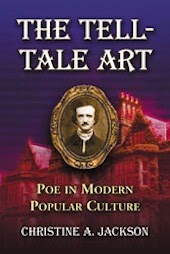
The latest recipient of the George N. Dove Award of the PCA's Detective/ Mystery Caucus is Christine Jackson (Nova Southeastern University, FL). The award is presented for contributions to the serious study of mystery and crime fiction. Jackson's publications include The Tell-Tale Art: Poe in Modern Popular Culture; she also has an article in the latest issue of Clues on Tana French.

Wednesday, April 23, 2014

The underappreciated Msgr. Ronald Knox.

Bust of Ronald A. Knox
by Arthur Pollen
Benjamin Welton pens an appreciation of Monsignor Ronald A. Knox (1888–1957), famed for his Detective Story Decalogue, his creation of sleuth Miles Bredon (I like his Footsteps at the Lock), and his launch of serious studies of Sherlock Holmes with this lecture. Welton calls Knox's Bredon works "charming, almost whimsical novels."

Tuesday, April 22, 2014

Trapped (1949).

More from the Bridges family: In Trapped (directed by Soylent Green's Richard Fleischer), the Treasury enlists counterfeiter Lloyd Bridges in its efforts to smash a counterfeiting ring.


Monday, April 21, 2014

New in thriller music.

Some items re mystery film music, thanks to Scott Bettencourt at Film Score Monthly:

• The new The Man in Half Moon Street showcases the compositions of Miklos Rozsa, providing music from this 1945 thriller as well as some of his work for The Strange Love of Martha Ivers (1946).

• A two-CD set has been released of Bruce Broughton's soundtrack for Young Sherlock Holmes (1985).

• Also released is the original soundtrack by Michael Small for Child's Play (a 1972 thriller directed by Sidney Lumet that features James Mason, Robert Preston, and Beau Bridges)

Wednesday, April 16, 2014

The return of J. B. Priestley's doctor-sleuth.

Valancourt Books follows up its reprinting of playwright-novelist-BBC broadcaster J. B. Priestley's Benighted with his sole novel featuring an amateur sleuth, Salt Is Leaving (1966). A retiring doctor suspects foul play when a patient who requires regular treatment suddenly goes incommunicado. (A review appears here from the Victoria [TX] Advocate.)

Tuesday, April 15, 2014

Cottage to Let (aka Bombsight Stolen, 1941).

In Cottage to Let (dir. Anthony Asquith—son of the prime minister), a new bombsight proves irresistible to Nazis, the RAF, and Scotland Yard. The film features Alastair Sim, John Mills, and Michael Wilding and is adapted from a play by Geoffrey Kerr (father of actor-lawyer John Kerr, who is probably best known for his role in South Pacific). Also see Yvette Banek's earlier take on the film.


Monday, April 14, 2014

"Le Sherlock Holmes Américain."

L'Affaire Bardouillet, one of the
adventures of Harry Dickson by Jean Ray
repr. Belgian publisher Le Cri
Harvard's Houghton Library blog features its copies of Harry Dickson—"le Sherlock Holmes Américain"—a pulp series penned by Belgian author Jean Ray (aka Raymundus Joannes de Kremer, John Flanders, and "the Belgian Poe") that had its beginnings in dime novels published from 1907 to 1911.

Wednesday, April 09, 2014

The return of Celia Fremlin.

Faber Finds has reissued a number of mysteries by Celia Fremlin (1914–2009), including her Edgar-winning The Hours before Dawn (dramatized on The Alfred Hitchcock Hour as "The Lonely Hours").

• Appointment with Yesterday 
• By Horror Haunted (short story collection)
• Dangerous Thoughts (Kirkus review here)
• Don't Go to Sleep in the Dark (short story collection)
• The Echoing Stones
• The Jealous One
• King of the World (her last novel)
• Listening in the Dusk
• The Long Shadow (Pittsburgh Press review here)
• A Lovely Way to Die (short story collection; Kirkus review here)
• The Parasite Person
• Possession
• Prisoner's Base (Kirkus review here)
• Seven Lean Years
• The Spider Orchid
• The Trouble-Makers
• Uncle Paul
• With No Crying  

Faber Finds also has republished Fremlin's first book, the nonfiction work War Factory, which is a result of the British World War II effort called Mass Observation.

Tuesday, April 08, 2014

I Love a Mystery (1945, 1973).

Based on Carleton E. Morse's radio series, I Love a Mystery follows the adventures of three insurance investigators. In the 1973 TV-movie version, mystery writer Melodie Johnson Howe appears as Charity, one of the daughters of star Ida Lupino.

(At left: The Devil's Mask, the 1946 version of I Love a Mystery)

Monday, April 07, 2014

Clues 32.1:
Tana French and Irish crime fiction.

 
Clues 32.1 (2014) has been published, which is a theme issue on Tana French and Irish crime fiction. A summary of the contents appears below.To order, contact McFarland.

A Debt Acknowledged: Clues Founding Editor Alice Maxine “Pat” Browne. NANCY ELLEN TALBURT (University of Arkansas). The author pays tribute to Clues founding editor Alice Maxine “Pat” Browne, who died in December 2013.

Introduction. Rachel Schaffer (Montana State University Billings).

Blurring the Genre Borderlines: Tana French’s Haunted Detectives. JOHN TEEL (Marshall University). In each of her mysteries, Tana French presents a different detective-narrator, and all of them are “haunted” by traumatic events from their childhoods or teen years. Through this use of “haunting,” French blurs genre “borderlines” by mixing the elements of the police procedural with, essentially, an aura of the gothic.

Unhappily Ever After: Fairy-Tale Motifs in Tana French’s In the Woods. SARAH D. FOGLE (Embry-Riddle University). In her first novel, In the Woods, Tana French makes sustained use of various fairy-tale motifs and conventions to illuminate her characters and their relationships as the murder investigation unfolds.

Tana French: Archaeologist of Crime. RACHEL SCHAFFER. The parallels between archaeology and detection provide a framework for the way the protagonists in Tana French’s novels work. Both disciplines follow the same general stages of surveying the scene, excavating information, and analyzing and interpreting results to shed light on the effects of past events on the lives of contemporary people.

Vision and Blind Spots: Characterization in Tana French’s Broken Harbor. CHRISTINE JACKSON (Nova Southeastern University). Obsessive watching is at the center of Tana French’s Broken Harbor. A stalker’s voyeurism shapes the case while police surveillance both conceals and unmasks detective protagonist Michael “Scorcher” Kennedy. French projects an actor’s stage background onto the novelist’s page to manipulate narrative distance and reconfigure detective novel conventions.

Liminality in the Novels of Tana French. MIMOSA SUMMERS STEPHENSON (University of Texas at Brownsville). In Tana French’s mysteries, the murder victims die at crucial turning points in their lives, and the detectives find themselves on the edge, neither in nor out, of the cases they investigate. The protagonists become involved personally and pass through liminal zones that leave them altered when the novels end.

Twenty-First-Century Irish Mothers in Tana French’s Crime Fiction. ROSEMARY ERICKSON JOHNSEN (Governors State University). Tana French’s three novels narrated by male detectives—In the Woods, Faithful Place, and Broken Harbour—reveal an intersection between crime fiction and the Irish literary tradition. Tropes of feminine imagery—particularly of the maternal—are implicated in the personal and professional failures of the narrators, and are part of French’s exploration of contemporary Ireland.

Murder in the Ghost Estate: Crimes of the Celtic Tiger in Tana French's Broken Harbor. SHIRLEY PETERSON (Daemen College). In Tana French’s fourth novel, Broken Harbor, the crimes of Celtic Tiger excess are interrogated in a deracinated ghost estate, where the desire for prosperity results in dire consequences for a young family, belying the notion that Ireland’s troubled past was well removed from its upwardly mobile present.

Authority and Irish Cultural Memory in Faithful Place and Broken Harbor. MAUREEN T. REDDY (Rhode Island College). French’s two most recent novels, Faithful Place and Broken Harbor, examine both the consequences of widespread loss of belief in any sort of authority in Ireland and some of the radical shifts in Irish cultural memory during the Celtic Tiger period and its aftermath.

"Built on Nothing but Bullshit and Good PR": Crime, Class Mobility, and the Irish Economy in the Novels of Tana French. MOIRA E. CASEY (Miami University of Ohio). Tana French’s novels demand serious literary attention for their social realist depiction of the cultural and economic impact of the Celtic Tiger economy and its recent crash. All four novels criticize Celtic Tiger culture, present the pre–Celtic Tiger past ambivalently, and represent the challenges of economic class mobility in contemporary Ireland.

REVIEWS
William Stephens Hayward. Revelations of a Lady Detective. Ellen F. Higgins

Arthur Conan Doyle, auth.; Jon Lellenberg, Daniel Stashower, and Rachel Foss, eds. The Narrative of John Smith. Christopher Pittard

Spiro Dimolianis. Jack the Ripper and Black Magic: Victorian Conspiracy Theories, Secret Societies and the Supernatural Mystique of the Whitechapel Murders. Rita Rippetoe

Emelyne Godfrey. Femininity, Crime, and Self-Defence in Victorian Literature and Society: From Dagger-Fans to Suffragettes. Gianna Martella

William Luhr. Film Noir. Mary P. Freier

Thursday, April 03, 2014

The friendship of a notorious spy.

On the History Extra podcast Ben Macintyre (Agent Zigzag, Operation Mincemeat) talks about his upcoming book that delves into the friendship between the Cambridge Spy Ring's Kim Philby and MI-6 agent Nicholas Elliott. The book was inspired by a suggestion from John le Carre.

Tuesday, April 01, 2014

Wallace's Psycho-Circus (1966).

Celebrate today's birthday of Edgar Wallace (1875–1932, an important author in the development of the thriller) with Psycho-Circus, a film on the exploits of "a syndicate of evil" starring Christopher Lee, Leo Genn, and Klaus Kinski that is based on Wallace's The Three Just Men.

Monday, March 31, 2014

WQXR Movies on the Radio: 1940s films.

Miklos Rozsa conducts his suite
 from Ben Hur, 1979 (PBS)
The March 29 episode of WQXR's Movies on the Radio features scores from the 1940s, which includes music from Double Indemnity (composed by Miklos Rozsa), The Maltese Falcon (composed by Adolph Deutsch), and Spellbound (composed by Bernard Herrmann).

Wednesday, March 26, 2014

Behind a new Hammett collection.

On Cultural Compass of UT-Austin's Harry Ransom Center, Julie M. Rivett (granddaughter of Dashiell Hammett) describes her work in the center archives with Richard Layman to prepare the raw material for The Hunter and Other Stories—a new collection of Hammett short stories that includes previously unpublished works.

Tuesday, March 25, 2014

Heinlein on decency.

In an August 1952 episode of the Edward R. Murrow program This I Believe, sci-fi author Robert Heinlein spoke about his faith in the goodness of his neighbors and others. Said Heinlein, "Our headlines are splashed with crime. Yet for every criminal, there are ten thousand honest, decent, kindly men. . . . Decency is not news. It is buried in the obituaries, but it is a force stronger than crime."

Monday, March 24, 2014

Number, please: Return of an Australian debut.

Murder in the Telephone Exchange (1948) by Australian mystery writer June Wright (1919–2012) features a sleuthing telephone operator pursuing the murderer of a nosy colleague (Kirkus review here). It is slated to be reissued by Portland publisher Verse Chorus in April (in Australia) and June (other countries). This will be followed later in the year by a previously unpublished Wright mystery, Duck Season Death. Verse Chorus plans other Wright reissues.

Wednesday, March 19, 2014

Twenty-year anniversary of The Alienist.

Bellevue Hospital, 1878. NYPL
The Bowery Boys podcast remembers that Caleb Carr's The Alienist was released 20 years ago and provides additional details on and a map of significant New York locations in the book (such as Bellevue Hospital and Theodore Roosevelt's house).

Tuesday, March 18, 2014

The Happy Thieves (1961).

Today would have been the 99th birthday of Richard Condon, who was born in 1915 and died in 1996. He is probably best known for the chilling The Manchurian Candidate (1959) and Prizzi's Honor (1982). His debut novel was The Oldest Confession (1958), which became the film The Happy Thieves. Rex Harrison and Rita Hayworth star as a pair of art thieves plying their trade in Madrid; apparently Hayworth thought little of the film.

Monday, March 17, 2014

Mysteries in March on CBC Radio (Canada).

The CBC Radio program The Next Chapter is focusing on mysteries this month, including quizzes and recommended reading lists (the latter featuring writers such as Gail Bowen).

Wednesday, March 12, 2014

Nazis in crime fiction.

Edmund Crispin's Holy Disorders
(1945), one entry in the
Detecting the Past database
Katharina Hall of Swansea University has an ongoing project, Detecting the Past, that seeks to examine how crime writers have portrayed the Nazis and their impact on the postwar period. The project also will include TV and film representations. A sample of the database that Hall is compiling on the subject can be viewed here.

Tuesday, March 11, 2014

The Lady Confesses (1945).

In The Lady Confesses (1945), Hugh Beaumont's inconvenient wife returns just as he plans to marry another woman and winds up dead.

Monday, March 10, 2014

Now online:
My article on first American detective novelist.

Illustration from
Metta Fuller Victor's
The Dead Letter (1864)
Mystery Scene has posted my article from issue no. 81 (2003) on author-editor Metta Fuller Victor, who wrote The Dead Letter (the first American detective novel).

Wednesday, March 05, 2014

The intrigue behind Holmes's missing years.

Patrick Allen as Col. Sebastian
Moran in "The Empty House"
(TV, 1986)
In the Public Domain Review, Andrew Glassard speculates that Sherlock Holmes may have been involved in espionage between "The Final Problem" (1893) and "The Adventure of the Empty House" (1903). He also looks at the backdrop of international intrigue behind "Empty House."

Tuesday, March 04, 2014

Three Cases of Murder (1955).

As the title indicates, there are three segments to Three Cases of Murder. "In the Picture" (from a story by Scottish writer Roderick Wilkinson) features a painting with supernatural elements. "You Killed Elizabeth" (from a 1951 story by Davis Dresser, aka Brett Halliday) involves two friends competing over a woman, who is subsequently killed. Orson Welles directs (and is the title character) "Lord Mountdrago" (from a story by Somerset Maugham), in which the tormented Welles grapples with the effects of his cruelty on a politician colleague.

Monday, March 03, 2014

50th anniversary: The death of Arthur Upfield.

Philip Morton in the Southern Highland News (Australia) notes the 50th anniversary of the death of British-born author Arthur Upfield, an important figure in Australian crime fiction as the creator of aboriginal detective Napoleon "Bony" Bonaparte. Bony debuted in The Barrakee Mystery (1929, aka The Lure of the Bush) and appeared in 29 works. An Edgar nominee for The Bushman who Came Back (1957), he influenced authors such as Tony Hillerman. Assessing Upfield's place in Australian and international literature is Investigating Arthur Upfield: A Centenary Collection of Critical Essays. The TV movie 3 Acts of Murder (2009) delves into the fatal results when a friend of Upfield used one of the author's fictional methods of murder. 


Wednesday, February 26, 2014

Film on author Lloyd Alexander.

Jared Crossley, the director of Lloyd Alexander, has dropped the price of the DVD of his film on the noted American fantasy author (best known for the Chronicles of Prydain) in honor of what would have been Alexander's 90th birthday in 2014. The DVD is now $10.

Tuesday, February 25, 2014

Stolen (2006).

Stolen, a documentary by Rebecca Dreyfus, delves into the 1990 heist at the Isabella Stewart Gardner Museum in Boston, with special attention to the role of art detective Harold Smith.

Monday, February 24, 2014

New Clues CFP: Patricia Highsmith.

Le cri du hibou (The Cry of the Owl),
dir. Claude Chabrol (1987, based on
the novel by Patricia Highsmith)
A Call for Papers has been posted for the Clues 2015 issue "Re-Evaluating Patricia Highsmith," guest edited by Fiona Peters (Bath Spa University, UK). Proposals for articles are due by May 1.

Wednesday, February 19, 2014

TLS on the model for a Buchan villain.

David Warner as
Appleton in
The 39 Steps (1978)
The Times Literary Supplement's Michael Caines discusses a new book on Sir Edgar Speyer, considered a model for a villain in John Buchan's The Thirty-Nine Steps (1915).

Tuesday, February 18, 2014

Huston's Three Strangers (1946).

In Three Strangers, a lottery ticket spells trouble for Sydney Greenstreet, Peter Lorre, and Geraldine Fitzgerald. Story by John Huston, with a screenplay by Huston and Howard Koch.

Monday, February 17, 2014

August Derleth: Best mysteries of 1969.

Essential Solitude: The Letters of
H. P. Lovecraft and August Derleth

Hippocampus P
In the Dec. 6, 1969, issue of the Capital [WI] Times, August Derleth (creator of the Holmes-like Solar Pons) listed his selections for the best fiction, nonfiction, and poetry books of 1969. Mysteries and sci-fi appeared under the subtitle "Entertainments" rather than the "Fiction" category. It may have been ethically questionable that he listed H. P. Lovecraft et al.'s Tales of the Cthulhu Mythos—which was issued by Arkham House, the publishing firm he cofounded.

The Godfather by Mario Puzo and Daphne du Maurier's The House on the Strand were two of his fiction selections, whereas two of his sci-fi picks were Fritz Leiber's A Spectre Is Haunting Texas and Douglas Warner's Death on a Warm Wind. His mystery selections included:

Allingham, Margery. The Allingham Casebook. Campion and Charlie Luke short stories
Bernkopf, Jean F., ed. Boucher's Choicest. Some of Anthony Boucher's picks for best mystery short stories
Carr, John Dickson. The Ghosts' High Noon.
Carter, Philip Youngman. Mr. Campion's Farthing. Carter was Allingham's widower
Christie, Agatha. By the Pricking of My Thumbs.
Davies, L. P. Stranger to Town.
Fish, Robert L. The Murder League.
Gardner, John. A Complete State of Death.
Kahn, Joan, ed. Hanging by a Thread.
Marric, J. J [John Creasey]. Gideon's Power.
Marsh, Ngaio. Clutch of Constables.
Queen, Ellery, ed. Queen's Minimysteries.
Simenon, Georges. Maigret in Vichy (aka Maigret Takes the Waters)
Stout, Rex. Death of a Dude.
Whitney, Phyllis A. The Winter People.

Thursday, February 13, 2014

Clues' Brooks Hefner on S. S. Van Dine,
With Good Reason radio.

On the February 15 episode of the radio program With Good Reason, James Madison University's Brooks Hefner discusses the heretofore unknown pseudonym he uncovered of Philo Vance creator S. S. Van Dine (featured in his Clues article), Van Dine's alter ego of Willard Huntington Wright, and Wright's work in the context of highbrow/lowbrow debates of his time. The same program features Longwood University's Christopher McGee talking about the Hardy Boys series.

Tuesday, February 11, 2014

Finger of Guilt (aka The Intimate Stranger, 1956).

In Finger of Guilt, film studio honcho Richard Basehart receives threatening letters from someone who says she is his mistress, although he claims no knowledge of her. Roger Livesey and Constance Cummings costar. The film was directed by the blacklisted Joseph Losey (as Joseph Walton), with a screenplay by blacklisted screenwriter Howard Koch (as Peter Howard).

Monday, February 10, 2014

Anthony Mann films in Berkeley.

Claire Trevor in Raw Deal (1948)
Envy lucky San Francisco residents, because they can see the crime films of Anthony Mann (1906–67) at the Pacific Film Archive in Berkeley this month. These include Border Incident (1949), Desperate (1947), He Walked by Night (1948), Raw Deal (1948), Side Street (1949), and T-Men (1947). There's a new book about this aspect of the director's work: The Crime Films of Anthony Mann by Max Alvarez.

Wednesday, February 05, 2014

"Dutch" redux: Radio doc on Elmore Leonard.

The Trespassers, previously
unpublished by Elmore Leonard
On the KPFA radio program Bookwaves, Richard Wolinsky (known for various collaborations with mystery-science fiction author Richard A. Lupoff) hosts a documentary on Elmore Leonard that includes archival interviews. Two audio versions are available: a 36-min. edited version and a version as heard on KPFA.

Tuesday, February 04, 2014

Podcasts on mystery films, Warner Archive.

The latest episode of the Warner Archive Collection podcast discusses the release of Bill Elliott Detective Mysteries (1955–57), a DVD of films with Elliott as a detective working in the LA sheriff's office:

• Calling Homicide (a police officer's death is connected to the murder of a head of a modeling school)

• Chain of Evidence (man with amnesia faces murder charges)

• Dial Red-O (disturbed veteran is accused of killing his wife)

• Footsteps in the Night (Elliott on the trail of a strangler)

• Sudden Danger (son seeks his father's murderer)

Other podcast episodes include:
  • Episode on Terror on a Train (1953, with Glenn Ford) and The Decks Ran Red (1958, with James Mason and Dorothy Dandridge)
  • Episode on The Mask of Dimitrios (1944, from the novel by Eric Ambler), A Dangerous Profession (1949), Duffy of San Quentin (1954), The Fall Guy (1947, from Cornell Woolrich's "Cocaine"/"C-Jag"), FBI Code 98 (1963), and Loophole (1954)
  • Episode on the Hildegarde Withers Mystery Collection that features the spinster detective created by Stuart Palmer and popularized by Edna May Oliver

Monday, February 03, 2014

Jill Paton Walsh on Lord Peter Wimsey.

Ian Carmichael as Lord Peter
Wimsey in "Clouds of Witness"
On the BBC Radio 4 program Open Book, Jill Paton Walsh—who completed Dorothy L. Sayers's Thrones, Dominations—discusses why readers remain devoted to Sayers's sleuth Lord Peter Wimsey. Walsh considers Wimsey an early feminist.

Friday, January 31, 2014

MacKinlay Kantor's It's about Crime (1960).

After reading MacKinlay Kantor's "The Grave Grass Quivers" (1931; see my post here), I wanted to read some of his other mystery work. In December 1960, he published It's about Crime, which includes "The Grave Grass Quivers" and 10 other short stories. The January 28, 1961, issue of the Saturday Review called the collection a "[f]ine pro job, as expected."

The collection provides much fascinating material and is a quick read. It is best suited to those who like hard-hitting mystery prose (for example, Kantor refers to a bullet as a "lead messenger"), and younger readers might need a tutorial from their elders as to past conventions such as a night letter.

In "Sparrow Cop," Nick, a rookie assigned to the zoo, receives a lot of ribbing about his job from his brother the seasoned cop ("you can never tell about bears," the latter says), yet Nick's encounter with an unaccompanied child leads to something far more sinister and gives his smart-aleck brother his comeuppance. "Rogues' Gallery" offers an unusual method for fingering criminals. The detective in "Something Like Salmon" must connect a bunch of fragmented clues provided by a lunch counter proprietor to find a gang of bank robbers. In "Nobody Saw Him Fall," an observant janitor who moonlights as Santa Claus figures out who framed him for murder (with Kantor commenting on class). An interesting twist occurs in "The Shadow Points," as a man thinks he has devised the perfect way to recover the valuable items from a long-ago robbery. The humorous "The Strange Case of Steinkelwintz" features an amateur sleuth on the trail of a missing baby-grand piano.

Kantor, Pulitzer Prize winner for Andersonville (1955) and writer of the story that became the film Gun Crazy (1950), died in 1977. His son, Tim, offers reflections in My Father's Voice: MacKinlay Kantor Long Remembered (1988).

Tuesday, January 28, 2014

Household's "Woman in Love" (1952).

This 1952 episode of Suspense about a woman attempting to smuggle an incriminating document out of communist territory features a story (published in Tales of Adventurers, 1952) by Rogue Male's Geoffrey Household, an appearance by Paul Newman, direction by Robert Mulligan (To Kill a Mockingbird, Summer of  '42), and a lot of melodramatic organ music.


Monday, January 27, 2014

Wellcome Library offers free historical images.

Dr. Joseph Bell, regarded
as the model for Sherlock
Holmes. Wellcome Images
The Wellcome Library, known for its medically related materials, has opened its historical images collections so that users can download high-resolution images for no charge. The only requirement is to acknowledge the library as the source. (Thanks to PhiloBiblos for the tip.)

Thursday, January 23, 2014

Oxford DNB remembers Israel Zangwill.

Israel Zangwill. NYPL.
One of Oxford Dictionary of National Biography's Lives of the Week is Israel Zangwill (1864–1926), author of The Big Bow Mystery (1891).

Below: Clip from The Verdict (1946, dir. Don Siegel), with Sidney Greenstreet and Peter Lorre, based on Zangwill's The Big Bow Mystery.

Tuesday, January 21, 2014

Kansas City Confidential (1952).

In Kansas City Confidential, John Payne is framed for an armored car robbery, and he sets out to learn who set him up.

Monday, January 20, 2014

New blog on Vincent Starrett.

Cover of Vincent Starrett's
Bookman's Holiday. NYPL
Ray Betzner has started a new blog on author-collector Vincent Starrett, a key figure in the Baker Street Irregulars and Sherlockian scholarship. I'm very fond of collections of Starrett's columns and essays: Bookman's Holiday (1942) and Books Alive (1940).

Wednesday, January 15, 2014

Jan 31 app deadline, UT-Austin Ransom Center.

Baroness Orczy, from the
May 26, 1906
San Francisco Call
The application deadline for research fellowships at UT-Austin's Harry Ransom Center is Jan. 31. Fellowships range from 1 to 3 months and from $1200 to $3000 for individuals who need to consult the center's collections (including those working on dissertations). Its mystery collections include the Sherlock Holmes and Sherlockian Collection; correspondence from Mary Elizabeth Braddon, Wilkie Collins, Patrick Hamilton, and Edgar Allan Poe; and manuscripts of J. S. Fletcher, Dashiell Hammett, A. E. W. Mason, Beverley Nichols, and Baroness Orczy.

Tuesday, January 14, 2014

Hollow Triumph (aka The Scar, 1948).

Adapted from the book by radio star Murray Forbes, Hollow Triumph (aka The Scar) features Paul Henreid attempting to evade a gangster and taking drastic steps to assume a new identity—with ironic consequences (especially relevant in today's context of identity theft).

Monday, January 13, 2014

Harvard on Darcy Glinto (Harold Ernest Kelly).

Harvard's Houghton Library blog features the evils of the cocaine trade via its copy of Snow Vogue (1941) by Darcy Glinto—a pseudonym of sci-fi, western, horror, and mystery writer Harold Ernest Kelly (1900–69). Kelly also was a publisher and wrote as Lance Carson, Gordon Holt, Hank Janson, Buck Toler, Preston Yorke, and Eugene Ascher (producing paranormal mysteries under the latter name).

There is an interesting 1942 newspaper clipping regarding charges against Kelly and writer Rene Raymond (aka James Hadley Chase, the author of No Orchids for Miss Blandish) for publishing obscene books—apparently pertaining to Kelly's Lady–Don't Turn Over (1940) and Road Floozie (1941) and Raymond's Miss Callaghan Comes to Grief (1941). The National Archives of Australia discusses here the banning of several Kelly books—including Road Floozie—and Mickey Spillane's novels.

Thursday, January 09, 2014

Ellroy companion published (ed. Foxwell).

James Ellroy: A Companion to the Mystery Fiction, written by Jim Mancall (Wheaton College, MA), was published on January 2. It is volume 6 in the series I edit for McFarland.

Author-critic Dick Lochte calls it "a clear, comprehensive guide to the Demon Dog’s dark, complex literary world." In the view of the Midwest Book Review, these companion books compose an "outstanding literary studies series."

Tuesday, January 07, 2014

The Zombies of Mora-Tau (1957).

What is one to do when zombies walk the ocean floor?

Monday, January 06, 2014

Pat Browne, founding editor of Clues, 1932-2013.

Pat Browne, the founding editor of Clues, passed away on December 27, 2013, at age 81. Her obituary has been published in the Toledo Blade, and a memorial event is planned for the Popular Culture Conference in Chicago in April. Memorial contributions may be directed to BGSU's Browne Popular Culture Library.

With the help of her husband, Ray, Pat provided one of the few venues for serious scholarship on the mystery genre, starting with the first issue in spring 1980: the product of a November 1978 conference at the University of South Florida on the work of Travis McGee creator John D. MacDonald. Wrote Pat in the issue:
...[W]e decided that the Popular Press would like to inaugurate a publication devoted exclusively to the detection genre, and I decided that the papers that had been presented at the MacDonald Conference and Mr. MacDonald's comments would constitute the core of that new publication—Clues: A Journal of Detection—under the assumption that few publications could be launched under such auspicious circumstances. (65)
Wrote JDM in this first Clues on Francis M. Nevins Jr.'s piece about his pulp work:
My work habits accounted, I think, for not only the diversity of plot and structure and societal themes in early work, but also for the diversity of the places where they were published. . . . When I tried to work exclusively within a specific genre, everything went stale for me. The words died. (66)
JDM noted elsewhere in this commentary piece, "Were I forced to define my strength, I would say that I am best at creating an illusion of contemporary reality" (66).

After serving as Clues editor for approximately 20 years, Pat retired in 2001, and I spearheaded the acquisition of the journal by Heldref Publications from Bowling Green State University in 2003, with the first issue under new management published in 2004. Clues is now published by McFarland, and we can only hope that Pat's "auspicious circumstances" have been fulfilled, as the journal enters its 32nd year of publication with a theme issue on the work of Tana French.

Excerpt from the table of contents for
Clues 1.1 (spr 1980)

Tuesday, December 31, 2013

"House for Sale" (1953).

Originally broadcast today 60 years ago, "House for Sale" (an episode of Four Star Playhouse) features Ida Lupino as a woman who confronts a real estate agent in a lonely house—or someone far more unstable.

Monday, December 30, 2013

Somerset Maugham's "The Criminal" (1904).

Somerset Maugham, NYPL
In English Literature in Transition 57.1 (2014), Daniel Blackburn and Alexander Arsov discuss "The Criminal," an early short story by Somerset Maugham that has not been reprinted—until now, in the journal. The style may seem a bit stilted to modern readers, but those interested in Maugham's crime-related work (such as "The Letter") may find intriguing elements in this ironic tale (based on a true incident) of a woman accused of theft and the barrister who represented her (or so she believes).

The issue also includes Jeremy Larance's discussion of E. W. Hornung's Raffles as an "ungentlemanly gentleman" refuting the English code of conduct, yet enjoying tremendous popularity.

Tuesday, December 24, 2013

Hammett's Secret Agent X-9 (1945).

Lloyd Bridges teams up with other secret agents to thwart Nazi plans for a synthetic fuel in this film adaptation of the comic strip by Dashiell Hammett and Alex Raymond.

Monday, December 23, 2013

T'is the season.

Some past season's greetings in the literary world:

Detail from Xmas card
NYPL
• The first Christmas card, 1846.

• Holiday cards sent by Robert Frost illustrating his poems.

• 1952 Christmas card from the New York Public Library.

• Christmas card sent by Langston Hughes, with a painting by Rockwell Kent. 

• Rebecca West with her husband, Henry Andrews, for their 1957 Christmas card.

• Christmas greeting from Mark Twain to J. M. Barrie

And don't miss:

• This essay by James Thurber on the phenomenon of sending holiday cards and his Hemingwayesque spoof of "The Night before Christmas."

• Journalist C. J. Ciaramella's Chandleresque spoof of "The Night before Christmas."

Wednesday, December 18, 2013

Foxwell on supporting players, Femmes Fatales.

Miss Clack (Cynthia Etherington, left)
wields her tracts before a skeptical
Rachel Verinder (Vivien Heilbron)
in The Moonstone (1972)
Today on the Femmes Fatales blog I'm talking about five of my favorite supporting characters in mysteries: Grandmama (Anne Perry), Miss Drusilla Clack (Wilkie Collins), Wilson Budd Hotchkiss (Mary Roberts Rinehart), Cordelia Thorn (Ellen Hart), and Ramses Emerson (Elizabeth Peters).

Tuesday, December 17, 2013

Remembering Peter O'Toole: Rogue Male (1976).

Although most of the tributes to the late Peter O'Toole seem focused on Lawrence of Arabia, The Lion in Winter, and Becket, he also was the lead in the second film adaptation of Geoffrey Household's thriller Rogue Male (dir. Clive Donner, 1976). O'Toole plays Sir Robert Hunter, who takes a potshot at Hitler and is pursued by the Gestapo.

Monday, December 16, 2013

New database, crime fiction by women authors from Spain.

Nuria Minguez's
Benvingut, Mister Holmes

(Welcome, Mister Holmes)
MUNCE (Mujeres y Novela Criminal en España 1975-2010, or Women and Crime Fiction in Spain 1975-2010) is a new database in Spanish that includes information on female mystery writers in Spain and crime novels written in Basque, Catalan, Galician, and Spanish. Funded by the Spanish Ministry of Economy and Competitiveness, the database is a team effort by scholars from universities in Spain, Australia, and the United Kingdom (one is Stewart King, who is working on a project on Spanish crime fiction).

Wednesday, December 11, 2013

Unlikely duos: Dolores Hart and Gilligan.

Dolores Hart, NYPL
A fascinating sidelight to the short acting career of Dolores Hart (e.g., King Creole and Where the Boys Are; she is now Mother Hart, O.S.B.) is this series of photos from a 1956 production of Joan of Lorraine at Loyola Marymount University. Hart played the Maid of Orleans, and—believe it or not—Bob Denver played the Dauphin.

Tuesday, December 10, 2013

Blackwell's Island (1939).

In Blackwell's Island, a reporter (John Garfield) goes undercover in a prison to expose the activities of a mobster. This film was co-directed by Michael Curtiz, with a screenplay and story by Crane Wilbur (a cousin of Tyrone Power).

Monday, December 09, 2013

First modern female PI in US mysteries.

Read my letter in the December 7 Washington Post regarding the first modern female private investigator in American mystery fiction (sorting out the debuts of Delilah West, Sharon McCone, V.I. Warshawski, and Kinsey Millhone).

Wednesday, December 04, 2013

Kenneth Fearing the poet.

The Neglected Books blog features "Cracked Record Blues" by Kenneth Fearing—probably better known during his lifetime for his poetry, but he's also the author of The Big Clock (film w/Ray Milland, 1948; remade as Police Python 357, 1976, and No Way Out, 1987).

Tuesday, December 03, 2013

The Narrow Margin (1952).

Before Peter Hyams remade it in 1990 with Gene Hackman and Anne Archer, The Narrow Margin appeared in 1952—a tale of a woman who intends to testify against criminals and is pursued on a train, directed by Richard Fleischer (Soylent Green, Mr. Majestyk).

Monday, December 02, 2013

Le Carre exhibition from Oxford.

Now online are some items from the Bodleian Library exhibition "Tinker, Tailor, Writer, Spy" on the work of John le Carre (aka David Cornwell). The library presented the exhibition in 2011 to mark the move of le Carre's papers to the Bodleian. Exhibits include:

• typewritten drafts of Tinker, Tailor, Soldier, Spy
• manuscript page from The Russia House
• photo of Alec Guinness and le Carre during the filming of Tinker, Tailor, Soldier, Spy
Of related interest: this 1996 program with le Carre and George Plimpton at New York's 92nd Street Y at the time of the release of The Tailor of Panama.