
Monday, May 02, 2011
New book on Collins and Caspary.

Thursday, April 28, 2011
Carnegie Mellon's Posner Collection.
 |
| "I clapped a pistol to his head." Illust. Sidney Paget The Adventures of Sherlock Holmes |
• The Adventures of Sherlock Holmes, first ed. (1892), by Arthur Conan Doyle, illus. Sidney Paget
• The Memoirs of Sherlock Holmes, first ed. (1894), by Arthur Conan Doyle, illus. Sidney Paget
• The Strange Case of Dr. Jekyll and Mr. Hyde, limited ed. (1952), by Robert Louis Stevenson, illus. Edward A. Wilson
• The Time Machine: An Invention (1895), by H. G. Wells (dedicated to W. E. Henley)
Wednesday, April 27, 2011
Poe Museum exhibition, "The Birth of Mystery."
 |
| Edgar Allan Poe, 1848. Library of Congress, Prints and Photographs Division |
Tuesday, April 26, 2011
Tribute to Ernie Kovacs.
 |
| The legendary Nairobi Trio |
Monday, April 25, 2011
Graphic novel version, The Sign of the Four.

Thursday, April 21, 2011
Cornell to preserve early accounts of U.S. trials.
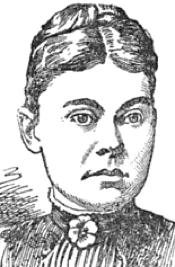 |
| Rendering of Lizzie Borden Phrenological Journal, Dec 1892. The phrenologists judged that her face showed "courage, selfishness, and executive ability." |
Wednesday, April 20, 2011
A history of the Illustrated Police News.

Tuesday, April 19, 2011
Silva Screen remasters Fear Is the Key (1972).
 |
| Barry Newman in his muscle car in Fear Is the Key (1972, dir. Michael Tuchner) |
Monday, April 18, 2011
Happy birthday, mystery composer Miklos Rozsa.
Distinguished film composer Miklos Rozsa was born today in Budapest in 1907. His mystery-related film scores
include Double Indemnity (1944; Oscar nominee, Best Score), Blood on the Sun (1945), Spellbound (1945; Oscar winner, Best Score), The Killers (1946; Oscar nominee, Best Score), The Naked City (1948), A Woman's Vengeance (1948), The Bribe (1949), The Asphalt Jungle (1950), Time after Time (1979), and Eye of the Needle (1981). He died in 1995.
To hear some clips from his work, visit the following links:
• The Asphalt Jungle
• Double Indemnity
• The Naked City
• Spellbound
• Time after Time
 |
| Barry Fitzgerald, left, and Don Taylor in The Naked City |
To hear some clips from his work, visit the following links:
• The Asphalt Jungle
• Double Indemnity
• The Naked City
• Spellbound
• Time after Time
Thursday, April 14, 2011
Greene-influenced journal Night and Day returns.

Wednesday, April 13, 2011
Happy birthday, Bill Pronzini.
 |
| Erle Stanley Gardner's Exploits of the Patent Leather Kid, ed. Bill Pronzini (2011). Crippen and Landru |
Tuesday, April 12, 2011
Edgar Allan Poe, self-publisher?
 |
| Edgar Allan Poe, 1848. Library of Congress, Prints and Photographs Division |
Monday, April 11, 2011
John Buchan this week on BBC Radio 4 Extra.

Thursday, April 07, 2011
Exhibition on the roles and perceptions of journalists.

Wednesday, April 06, 2011
Mystery-related films considered lost.
 | |||
| Pauline Frederick, star of Lydia Gilmore, Woman in the Case, and The Paliser Case. NYPL |
• Sherlock Holmes and the Great Murder Mystery (1908). SH and a gorilla?
• Lydia Gilmore (1915). Philandering husband murders his lover's spouse; wife attempts cover-up.
• The Woman in the Case (1916). Is a suicide actually murder?
• Col. Heeza Liar, Detective (1917). One in a series of cartoons with a Colonel Blimp-type character.
• The Paliser Case (1920). The murder of a treacherous man throws suspicion on the woman he lured into a sham marriage.
• The Radio Detective (1926). Adventure serial with Boy Scouts versus gangsters.
• Kismet (1930–31, dir. William Dieterle). Thief is embroiled in a plot against a caliph.
• Murder Will Out (1939). A valuable piece of jade causes a series of murders.
Tuesday, April 05, 2011
Hammer's 1940s–50s crime films.
 |
| Ad for A Case for PC 49. Hammerfilms. |
Monday, April 04, 2011
The Road Murder this week on BBC Radio 4 Extra.

Thursday, March 31, 2011
Childers's Riddle of the Sands (1903) at NYU.
On April 14, NYU's Glucksman Ireland House will celebrate the Haycraft-Queen Cornerstone work The Riddle of the Sands (1903)
by Erskine Childers (who ran guns before the 1916 Easter Rising and was executed in 1922 during the Irish civil war; his son later became president of Ireland). Penguin has reissued this tale of espionage. Childers's great-grandson, also named Erskine Childers, will read from his relative's work.
 |
| Simon MacCorkindale, left, and Michael York in The Riddle of the Sands (dir. Tony Maylam, 1979). |
Wednesday, March 30, 2011
Amateur detectives of 100 years ago.
A NYT article of March 12, 1911, listed "tales that will test the ingenuity of experts in the literature of mystery," but not all were universally embraced by the reviewer. The books were the following:
• The Dazzling Miss Davison by Florence Warden [actress-author Florence Alice Price James] (1910). Is the beautiful Miss Davison a pickpocket and a shoplifter, under the "hypnotic control [of] some very capable crook"? Filmed in 1917.
• The Paternoster Ruby by Charles Edmonds Walk (1910). A detective investigates the murder of a skinflint who owned a priceless jewel.
• The De Bercy Affair by Gordon Holmes [Louis Tracy] (1910, illus. Howard Chandler Christy). An actress is murdered; suspects include her wealthy fiance and anarchists. A "well-constructed detective tale, with plenty of false clues to lead the reader astray" [and a] "Chief Inspector, who is a much more human and attractive person than the customary detective of fiction."
• The Key to Yesterday by Charles Neville Buck (1910). An artist with no memory of his past begins to look into what he once was. Filmed in 1914. Buck has "to enjoin his characters from attempting such curious stunts with their eyes—as when his heroine stifles 'a mutinous impulse of her pupils to riffle into amusement.'"
• The Quests of Paul Beck by M. McDonnell Bodkin (1910). A dozen murders that have baffled others are solved by the detective of the title; Bodkin was a judge and served in the Irish Parliament. His notable female detective is Dora Myrl (Dora Myrl, the Lady Detective, 1900)—a "Sherlock Holmes in petticoats," according to the Morning Leader.
 |
| "I'll shoot," she announced in a tense tone, "so help me, I'll shoot." Illustration by J. V. McFall from The Paternoster Ruby. |
• The Paternoster Ruby by Charles Edmonds Walk (1910). A detective investigates the murder of a skinflint who owned a priceless jewel.
• The De Bercy Affair by Gordon Holmes [Louis Tracy] (1910, illus. Howard Chandler Christy). An actress is murdered; suspects include her wealthy fiance and anarchists. A "well-constructed detective tale, with plenty of false clues to lead the reader astray" [and a] "Chief Inspector, who is a much more human and attractive person than the customary detective of fiction."
• The Key to Yesterday by Charles Neville Buck (1910). An artist with no memory of his past begins to look into what he once was. Filmed in 1914. Buck has "to enjoin his characters from attempting such curious stunts with their eyes—as when his heroine stifles 'a mutinous impulse of her pupils to riffle into amusement.'"
• The Quests of Paul Beck by M. McDonnell Bodkin (1910). A dozen murders that have baffled others are solved by the detective of the title; Bodkin was a judge and served in the Irish Parliament. His notable female detective is Dora Myrl (Dora Myrl, the Lady Detective, 1900)—a "Sherlock Holmes in petticoats," according to the Morning Leader.
Tuesday, March 29, 2011
Jonathan Miller and an M. R. James ghost story.
 |
| Michael Hordern in "Whistle and I'll Come to You," BBC Omnibus, 1968. |
Monday, March 28, 2011
Jurispeepidence.
 |
| "Crime and Peepishment" by Diane H. Esher 2010 Peeps in Law, Pt Deux, ABA Journal |
Thursday, March 24, 2011
Death and the Good Life by Richard Hugo (1980).
The Neglected Books blog looks at the mystery Death and the Good Life about an ex-cop investigating the murders of two victims by ax. It's written by Seattle-born Richard Hugo (1923–82)—poet, University of Montana professor, and self-described "world's worst bombardier" during World War II (qtd. in Dictionary of Literary Biography).
Wednesday, March 23, 2011
Clues 29.1 issued: Christie, Spencer-Fleming, Borges, Temple, et al.

• Maria Hebert-Leiter on detecting crime after Hurricane Katrina (including analysis of James Lee Burke and several stories from New Orleans Noir, ed. Julie Smith)
• Stephen Knight on the work of Australian author Peter Temple
• Linda S. Maier on similarities between Jorge Luis Borges (who wrote detective fiction under pseudonyms) and Wilkie Collins
• Pamela S. Saur on the novels of Austrian author Gerhard Roth that can be read as murder mysteries
• Rachel Schaffer on sources of moral authority in Julia Spencer-Fleming's series
• Sarah E. Whitney on emotional violence in the neglected novels of Mary Westmacott (aka Agatha Christie)
 |
| Holmes and Watson on the trail with the "staunch hound" Pompey. Illustration by Sidney Paget, "The Adventure of the Missing Three- Quarter" |
• Janice Shaw on Frank Moorhouse's use of whodunit techniques in Lateshows
• Elyssa Warkentin on women in two early fictionalizations of the Jack the Ripper murders
• Reviews of Thrillers: 100 Must Reads, Detective Fiction in a Postcolonial and Transnational World, and Investigating Identities: Questions of Identity in Contemporary International Crime Fiction
Particularly fascinating is Emanuela Gutkowski's explanation using linguistic theory of just how Christie fools the reader regarding the murderer's identity in The Murder of Roger Ackroyd (1926). Readers should not be daunted by the word theory; the author clearly explains each point and illustrates it with examples from Christie's book.
Tuesday, March 22, 2011
Canada's new chess detective.

Margot Kinberg discusses the similarity of the game of chess and the activities of fictional investigators, and the Chess Circle forum mentions appearances of chess in works such as Rex Stout's Gambit (1952), Alan Sharp's Night Moves (1975), and Katherine Neville's The Eight (1988); another example is William Faulkner's short story "Knight's Gambit" in the collection of the same name (1949).
Monday, March 21, 2011
Ngaio Marsh curator okay after earthquake;
Ngaio Marsh House suffers some ill effects.
 |
| Stamp of Marsh issued by NZ in 1989 |
 |
| Ngaio Marsh House |
After the September [2010] quake there was a broken sewer pipe in the garden in front of the House and the front concrete steps had come away from the building. This time the interior of the fireplace and chimney in the diningroom has come down and the bricks have tumbled out onto the floor. On the kitchen side of the chimney where once there was a coal range there are signs of some movement. . . .
The damage has been mostly to contents. Both times [referring to the Sept 2010 and Feb 2011 earthquakes] books have spilled out of shelves . . . Ngaio's collection of Venetian glass has mostly now been smashed. . . . One or two valuable decorative plates and vases have broken and many glasses and china cups and saucers in the kitchen have smashed. . . . The marble top of the lovely old dresser in the Longroom is badly broken. Amazingly the wine glasses on the table in the dining room which is always set up for a festive Christmas meal are all sitting demurely in place!Sweet notes that because Ngaio Marsh House is classified as a commercial property, it is not eligible for redress services from the New Zealand Earthquake Commission. The inaugural Ngaio Marsh Memorial Lecture by Elric Hooper, scheduled for April 17, has been postponed.
Writes Harding, "So much of our daily life is now in upheaval. Roads buckled and traffic is slow . . . .But compared to the inconceivable horrors of northern Japan we are OK."
Friday, March 18, 2011
Friday's Forgotten Books:
Josephine Bell's Murder in Hospital (1937).
It was not his fault if a nurse was so ill-bred as to get herself murdered... — Josephine Bell, Murder in Hospital 30A nurse found strangled in a hospital laundry launches the first mystery novel of Josephine Bell and the debut of series sleuth Dr. David Wintringham. In Murder in Hospital Wintringham, medical registrar at St. Edmund's Hospital, sees disquieting occurrences in cases featuring star physician Sir Frank Jamieson; soon the instances of patients who have inexplicably died assume far greater significance. Enlisting fellow physicians Richard Williams, Rachel Ludwick, and Tony Hutchings to chase down details among patients, staff, doctors, and students, Wintringham begins to uncover a more sinister pattern and comes face to face with a serial killer.
In this book Bell has interesting things to say about medical ethics, race relations, and the position of women in medicine and has a fine sense of irony. The New York Times deemed the method of murder too difficult for readers to grasp, but I did not find it so. Readers may appreciate the following comment by the highly starched hospital matron: "... I should have thought you could have got all you want out of modern novels. I find most of them so full of sex as to be quite unreadable" (179). Sadly, Murder in Hospital is out of print.
Detection Club member and British Crime Writers Association cofounder Josephine Bell (aka Doris
 Bell Collier Ball, 1897–1987) was a physician before she became a full-time writer in 1954. She published more than 60 books over the course of her long career. Well-regarded novels include The Port of London Murders (1938), Death in Clairvoyance (1949), and New People at the Hollies (1961). She contributed an essay to Michael Gilbert's Crime in Good Company (1959).
Thursday, March 17, 2011
Dorothy B. Hughes picks, best mysteries of 1953.
 |
| Glenn Ford in The Big Heat (1953, dir. Fritz Lang) |
• Christianna Brand, Fog of Doubt. "Artful puzzle."
• Leslie Ford, Washington Whispers Murder."Tells, with the bite of intelligent scorn, a terrifying story."
• Max Franklin [Richard Deming], Justice Has No Sword. "This one has the professional touch of a star reporter."
• Michael Gilbert, Fear to Tread. "Another great Michael Gilbert novel."
• Charlotte Jay, Beat Not the Bones. "The first important mystery of the year."
• Ira Levin, A Kiss before Dying. "Another big first, written by a 23-year-old."
• René Masson, Green Oranges. "Masson is one of the great discoveries of this decade."
• William McGivern, The Big Heat. "Today's first-ranking novelist of the hard-hitting mystery."
• Josephine Tey, The Singing Sands. "Her noted blend of detecting excitement and beautiful writing."
Wednesday, March 16, 2011
BYU exhibition, Literary Worlds.
 |
| Caricature of Chesterton by David Low from Lions and Lambs (1928), NYPL |
Tuesday, March 15, 2011
The Times' recommended mysteries, 1936.
 |
| Eden Phillpotts, NYPL |
• Margery Allingham, Flowers for the Judge
• E. C. Bentley and H. Warner Allen, Trent's Own Case
• Thomas Burke, Murder at Elstree. "makes our flesh creep."
• Agatha Christie, The A.B.C. Murders; Murder in Mesopotamia
• G. Belton Cobb, No Alibi
• Freeman Wills Crofts, The Loss of the "Jane Vosper"
• [Margaret] Leonora Eyles, They Wanted Him Dead. Eyles was married to D. M. Murray, editor of the Times Literary Supplement.
• R. Austin Freeman, The Penrose Mystery
• Georgette Heyer, Behold, Here's Poison
• Charles J. Kenny [Erle Stanley Gardner], This Is Murder
• L[eonard]. A[rthur]. Pavey, Forward from Youth. Summary from the London Mercury, 34 (1936): "Brian Ferrands, a victim of shell-shock, is found lying dead of exposure. His friend, Denis Wantage, is induced to search into the dead man's past to find the true reason for his suicide." Pavey was a World War I veteran.
• Eden Phillpotts, A Close Call
• Edward Shanks, Old King Cole. "an unusual 'thriller.'" Mystery author Martin Edwards is distantly connected to Shanks by marriage.
Monday, March 14, 2011
Christie conf, Mosley panel, Frye issue.

• A panel is planned on Walter Mosley's work at November's Pacific Ancient and Modern Language Assn conf; Call for Papers here.
• ESC: English Studies in Canada plans a special issue on critic Northrop Frye in honor of his centenary. One item on the Call for Papers lists "Frye and . . . detective fiction." Deadline for papers is July 15. Go here for Frye's musings on the appeal of detective fiction.
Thursday, March 10, 2011
The lighter side of mystery.
 |
| The Richard Belzer muppet attempts to find the letter M. Sesame Street |
Wednesday, March 09, 2011
Watch episodes of Richard Diamond,
Private Detective.
 |
| David Janssen as Richard Diamond in "Picture of Fear" |
Tuesday, March 08, 2011
The favorite mystery writers of 1941.

1. Dorothy L. Sayers
2. Agatha Christie
3. Arthur Conan Doyle
4. Ngaio Marsh
5. Erle Stanley Gardner
6. Rex Stout
7. Ellery Queen
8. Margery Allingham
9. Dashiell Hammett
10. Georges Simenon
Thus the total is 4 Brits, 4 Americans, 1 New Zealand citizen, and 1 Belgian.
Lord Peter Wimsey was voted best detective; Marsh's Death of a Peer (aka A Surfeit of Lampreys, 1940) was deemed the best story read within the past six months, followed by Allingham's Traitor's Purse (1941).
Monday, March 07, 2011
Steal this book.
As the October 15, 1922, Library Journal reported in "Favorite Books of the Lightfingered," the books of mystery writers were the most
popular ones taken from the Grand Rapids Public Library, along with those of adventure and western authors. Among those most popular with thieves:
• Zane Grey, including 3 copies of Rainbow Trail (1915)
• E. Phillips Oppenheim
• Mary Roberts Rinehart, Amazing Interlude (1918) and More Tish (1921)
• Sax Rohmer, The Golden Scorpion (1919; "a galloping, breath-taking yarn" according to its advertisements)
 |
| Sax Rohmer, from the New York Tribune, Apr 18, 1920 |
• Zane Grey, including 3 copies of Rainbow Trail (1915)
• E. Phillips Oppenheim
• Mary Roberts Rinehart, Amazing Interlude (1918) and More Tish (1921)
• Sax Rohmer, The Golden Scorpion (1919; "a galloping, breath-taking yarn" according to its advertisements)
Friday, March 04, 2011
Unlikely Mystery Fan #5: Robert Taft.
 |
| Sen. Robert Taft, ca. 1940 (note photo of his father behind him). Library of Congress, Prints & Photographs Div. |
It seems to have run in the family. His father, President and Supreme Court Chief Justice William Howard Taft, also enjoyed detective stories.
Thursday, March 03, 2011
Edward Gorey exhibition, Boston Athenaeum.
 |
| Cover of Amphigorey Again (2007) |
Wednesday, March 02, 2011
UK's National Archives on the Constance Kent case.
 |
| Rendering of Constance Kent, Alden's Illustrated Family Miscellany, Aug 1865 |
Tuesday, March 01, 2011
Why aren't women writers remembered?
 |
| Dorothy B. Hughes, one author reprinted by Persephone Books |
Literary gatekeeping is a perpetual, much-debated topic. Although it seems to operate more aggressively against women, it also occurs with men. Fitzgerald, for one, was not recognized as a literary craftsman until well after his death. How many pulp writers were considered to be "slumming" in their lifetimes? The mystery genre suffers from the Rodney Dangerfield syndrome (i.e., receives little respect as a literary form worthy of study) and persistent perceptions that women write "fluffier" works, as can be seen in the sneering about the hugely successful Mary Roberts Rinehart. Powerhouses such as Charlotte Armstrong, Vera Caspary, Hughes, Margaret Millar, Ruth Rendell, and others would tend to refute the fluffy notion, but it would be interesting to see how many works by female mystery writers of the past are reprinted versus those by men.
Monday, February 28, 2011
Eric Ambler this week on BBC Radio 7.
 |
| Orson Welles (foreground) and Joseph Cotten in Eric Ambler's Journey into Fear (dir. Norman Foster, 1943). |
Thursday, February 24, 2011
Unlikely Mystery Fan #4: Tallulah Bankhead.
Part of a series on unexpected individuals who enjoy or enjoyed mystery-related works and authors.
 |
| Tallulah Bankhead, by Carl Van Vechten. Jan 1934. Library of Congress, Prints and Photographs Div |
I'm a sucker for a detective story.Husky-voiced actress Tallulah Bankhead was not only the daughter of Alabama Congressman William Brockman Bankhead but also quite fond of mysteries. In her autobiography she mentions Graham Greene as a particular favorite and states that Wilkie Collins's The Moonstone was the first mystery that she ever read. She appeared in the comedy thriller The Creaking Chair in 1924, the play version of Blackmail in London in 1928 (filmed by Hitchcock in 1929), and George Batson's play Design for Murder with later TV veteran Joseph Campanella in 1958.
—Tallulah Bankhead, My Autobiography 303
Wednesday, February 23, 2011
Bibliophilic superheroes.
 |
| Captain America, friend of librarians. From the Captain America t-shirt, 80stees.com |
Tuesday, February 22, 2011
Exhibition on Holmes, Fandorin in Russia.
 |
| Vasili Livanov as Sherlock Holmes in Sobaska Baskerviley (The Hound of the Baskervilles, 1981) |
Monday, February 21, 2011
Happy 190th birthday, Charles Scribner.
 |
| Charles Scribner, by Thomas Emmet. NYPL |
Thursday, February 17, 2011
Happy birthday, Ronald Knox.

Wednesday, February 16, 2011
Arthur C. Clarke's 31-word short story.
 |
| The rather paranoid star of Arthur C. Clarke's 2001: A Space Odyssey |
Tuesday, February 15, 2011
Happy birthday, Sax Rohmer.
 |
| Boris Karloff as the fiendish Dr. Fu Manchu in The Mask of Fu Manchu (1932) |
Monday, February 14, 2011
Dick Francis this week on BBC Radio 7.

Those who prefer their Francis on DVD can obtain Blood Sport, In the Frame, and Twice Shy that feature Ian McShane.
Thursday, February 10, 2011
Unlikely Mystery Fan #3: Robert Graves.
Part of a series on unexpected individuals who enjoy or enjoyed mystery-related works and authors.
 Poet-author Robert Graves (I, Claudius; Good-bye to All That, etc.), wrote "After a Century, Will Anyone Care Whodunit?", which appeared in the August 15, 1957, New York Times. In it, Graves prognosticated on which 20th-century "crime-and-detection thriller" authors will be taught in the 21st century, with quite emphatic likes and dislikes.
The mystery writers he liked:
• Erle Stanley Gardner. "As a former practicing attorney he can be trusted not to cheat . . . the legal situation is always novel and fascinating."
• Dashiell Hammett, "The Cleansing of Personville"/Red Harvest. "He writes a good practical English."
• Selwyn Jepson (author of Man Running, adapted by Hitchcock as Stage Fright, 1950, and uncle of writer Fay Weldon). "A refreshing exception."
• Georges Simenon. "a law to himself . . . his diversity and brilliance put most of his rivals to shame."
The mystery writers he dissed:
• E. C. Bentley. "flat-footed."
• Raymond Chandler. "...I would succumb more often to his ingenious impostures, if the style were not so sadly meretricious..."
• G. K. Chesterton. "self-satisfied criminologist . . .a jolly Catholic priest."
• Agatha Christie. "... nobody could promise Agatha immortality as a novelist." (never mind that Christie dedicated a book to him)
• Edgar Allan Poe. "...Heaven knows why nobody in Paris caught sight of the ape [from "The Murders in the Rue Morgue"] during all that excitement, though it was wandering paw-loose for days and must have felt pretty hungry and thirsty."
• Dorothy L. Sayers. "Dorothy Sayers . . . will . . . sink without a trace; she clearly has no belief in her outrageous drawing-room charades..."
Graves's crystal ball seems to have been cloudy, given how seriously he missed the mark on Chandler, Christie, and Sayers, and Jepson is hardly a household name in the present day.
Wednesday, February 09, 2011

Subscribe to:
Posts (Atom)