Monday, September 01, 2014

Academe: More notable U.S. espionage novels.

On the Academe blog Martin Kich (Wright State University) continues his series on "Fifty Notable American Espionage Novels" with the following:

Peter Lorre in
The Mysterious Mr. Moto (1938)
• Helen MacInnes, Assignment in Brittany (1942)

• Colin MacKinnon, Finding Hoseyn (1987)

• Joe Maggio, The Company Man (1972)


John P. Marquand, Stopover Tokyo
(1957; Mr. Moto takes on the communists)

• Wilson McCarthy, The Detail (1973) 

• Charles McCarry, The Miernick Dossier (1973)

Here's a rundown of Kich's earlier choices.

Tuesday, August 26, 2014

Remembering Richard Attenborough:
Seance on a Wet Afternoon (1964).

Among the many distinguished performances of Richard Attenborough, who died at age 90 on August 24, was in Seance on a Wet Afternoon with Kim Stanley (1964, dir. Bryan Forbes). It was based on the novel Seance by Australian Mark McShane, which Anthony Boucher considered one of the best debut mysteries of 1962.

Monday, August 25, 2014

A look at a Victorian murder case.

In this podcast from the UK National Archives, Kate Colquhoun (author of Murder in the First-Class Carriage: The First Victorian Railway Killing) discusses the case of the American Florence Maybrick, convicted of murdering her British husband in 1889. Colquhoun has written a book on the case: Did She Kill Him? A Victorian Tale of Deception, Adultery, and Arsenic (due out in the United States in October). Marie Belloc Lowndes's The Story of Ivy is a fictional take on the case.

Wednesday, August 20, 2014

UM: Literary maps (including mystery authors).

T. S. Stribling
The Century, Oct. 1921
The Clark Library at the University of Michigan is featuring literary maps of the United States in an online exhibition, including the following:

• "Raymond Chandler's Los Angeles" (want to see where Philip Marlowe lives?)

• The Southern map includes Truman Capote, William Faulkner, Edgar Allan Poe, and T. S. Stribling

• The Michigan map includes Charlotte Armstrong, Loren Estleman, Steve Hamilton, and Elmore Leonard

• Links to interactive maps include Brooklyn, Detroit, Manhattan, and San Francisco

Tuesday, August 19, 2014

Ira Levin's "The Pattern" (1951).

In "The Pattern," a May 1951 episode of Lights Out, a man is haunted by an incident during World War II when he could not prevent the bombing of an army barracks. The episode, written by Ira Levin (A Kiss before Dying, The Stepford Wives, Rosemary's Baby, Deathtrap), features John Forsythe and Rita Gam.

Monday, August 18, 2014

BFI hunts for missing A Study in Scarlet (1914).

Ad for the 1914 American version of
A Study in Scarlet, starring Francis Ford
As the British Film Institute noted on August 15, it is calling on the public for assistance in locating a print of A Study in Scarlet, a 1914 silent-film adaptation directed by George Pearson that is an early screen portrayal of Sherlock Holmes. Also missing is the 1914 American version (starring Francis Ford, brother of the director John Ford), as well as Pearson's version of The Valley of Fear (1916).

BFI also has reported on its successes in locating missing films, including the country-house mystery Three Steps in the Dark (1953).

Thursday, August 14, 2014

Poe mural, UK.

With a Pentel ballpoint pen, artist Wayne Mitchelson created this cool mural inspired by the work of Edgar Allan Poe. It is slated to go on display at UK's Loughborough Library. More on the work and the artist here.

Tuesday, August 12, 2014

James Hilton's "The Mallet" (Suspense, 1950).

In "The Mallet," a man hawking questionable medicines believes he has the formula to commit the perfect murder. Walter Slezak made his TV debut in this Dec. 1950 Suspense episode based on a 1929 story of the same name by Lost Horizon's James Hilton, who sometimes moonlighted in mystery.

Monday, August 11, 2014

"Forensic Chemistry in Golden-Age Detective Fiction."

In the summer 2014 issue of Chemical Heritage Magazine, Lee Sullivan Berry discusses "Forensic Chemistry in Golden-Age Detective Fiction: Dorothy L. Sayers and the CSI Effect," which touches on forensics in the works of Arthur Conan Doyle and R. Austin Freeman but concentrates on forensic aspects of Sayers's Whose Body?, Clouds of Witness, The Unpleasantness at the Bellona Club, Strong Poison, and The Documents in the Case (coauthored with Robert Eustace, aka Dr. Eustace Robert Barton).

Wednesday, August 06, 2014

British spies in World War II.

On the International Spy Museum's SpyCast, Michael Goodwin (King's College London) talks about the formation of the British Joint Intelligence Committee.

Faber has launched a new nonfiction blog called The Curious Files. Its podcasts include historian Roderick Bailey on British spies in World War II Italy and Matthew Sweet on still more World War II spies running around London's West End hotels. 

Tuesday, August 05, 2014

Remembering Dorothy Salisbury Davis:
"House of Masks" (1952).

MWA Grand Master Dorothy Salisbury Davis died on August 3 at age 98. The June 1952 Suspense episode "House of Masks" (based, I think, on Davis's A Town of Masks) features Geraldine Fitzgerald resenting the interference of her sister in her life and promoting the presence of a shady gardener.

With the passing of Davis, there remains only one living writer on the Haycraft-Queen Cornerstone List: Helen Eustis.

Thursday, July 31, 2014

Frank Drebin lives:
New Naked Gun soundtracks.


Good news for Frank Drebin fans: Film Score Monthly announced that La La Records has released a limited edition of Ira Newborn's scores for The Naked Gun: From the Files of Police Squad, The Naked Gun 2 1/2: The Smell of Fear, and The Naked Gun 33 1/3: The Final Insult.

Wednesday, July 30, 2014

Irish Humanities Alliance:
"The Success of Intl Crime Fiction."

The Irish Humanities Alliance offers a podcast on "The Success of International Crime Fiction," drawing from a June 2014 conference at Queen's University Belfast. Discussing the topic (and the flexibility of crime fiction to encompass all sorts of commentary) are Kate Quinn (University of Galway), who presented a paper on crime fiction in Chile; writer Garth Carr; and David Platten (University of Leeds).

Tuesday, July 29, 2014

Alias John Preston (1955).

In Alias John Preston, wealthy Christopher Lee arrives in an English village, has disturbing dreams, and may have a dark secret in his past. Psychiatrist Alexander Knox delves into the case.

Monday, July 28, 2014

UNM's Tony Hillerman Portal.

Debuting at the University of New Mexico Libraries is the Tony Hillerman Portal, which seeks to provide "an interactive guide to the life and work of Tony Hillerman." It includes the online exhibition "Tony Hillerman: From Journalist to Novelist"; maps of Southwest locations in the books The Blessing Way, The Boy Who Made Dragonfly, Dance Hall of the Dead, and Listening Woman; and audio and video interviews with the creator of tribal police officers Joe Leaphorn and Jim Chee, who died in 2008.

Wednesday, July 23, 2014

Mystery reading group guides.

For those looking for mystery reading group guides:

• The New York Review of Books has guides for William Lindsay Gresham's Nightmare Alley, Jean-Patrick Manchette's Fatale, and Georges Simenon's The Engagement.

• Michigan Center for the Book has a Reading Guide to Robert Traver's Anatomy of a Murder.


Tuesday, July 22, 2014

Knight without Armor (1937).

In Knight without Armor, British secret agent Robert Donat must rescue aristocrat Marlene Dietrich from Bolshevik baddies. The film (produced by Alexander Korda) is based on Without Armor by Lost Horizon's James Hilton, with a screenplay by early Hollywood pioneer Frances Marion.


Monday, July 21, 2014

"Behind the Badge:
The US Postal Inspection Service."

Front page of the Evening World of October 25, 1921,
reflecting the largest robbery of the time
The new exhibition "Behind the Badge: The U.S. Postal Inspection Service" at the Smithsonian's National Postal Museum includes famous scammers such as Charles Ponzi, a forged Robert Frost poem, counterfeit stamps, mail heists, assaults and murders of postal employees, and other cases involving the service such as that of the Unabomber.

Saturday, July 19, 2014

Philip K. Dick speaks.

The Best of Philip K. Dick
(Echo Point Books, 2013)
Pacifica Radio's From the Vault archival program is featuring a 1976 conversation between sci-fi author Philip K. Dick and Pacifica Radio's Mike Hodel. Topics include Richard Congdon, Harlan Ellison, Richard Lupoff, Kurt Vonnegut, the business of writing, A Scanner Darkly, The Man in the High Castle, and the first story sold by Dick (to Anthony Boucher who was, in Dick's words, "a great writer, a great editor, a great anthologizer, and a great person").

Wednesday, July 16, 2014

Religion and fictional detectives.

G.K. Chesterton
A recent article by Bill Phillips (University of Barcelona) is on "Religious Belief in Recent Detective Fiction." Some of the authors mentioned are Ken Bruen, James Lee Burke, G. K. Chesterton, Sara Paretsky, Robert B. Parker, and Ian Rankin.

Tuesday, July 15, 2014

Rinehart's The Bat (film, 1926).

Ad for The Bat
Film Daily Jan-Dec 1925
The smash play "The Bat" written by Mary Roberts Rinehart and Avery Hopwood first appeared on screen in this silent film version of 1926. The cast included Jack Pickford (brother of Mary).


Monday, July 14, 2014

Academe: Notable American espionage novels.

James Fenimore Cooper. NYPL
For the blog of Academe magazine (published by the American Association of University Professors), Martin Kich (Wright State University) is crafting a series of posts on "Fifty Notable American Espionage Novels" (he is up to no. 29). His choices include the following:

James Fenimore Cooper, The Spy (1821)
Richard Congdon, The Manchurian Candidate (1959)
Brian Garfield, Hopscotch (1975)
Dorothy Gilman, The Amazing Mrs. Pollifax (1970)
James Grady, Six Days of the Condor (1975)
Bill Granger, The November Man (1979)
Nicholas M. Guild, The Summer Soldier (1978)
Noel Hynd & Christopher Creighton,  The Krushchev Objective (1987)
Aaron Latham, Orchids for Mother (1977)
Robert Littell, The Amateur (1981)

Tuesday, July 08, 2014

A Shriek in the Night (1933).

In A Shriek in the Night, reporter Ginger Rogers teams up with rival journalist Lyle Talbot to investigate murders in an apartment building.

Monday, July 07, 2014

Vintage Paperback Index, BGSU.

Edgar winner
Lawrence G. Blochman
from UC-Berkeley's
The Blue and Gold
(1922)
As a fan of Dell mapbacks, I'm enjoying prowls through the 1940s-70s cover art in the Vintage Paperback Index at Bowling Green State University's Browne Popular Culture Library. Mystery authors represented include Lawrence Goldtree Blochman, Robert M. Coates, George Harmon Coxe, Mignon G. Eberhart, A. A. Fair (aka Erle Stanley Gardner), Leslie Ford, Brett Halliday, Dashiell Hammett, Geoffrey Homes, Baynard Kendrick, Helen McCloy, Zelda Popkin, Mary Roberts Rinehart, Rex Stout, and Phoebe Atwood Taylor. It's also not without its pleasant surprises such as the inclusion of Lloyd C. Douglas (The Robe, Magnificent Obsession) for Doctor Hudson's Secret Journal and C. W. Grafton (father of Sue) for The Rope Began to Hang the Butcher and The Rat Began to Gnaw the Rope. In addition, there are items for western fans (The Law at Randado by Elmore Leonard) and sci-fi aficionados (Rocket to the Morgue by Anthony Boucher; Invasion from Mars ed. Orson Welles).

Thursday, July 03, 2014

CBC's "100 Novels That Make You Proud to Be Canadian."

CBC Books (of the Canadian Broadcasting Corp.) has issued its list of "100 Novels That Make You Proud to Be Canadian," which includes the following mystery works:

• Linwood Barclay,
No Time for Goodbye
• Giles Blunt, Forty Words for Sorrow 
• Will Ferguson, 419
• Louise Penny, Still Life
• Andrew Pyper, Lost Girls

Wednesday, July 02, 2014

Rod Serling speaks.

Some Rod Serling items I discovered:

• Binghamton, NY, is moving its Walk of Fame for preservation reasons. The first star was given posthumously to native son Serling.

Rod Serling, from 1959
Mike Wallace Interview
• At a May 1971 UCLA event, an often witty and blunt Serling commented on Twilight Zone episodes "The Monsters Are Due on Maple Street" and "A Stop at Willoughby"; Night Gallery episode "They're Tearing Down Tim Riley's Bar";  and the Hallmark Hall of Fame production "Storm in Summer." As can be expected given Serling's continual criticism of television, he had things to say about the state of TV in general:
"It . . . points out one of the major, in-bred problems of television: that however moving and however probing and incisive the drama, it cannot retain any consistent thread of legitimacy when after 12 or 13 minutes, out come 12 dancing rabbits with toilet paper." 
He plugged science fiction authors such as Arthur C. Clarke and a young filmmaker by the name of George Lucas ("Science fiction is becoming an altogether legitimate art form") and good writing ("You judge good writing by its lasting quality . . . nothing I've written in my life . . . will ever be remembered 100 years hence"). He considered his best work to be "Requiem for a Heavyweight," The Rack, and Seven Days in May.

Tuesday, July 01, 2014

23 Paces to Baker Street (1956).

Directed by Henry Hathaway and based on Warrant for X (aka The Nursemaid Who Disappeared) by author-screenwriter Philip MacDonald (The List of Adrian Messenger, etc.), 23 Paces to Baker Street features Van Johnson as a blind playwright who overhears a kidnapping plot.

Monday, June 30, 2014

E. W. Hornung's unpublished diary.

Libraries are always so interesting: a man's bookcase is something more interesting than the man himself, sometimes the one existing portrait of his mind.
—E. W. Hornung, The Crime Doctor

E. W. Hornung. NYPL
In English Literature in Transition, Edmund G. C. King (Open Univ) discusses the reading experience of British and Scottish soldiers in WWI, with particular attention to the wartime activities of E.W. Hornung (creator of Raffles, gentleman thief).

Sadly, Oscar—the only child of Hornung and Constance, Arthur Conan Doyle's sister—was killed in action at Ypres in July 1915. Seeking solace, Hornung served as a YMCA volunteer during the war—working in a canteen; maintaining a wartime library for soldiers in Arras, France, and a postwar one in the vicinity of Cologne, Germany; looking for friends of Oscar; and hoping to encounter Conan Doyle's serviceman son, Kingsley (who died of flu in 1918). His Notes of a Camp Follower on the Western Front (1919) tells about his war experiences and provides insight into what servicemen were reading (popular authors included Mary Elizabeth Braddon, Edward Bulwer Lytton, Marie Corelli, Anthony Hope, and E. Phillips Oppenheim). Interestingly, he reports only one reader for Wilkie Collins's The Woman in White. Pertaining to the works of his brother-in-law, he wrote, "Messrs. Holmes and Watson were the most flourishing of old firms, and Gerard the only Brigadier taken seriously at my counter" (Notes 141). His own output was not ignored:
"When I was up the line," said one of my friends, bubbling over with a compliment, "a chap said to me, 'You know that old—that—that elderly man who runs the Rest Hut? He's the author of Raffles.'"
Adds Hornung in mock outrage, "Elderly! One would as lief be labelled Virtuous or Discreet" (Notes 144–45). Hornung died of pneumonia in 1921 at 54, hardly an advanced age.

King relates that Hornung kept a diary between December 1917 and March 1918 that took the format of letters to his wife. He drew on this diary to write Notes, but King indicates that the diary reveals more about Hornung's reasons for war service than Notes does. Hornung's friend Shane Chichester preserved a typescript of the diary, which is now in the University of Birmingham's Cadbury Research Library along with other papers. King also provides a heart-warming glimpse of Hornung at work via the World War I memoir of Carlos Paton Blacker, Oscar's Eton classmate who became a noted psychiatrist.

King's article follows "The A. J. Raffles Stories Reconsidered: Fall of the Gentleman Ideal" by Jeremy Larance from the first 2014 issue of English Literature in Transition.

Thursday, June 26, 2014

War, Buchan, and The Thirty-Nine Steps.

As part of BBC Radio 3's programming on the centenary of World War I, the program Free Thinking convenes John Buchan's biographer Andrew Lownie and Buchan companion author Kate Macdonald to talk about the place of his war experience in The Thirty-Nine Steps and the popularity of the novel with servicemen.

Wednesday, June 25, 2014

Happy birthday, Dorothy Gilman.

She left us in 2012, but her work lives on. Grand Master Dorothy Gilman was born today in 1923 in New Brunswick, NJ—just like her most famous creation, senior-citizen secret agent Mrs. Pollifax. Here is a behind-the-scenes look at the making of Mrs. Pollifax-Spy with Rosalind Russell.

Tuesday, June 24, 2014

Woolrich's "Post Mortem" (May 1949).

In this 1949 episode of Suspense based on Cornell Woolrich's "Post Mortem" (Black Mask, Apr. 1940) and directed by Robert Stevens (Alfred Hitchcock Presents, Twilight Zone), a woman marries a doctor who has a disturbing track record when it comes to life insurance.

Monday, June 23, 2014

O'Donnell's Modesty Blaise, BBC Radio 4 Extra.

One of the Modesty Blaise
graphic novels from Titan Books
Peter O'Donnell's Modesty Blaise and Willie Garvin try to thwart a diamond robbery in this episode kicking off series 2 of BBC Radio 4 Extra's Modesty Blaise.

Wednesday, June 18, 2014

The return of Caspary's The Man Who Loved
His Wife
(1966).

Somehow I missed the new entry in the Feminist Press series Femmes Fatales: Vera Caspary's The Man Who Loved His Wife (1966), which features a man who may have ulterior motives when it comes to his much younger wife. This novel, called a trompe l'oeil by Kirkus in its original release, follows FP's reissues of Caspary's Laura and Bedelia.

Tuesday, June 17, 2014

Glaspell's Trifles (2009).

Susan Glaspell. NYPL.
Author, Pulitzer Prize-winning playwright, and Provincetown Players cofounder Susan Glaspell (1876–1948) wrote the play Trifles —with women as far more observant of what has happened in a farmhouse than the male law enforcement officials—after covering the John Hossack murder case for the Des Moines Daily News in 1900. Trifles was first produced in 1916. Glaspell then adapted it as the celebrated short story "A Jury of Her Peers" (1917). Pamela Gaye Walker directed the 2009 short film of Trifles. Sally Heckel made an Oscar-nominated version of "A Jury of Her Peers" in 1980, following the version on Alfred Hitchcock Presents in 1961.

Monday, June 16, 2014

McDermid on Pinkerton.

Allan Pinkerton. NYPL.
Today on BBC Radio 4 Extra's program The First Private Eye, Val McDermid talks about Allan Pinkerton, the groundbreaking private detective who thwarted a plot against Abraham Lincoln (as Daniel Stashower makes clear in the Edgar-winning The Hour of Peril).

Wednesday, June 11, 2014

MS review, Ellroy companion.

The latest review for James Ellroy: A Companion to the Mystery Fiction appears in Mystery Scene (no. 134), written by Jon L. Breen: "an ideal subject for the consistently excellent McFarland Companions series."

Tuesday, June 10, 2014

Sayers's "Suspicion" (Mar. 1949).

Why not celebrate Dorothy L. Sayers's birthday coming up on Friday by checking out the 1949 Suspense episode "Suspicion," based on the Sayers short story of the same name? Disregard the ID of Charlton Heston in this YouTube selection; there were two versions of "Suspicion" for Suspense, and this one is the Mar. 1949 version (Heston was in the Nov. 1949 version).

Monday, June 09, 2014

Art Detective Web site.

The "unknown rheumatologist"—
solved
The Art Detective Web site seeks to connect UK public art collections, the public, and experts, providing a nexus of discussion about art and supplying missing information about artwork.

Wednesday, June 04, 2014

Coming from U-Chicago Press:
Oppenheim, Westlake.

The arrival of the fat fall catalog from University of Chicago Press indicated that some goodies are in store for mystery fans:
  • New paperback editions of spy fiction and thriller pioneer E. Phillips Oppenheim's The Great Impersonation (1920) and The Spy Paramount (1935). Both are out in September, distrib. for the British Library.

Photo from The Great Impersonation (1935),
starring Edmund Lowe and Valerie Hobson

Tuesday, June 03, 2014

Woolrich's "The Listener" (1956).

In this February 1956 episode of Four Star Playhouse based on Cornell Woolrich's "Eyes That Watch You," Ida Lupino has some dark plans in store for her husband—but are she and her accomplice the only ones who know? Playing her brother is Richard Lupino (a cousin to Ida Lupino and Buster Keaton).

Monday, June 02, 2014

BL's "Discovering Literature:
Romantics and Victorians."

1877 Chatto & Windus edition
of Wilkie Collins's
The Moonstone
The British Library's online exhibition on "Discovering Literature: Romantics and Victorians" has some items of interest for mystery fans:

Note that the attribution for Revelations of a Lady Detective (1864) is incorrect; it is not by the pseudonymous Andrew Forrester (James Redding Ware), but rather William Stephens Hayward.

Update. The BL has corrected the attribution for Revelations of a Lady Detective.

Wednesday, May 28, 2014

Upcoming in film music: Schifrin, Jarre.

Film Score Monthly reports that the score to the spy film The Fourth Protocol (1987, book by Frederick Forsyth) will be out shortly after long unavailability; Lalo Schifrin is the composer (best known for the Mission Impossible theme).

Also interesting is the list of top sellers on the FSM Web site; no. 1 is the not yet released, limited-edition score to The Train (dir. John Frankenheimer and featuring Burt Lancaster, 1964) composed by Maurice Jarre.


Tuesday, May 27, 2014

David Goodis...To a Pulp (2010).

The documentary David Goodis ... To a Pulp seeks to illuminate the life and work of a major figure in American noir through interviews with relatives and associates and an examination of real-life influences on his fiction. Goodis was the first husband of Elaine Astor, the mother of filmmaker Larry Withers.

Monday, May 26, 2014

Recalling two Army nurses' deaths, 1917.

From left: Helen Burnett Wood, Edith Ayres, and Emma Matzen,
WWI Army nurses. Chicago Examiner 22 May 1917: 3.
As the centenary of the outbreak of World War I approaches, let us remember on this Memorial Day the nearly 200 American women who died in the line of duty during the war. Many of their deaths are attributed to the flu epidemic, but there were deaths such as those of Army nurses Helen Burnett Wood (Evanston, IL) and Edith Ayres (Attica, OH). En route to France, they were hit by a ricocheting shell on May 20, 1917, as the SS Mongolia conducted target practice; their fellow nurse, Emma Matzen (Columbus, NE), was injured. The official Senate inquiry provides graphic details about the incident. Wood and Ayres were buried with military honors; Matzen recovered and went on to duty in France.

Wednesday, May 21, 2014

Arsenic, the Marsh test, and mystery fiction.

In the May/June 2014 issue of Museum Notes, William B. Jensen (emeritus professor of chemistry at the University of Cincinnati) discusses the Marsh test for arsenic (named for British chemist James Marsh), its first use in a trial, and its place in mystery fiction (mentioning its appearances in Dorothy L. Sayers's Strong Poison and R. Austin Freeman's The Cat's Eye).

Tuesday, May 20, 2014

Hell Is a City (1960).

Stanley Baker in
Hell Is a City
Important in the evolution of the police procedural, Hell Is a City (U.S. book title: Somewhere in This City) was written by ex-police officer Maurice Procter as the first of his Granchester series. Directed by Val Guest (The Quatermass Xperiment), the film features the always interesting Stanley Baker, Billie Whitelaw, and Donald Pleasence. Baker's Inspector Harry Martineau hunts for an prison escapee in gritty Manchester (filmed on location).

Monday, May 19, 2014

Whitman's story of murder.

Walt Whitman. NYPL.
In the "Story of the Week," Library of America features Walt Whitman's "One Wicked Impulse!," which deals with the ironic aftermath of the murder of a unscrupulous lawyer. The introduction to "Impulse" mentions that the story was first published in 1845 and reprinted in the January 1954 EQMM.

Wednesday, May 14, 2014

Rose Macaulay's Mystery at Geneva (1922).

"They must be found, gentlemen. Alive or (unthinkable thought) dead, they must be found. The Assembly must do nothing else until this sinister mystery is unravelled. We must employ detectives. We must follow every clue."
Miss Longfellow said, "My! Isn't it all quite too terribly sinister!" (Rose Macaulay, Mystery at Geneva 110)
Rose Macaulay by W. W. Seaton
Shadowland Mar-Aug 1923
In catching up with U-Ghent professor Kate Macdonald's podcast Why I Really Like This Book, I was intrigued by the episode on Dame Rose Macaulay's Mystery at Geneva (1922). I was familiar with Macaulay (1881–1958) as a satirical novelist (for example, The Towers of Trebizond) and an inspiration to younger Somervillians Vera Brittain and Winifred Holtby, but did not know about this mystery sidelight that features Macaulay's feminist commentary and a journalist investigating disappearing delegates from the League of Nations. "A mystery without distinction," sniffed the Bookman. "[... E]veryone will enjoy Miss Macaulay's running fire of lively and humorous comment upon the human comedy and the fools we mortals are," countered N. P. Dawson in Shadowland. "A fascinating novel," adds Kate (whose specialties include thriller writers John Buchan and Dornford Yates).

Tuesday, May 13, 2014

No Hands on the Clock (1941).

Adapted from the novel by screenwriter-author Daniel Mainwaring (who wrote as Geoffrey Homes and is best known for Build My Gallows High, aka Out of the Past), No Hands on the Clock features Chester Morris as a fast-talking PI on the trail of a missing person. He learns that the case is connected to a string of bank heists, which interests the G-men. Jean Parker co-stars.

Monday, May 12, 2014

ABA Journal's contest for legal short fiction.

Raymond Burr as lawyer Craig Carlson
in Please Murder Me (1956)
The ABA Journal is having a writing contest for legal short fiction; the submission deadline is June 30.

Tuesday, May 06, 2014

Eight Witnesses (1954).

In Eight Witnesses, a scientist is murdered, and the only witnesses are eight blind people. Peggy Ann Garner stars in a story by screenwriter Halsted Welles (Alfred Hitchcock Presents, Mannix, 3:10 to Yuma, Rod Serling's Night Gallery).


Friday, May 02, 2014

Guardian review, Ellroy companion.

In the Guardian, P. D. Smith has reviewed the James Ellroy companion (written by Jim Mancall and edited by me): "this A-Z guide is an essential key to unlock the complexities of one of America's most distinctive and powerful writers."

Wednesday, April 30, 2014

James Madison and zombies.

Many of you probably have been worrying about this, but William Baude of University of Chicago's law school finally has addressed the question of whether zombies have rights under the US Constitution. There's also Adam Chodorow's "Death and Taxes and Zombies," for those wondering if tax law applies to brain-eaters. (thanks, Law and Humanities blog)

Tuesday, April 29, 2014

Dishonored Lady (1947).

Troubled former magazine editor Hedy Lamarr faces a murder charge in Dishonored Lady (1947, dir. Robert Stevenson), based on the play by Pulitzer Prize winner Margaret Ayer Barnes and her longtime friend, Edward Sheldon, that starred American theater legend Katharine Cornell. Its subject matter is the Madeleine Smith poisoning case of 1857 (featured also in David Lean's Madeleine, 1949). Barnes and Sheldon successfully sued MGM for plagiarism of their play in the studio's film of Letty Lynton (1932)—Marie Belloc Lowndes's version of the Smith case.


Thursday, April 24, 2014

Jackson receives Dove Award.

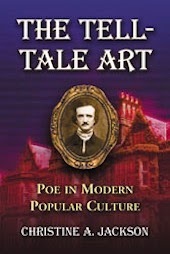
The latest recipient of the George N. Dove Award of the PCA's Detective/ Mystery Caucus is Christine Jackson (Nova Southeastern University, FL). The award is presented for contributions to the serious study of mystery and crime fiction. Jackson's publications include The Tell-Tale Art: Poe in Modern Popular Culture; she also has an article in the latest issue of Clues on Tana French.

Wednesday, April 23, 2014

The underappreciated Msgr. Ronald Knox.

Bust of Ronald A. Knox
by Arthur Pollen
Benjamin Welton pens an appreciation of Monsignor Ronald A. Knox (1888–1957), famed for his Detective Story Decalogue, his creation of sleuth Miles Bredon (I like his Footsteps at the Lock), and his launch of serious studies of Sherlock Holmes with this lecture. Welton calls Knox's Bredon works "charming, almost whimsical novels."

Tuesday, April 22, 2014

Trapped (1949).

More from the Bridges family: In Trapped (directed by Soylent Green's Richard Fleischer), the Treasury enlists counterfeiter Lloyd Bridges in its efforts to smash a counterfeiting ring.


Monday, April 21, 2014

New in thriller music.

Some items re mystery film music, thanks to Scott Bettencourt at Film Score Monthly:

• The new The Man in Half Moon Street showcases the compositions of Miklos Rozsa, providing music from this 1945 thriller as well as some of his work for The Strange Love of Martha Ivers (1946).

• A two-CD set has been released of Bruce Broughton's soundtrack for Young Sherlock Holmes (1985).

• Also released is the original soundtrack by Michael Small for Child's Play (a 1972 thriller directed by Sidney Lumet that features James Mason, Robert Preston, and Beau Bridges)

Wednesday, April 16, 2014

The return of J. B. Priestley's doctor-sleuth.

Valancourt Books follows up its reprinting of playwright-novelist-BBC broadcaster J. B. Priestley's Benighted with his sole novel featuring an amateur sleuth, Salt Is Leaving (1966). A retiring doctor suspects foul play when a patient who requires regular treatment suddenly goes incommunicado. (A review appears here from the Victoria [TX] Advocate.)

Tuesday, April 15, 2014

Cottage to Let (aka Bombsight Stolen, 1941).

In Cottage to Let (dir. Anthony Asquith—son of the prime minister), a new bombsight proves irresistible to Nazis, the RAF, and Scotland Yard. The film features Alastair Sim, John Mills, and Michael Wilding and is adapted from a play by Geoffrey Kerr (father of actor-lawyer John Kerr, who is probably best known for his role in South Pacific). Also see Yvette Banek's earlier take on the film.


Monday, April 14, 2014

"Le Sherlock Holmes Américain."

L'Affaire Bardouillet, one of the
adventures of Harry Dickson by Jean Ray
repr. Belgian publisher Le Cri
Harvard's Houghton Library blog features its copies of Harry Dickson—"le Sherlock Holmes Américain"—a pulp series penned by Belgian author Jean Ray (aka Raymundus Joannes de Kremer, John Flanders, and "the Belgian Poe") that had its beginnings in dime novels published from 1907 to 1911.

Wednesday, April 09, 2014

The return of Celia Fremlin.

Faber Finds has reissued a number of mysteries by Celia Fremlin (1914–2009), including her Edgar-winning The Hours before Dawn (dramatized on The Alfred Hitchcock Hour as "The Lonely Hours").

Appointment with Yesterday 
By Horror Haunted (short story collection)
Dangerous Thoughts (Kirkus review here)
Don't Go to Sleep in the Dark (short story collection)
The Echoing Stones
The Jealous One
King of the World (her last novel)
Listening in the Dusk
The Long Shadow (Pittsburgh Press review here)
A Lovely Way to Die (short story collection; Kirkus review here)
The Parasite Person
Possession
Prisoner's Base (Kirkus review here)
Seven Lean Years
The Spider Orchid
The Trouble-Makers
Uncle Paul
With No Crying  

Faber Finds also has republished Fremlin's first book, the nonfiction work War Factory, which is a result of the British World War II effort called Mass Observation.

Tuesday, April 08, 2014

I Love a Mystery (1945, 1973).

Based on Carleton E. Morse's radio series, I Love a Mystery follows the adventures of three insurance investigators. In the 1973 TV-movie version, mystery writer Melodie Johnson Howe appears as Charity, one of the daughters of star Ida Lupino.

(At left: The Devil's Mask, the 1946 version of I Love a Mystery)

Monday, April 07, 2014

Clues 32.1:
Tana French and Irish crime fiction.

 
Clues 32.1 (2014) has been published, which is a theme issue on Tana French and Irish crime fiction. A summary of the contents appears below.To order, contact McFarland.

A Debt Acknowledged: Clues Founding Editor Alice Maxine “Pat” Browne. NANCY ELLEN TALBURT (University of Arkansas). The author pays tribute to Clues founding editor Alice Maxine “Pat” Browne, who died in December 2013.

Introduction. Rachel Schaffer (Montana State University Billings).

Blurring the Genre Borderlines: Tana French’s Haunted Detectives. JOHN TEEL (Marshall University). In each of her mysteries, Tana French presents a different detective-narrator, and all of them are “haunted” by traumatic events from their childhoods or teen years. Through this use of “haunting,” French blurs genre “borderlines” by mixing the elements of the police procedural with, essentially, an aura of the gothic.

Unhappily Ever After: Fairy-Tale Motifs in Tana French’s In the Woods. SARAH D. FOGLE (Embry-Riddle University). In her first novel, In the Woods, Tana French makes sustained use of various fairy-tale motifs and conventions to illuminate her characters and their relationships as the murder investigation unfolds.

Tana French: Archaeologist of Crime. RACHEL SCHAFFER. The parallels between archaeology and detection provide a framework for the way the protagonists in Tana French’s novels work. Both disciplines follow the same general stages of surveying the scene, excavating information, and analyzing and interpreting results to shed light on the effects of past events on the lives of contemporary people.

Vision and Blind Spots: Characterization in Tana French’s Broken Harbor. CHRISTINE JACKSON (Nova Southeastern University). Obsessive watching is at the center of Tana French’s Broken Harbor. A stalker’s voyeurism shapes the case while police surveillance both conceals and unmasks detective protagonist Michael “Scorcher” Kennedy. French projects an actor’s stage background onto the novelist’s page to manipulate narrative distance and reconfigure detective novel conventions.

Liminality in the Novels of Tana French. MIMOSA SUMMERS STEPHENSON (University of Texas at Brownsville). In Tana French’s mysteries, the murder victims die at crucial turning points in their lives, and the detectives find themselves on the edge, neither in nor out, of the cases they investigate. The protagonists become involved personally and pass through liminal zones that leave them altered when the novels end.

Twenty-First-Century Irish Mothers in Tana French’s Crime Fiction. ROSEMARY ERICKSON JOHNSEN (Governors State University). Tana French’s three novels narrated by male detectives—In the Woods, Faithful Place, and Broken Harbour—reveal an intersection between crime fiction and the Irish literary tradition. Tropes of feminine imagery—particularly of the maternal—are implicated in the personal and professional failures of the narrators, and are part of French’s exploration of contemporary Ireland.

Murder in the Ghost Estate: Crimes of the Celtic Tiger in Tana French's Broken Harbor. SHIRLEY PETERSON (Daemen College). In Tana French’s fourth novel, Broken Harbor, the crimes of Celtic Tiger excess are interrogated in a deracinated ghost estate, where the desire for prosperity results in dire consequences for a young family, belying the notion that Ireland’s troubled past was well removed from its upwardly mobile present.

Authority and Irish Cultural Memory in Faithful Place and Broken Harbor. MAUREEN T. REDDY (Rhode Island College). French’s two most recent novels, Faithful Place and Broken Harbor, examine both the consequences of widespread loss of belief in any sort of authority in Ireland and some of the radical shifts in Irish cultural memory during the Celtic Tiger period and its aftermath.

"Built on Nothing but Bullshit and Good PR": Crime, Class Mobility, and the Irish Economy in the Novels of Tana French. MOIRA E. CASEY (Miami University of Ohio). Tana French’s novels demand serious literary attention for their social realist depiction of the cultural and economic impact of the Celtic Tiger economy and its recent crash. All four novels criticize Celtic Tiger culture, present the pre–Celtic Tiger past ambivalently, and represent the challenges of economic class mobility in contemporary Ireland.

REVIEWS
William Stephens Hayward. Revelations of a Lady Detective. Ellen F. Higgins

Arthur Conan Doyle, auth.; Jon Lellenberg, Daniel Stashower, and Rachel Foss, eds. The Narrative of John Smith. Christopher Pittard

Spiro Dimolianis. Jack the Ripper and Black Magic: Victorian Conspiracy Theories, Secret Societies and the Supernatural Mystique of the Whitechapel Murders. Rita Rippetoe

Emelyne Godfrey. Femininity, Crime, and Self-Defence in Victorian Literature and Society: From Dagger-Fans to Suffragettes. Gianna Martella

William Luhr. Film Noir. Mary P. Freier

Thursday, April 03, 2014

The friendship of a notorious spy.

On the History Extra podcast Ben Macintyre (Agent Zigzag, Operation Mincemeat) talks about his upcoming book that delves into the friendship between the Cambridge Spy Ring's Kim Philby and MI-6 agent Nicholas Elliott. The book was inspired by a suggestion from John le Carre.

Tuesday, April 01, 2014

Wallace's Psycho-Circus (1966).

Celebrate today's birthday of Edgar Wallace (1875–1932, an important author in the development of the thriller) with Psycho-Circus, a film on the exploits of "a syndicate of evil" starring Christopher Lee, Leo Genn, and Klaus Kinski that is based on Wallace's The Three Just Men.